

 Travel Essentials
 Travel Essentials

Comprehensive guide to respectful travel in Sri Lanka, covering temple etiquette, local customs, beach safety, and cultural sensitivities to enhance your visit.
 Travel Essentials
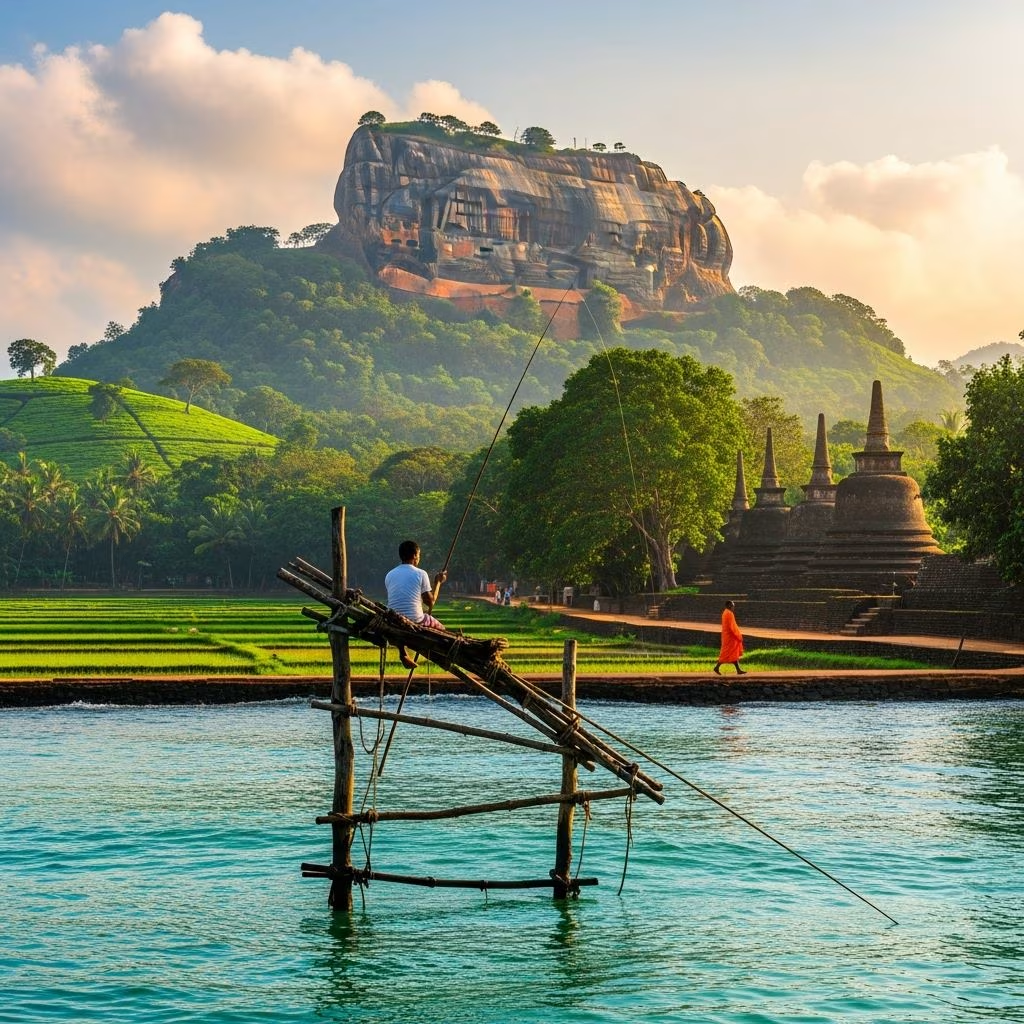
Sri Lanka is a destination of profound spiritual significance, breathtaking landscapes, and vibrant communities. However, visitors must approach this island nation with cultural sensitivity and awareness of local customs. Understanding the expectations of Sri Lankan society—particularly regarding religious practices, social norms, and safety protocols—transforms a typical vacation into a meaningful and respectful cultural exchange.
Sri Lanka’s numerous temples and religious sites represent the heart of the island’s spiritual heritage. Visitors frequently overlook the protocols required when entering these sacred spaces, leading to unintentional disrespect or, in some cases, restricted access.
Conduct within temples requires mindfulness and reverence. Maintain a quiet demeanor, avoid loud conversations, and never point with your index finger at sacred objects or religious icons. Instead, use your chin or extend your hand with palm upward when referencing something. Public displays of affection are particularly inappropriate in these settings.
Photography policies vary significantly across different temples. Some sites permit unrestricted photography, while others restrict it to specific areas or prohibit it entirely. Always check signage upon arrival or ask staff members before capturing images.
One of the most serious cultural violations in Sri Lanka involves Buddha statues. Posing for photographs with your back to a Buddha statue is not merely disrespectful—it is a serious legal offense punishable by fines or arrest. Always face Buddha statues directly when taking photographs or when in their presence. Similarly, displaying Buddha tattoos or religious imagery on your body can result in denial of entry or arrest, so visitors with such tattoos should consider covering them.
Sri Lanka’s eight UNESCO World Heritage Sites—Anuradhapura, Rangiri Dambulla Cave Temple, Polonnaruwa, Sigiriya, Kandy, Galle, the Sinharaja Forest Reserve, and the Central Highlands—attract visitors from across the globe. While independent exploration is possible, hiring a certified guide significantly enhances the experience.
National Tourist Guides and UNESCO-certified multilingual guides undergo rigorous 12-month training programs authorized by Sri Lanka Tourism. These professionals possess deep expertise in the historical, archaeological, and cultural significance of these sites. They can be booked directly at entrances and ticket offices, and their knowledge transforms a simple visit into an educational journey.
A particularly important guideline involves photography ethics. The success of popular hiking routes like the Pekoe Trail has brought substantial tourism to vulnerable communities living within tea estates. Many trails pass through residential areas and sacred spaces. Photographing people in poverty or capturing intimate moments without consent violates their dignity and privacy. Always ask permission before photographing individuals, especially in rural areas or at religious sites.
Sri Lanka maintains conservative social values reflected in dress codes and public behavior expectations. Dressing modestly demonstrates respect for local customs and significantly reduces unwanted attention.
| Context | Women’s Attire | Men’s Attire |
|---|---|---|
| Temples and Sacred Sites | Long pants or skirts covering knees, sleeves covering shoulders, scarf available | Long trousers, long-sleeved shirts, closed footwear |
| Urban Areas and Restaurants | Long pants or knee-length skirts, modest tops with sleeves | Long pants, shirts, minimal exposed skin |
| Beaches (Outside Water) | Cover-ups over swimwear, sarongs, light layers | Shirts or cover-ups over swimwear |
| Casual Rural Settings | Long pants, covered shoulders, modest footwear | Long trousers, shirts, covered footwear |
Tight-fitting or overly revealing clothing is particularly inappropriate. Carrying a lightweight scarf provides versatility—it can cover shoulders, wrap around the waist, or serve as a head covering when needed. During temple visits in hotter months, wearing dark-colored socks is practical, as temple tiles often become extremely hot underfoot.
Sri Lanka’s coastal beauty masks several safety concerns that visitors must understand before entering the water.
Public beaches lack lifeguards, and emergency response systems are limited. Tidal changes and strong winds can generate dangerous riptides. Before swimming, observe warning flags indicating dangerous conditions and maintain distance from boats and restricted areas. Never dive into unfamiliar waters, as hidden rocks or shallow areas pose serious injury or death risks.
Travel insurance is essential before arriving in Sri Lanka due to the limited emergency response infrastructure and absence of mandatory first-aid training in many workplaces.
While whale watching once represented an exciting visitor experience along Sri Lanka’s southern coast, the distinct blue whale population has declined alarmingly due to environmental and human impact. Expert consensus suggests that boats pursuing remaining whales will worsen their decline. Similarly, attractions involving baby turtles released from tanks do not support genuine conservation efforts. Baby turtles require minimal human intervention after hatching to ensure survival. Respecting these wildlife boundaries protects vulnerable species and demonstrates commitment to sustainable tourism.
Tourism in Sri Lanka profoundly impacts coastal and rural communities. Visitor choices directly influence whether these communities benefit economically from tourism or whether foreign entrepreneurs capture revenue.
Frequenting Sri Lankan-owned shops, restaurants, and service providers ensures that money remains within local economies. This practice applies to equipment rentals, including bikes and surfboards—prioritizing locally-owned rental services over foreign-operated businesses strengthens community resilience. Small coastal communities depend on tourism dollars to improve infrastructure, education, and healthcare. Consciously supporting these businesses transforms your spending into community investment.
Three-wheeled tuk tuks are iconic Sri Lankan vehicles, but visitors should not attempt to drive them. Operating a tuk tuk requires a valid driving license from your home country, an international driving license specifically covering three-wheeled vehicles, and a temporary Sri Lankan license obtained through rental companies. More importantly, licensed drivers possess crucial knowledge of local road conditions, traffic patterns, and safety protocols. Off-road driving of tuk tuks is particularly dangerous and not recommended.
The Sri Lankan police and military maintain checkpoints throughout the country. Cooperate respectfully at these checkpoints and expect that guards may search bags or scan belongings before entry to hotels, monuments, and public buildings. While confiscation is unlikely, certain facilities may temporarily hold flammable sprays or sharp objects.
Sri Lanka’s conservative culture extends to public displays of affection. Avoid kissing, extended hand-holding, or intimate physical contact, particularly around children and older adults. You may notice that men and women sit apart in public transportation or gathering spaces—this reflects cultural norms regarding gender interaction that visitors should respect.
Eating with your right hand is the customary practice in Sri Lanka. Most establishments provide sinks for hand-washing before and after meals. Beyond this physical habit, dining culture includes important safety considerations. Restaurants and roadside establishments, particularly in rural areas, do not routinely inquire about dietary restrictions or allergies before serving food. If you have severe allergies, explicitly inform staff before ordering, and if you cannot verify ingredient safety, abstain from the dish. After meals, clearing your own plate is appreciated; however, in rural settings where staff are older, allowing them to clear plates shows respect.
Sri Lanka’s tap water is unsuitable for tourists and can cause gastrointestinal upset. Consume only bottled water with intact seals, and avoid ice in drinks outside major resorts or trusted establishments. Many tour operators provide filtered water tanks on transportation, allowing travelers to refill reusable bottles throughout the day—a practice that reduces plastic waste while ensuring safe hydration.
Poya Day, the full moon day occurring each month, is an islandwide Buddhist holiday requiring particular visitor awareness. Most businesses close out of respect for this observance. Alcohol is neither served nor sold anywhere on the island during Poya Day. Loud parties, drinking, or disruptive behavior deeply offend communities spending these days and evenings at local temples. Plan accordingly when scheduling activities or dining during these dates.
Photography policies are temple-specific. Always check for signage indicating restrictions. When photographing individuals, always request permission first, especially in rural or religious contexts. Respect refusals graciously.
If you unintentionally violate a cultural practice, apologize sincerely. Sri Lankans generally appreciate visitors who make genuine efforts to respect their traditions. Learning from mistakes demonstrates respect.
Avoid photographing people experiencing poverty or in vulnerable situations. Do not photograph residential areas or intimate community moments without explicit permission.
Pickpocketing and bag snatching occur frequently, especially on public transportation. Maintain awareness of your surroundings and secure valuables. Theft also occurs in hotels and guesthouses, so use hotel safes for important documents and excess cash.
Respectful travel in Sri Lanka requires preparation, cultural humility, and genuine interest in local perspectives. Before departing, research specific temples you plan to visit, understand regional variations in customs, and commit to supporting local businesses and communities. These efforts transform your visit from tourism into meaningful cultural exchange, benefiting both you and the people whose homeland you are visiting.
