

 Travel Essentials
 Travel Essentials

Comprehensive guide to traveling with children in Sri Lanka, featuring top attractions, accommodations, wildlife experiences, and practical tips for unforgettable family vacations.
 Travel Essentials
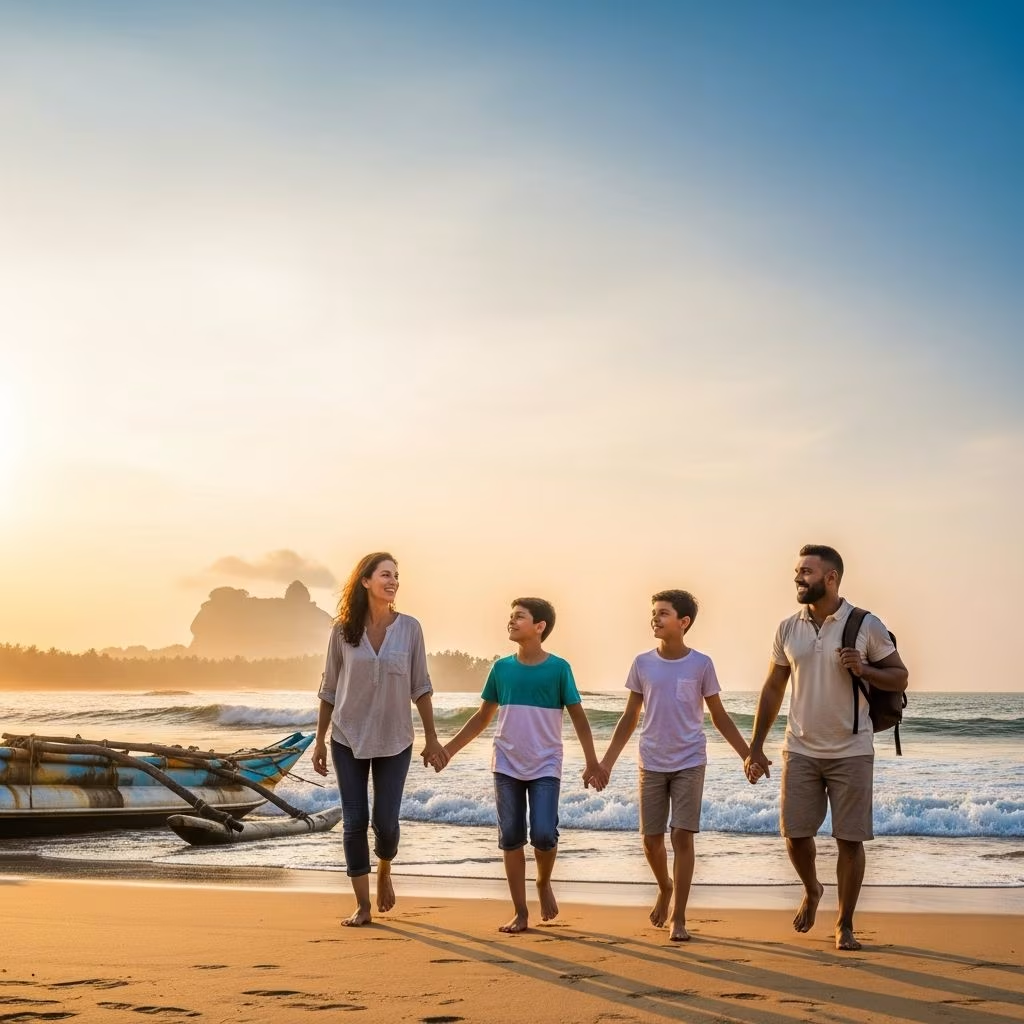
Sri Lanka stands as one of Asia’s most compelling destinations for families seeking an authentic blend of adventure, culture, and relaxation. The island nation offers something for every age group, from toddlers enjoying beach time to teenagers tackling challenging hikes and exploring ancient ruins. Whether you’re planning a two-week expedition or a shorter escape, Sri Lanka provides accessible experiences that create lasting memories without requiring extensive planning or specialized equipment.
What makes Sri Lanka particularly attractive for families is the genuine warmth extended to visitors with children across all regions and establishments. Restaurants welcome young diners enthusiastically, accommodations cater to specific family needs, and transportation networks have been refined through years of tourism experience. The country’s compact size means you can access diverse landscapes—pristine coastlines, mountainous highlands, ancient temples, and wildlife reserves—within relatively short travel distances, minimizing fatigue for children and maximizing exploration time.
The cultural dimension adds significant educational value to a family visit. Children gain exposure to Buddhist traditions, colonial history, and local customs through interactive experiences rather than textbook learning. Temple visits, marked by vibrant flowers and meditative soundscapes, engage young minds in ways that feel organic and memorable.
Accommodation selection significantly impacts the family travel experience. For families traveling with babies and toddlers, resort accommodations prove more practical than alternative lodging options if budget permits. Resorts provide crucial amenities including reliable crib availability—a convenience that homestays and guesthouses frequently cannot guarantee. Beyond equipment, resorts offer the psychological comfort of poolside relaxation spaces where young children can burn energy safely while parents decompress.
The resort environment also eliminates concerns about amenity reliability. Climate control, consistent hot water, laundry facilities, and on-site dining options reduce the stress that often accompanies traveling with very young children. Many Sri Lankan resorts have adapted their services specifically for family groups, offering kids’ clubs, shallow pools, and family-oriented dining schedules.
For families with older children seeking more authentic cultural immersion, a mix of resort stays in urban areas and mid-range guesthouses in smaller towns creates an optimal balance. This hybrid approach provides security and comfort during travel segments while allowing deeper engagement with local communities in destination areas.
Colombo, the capital and primary entry point, deserves more attention than many families initially allocate. Beyond serving as a transit hub, the city offers substantial child-friendly attractions. The Lotus Tower presents interactive exhibitions that captivate younger children through vibrant visual displays and educational content about Sri Lankan history. The tower’s revolving restaurant provides a unique dining experience while offering panoramic city views—an unusual combination that appeals to both children and adults.
City tours operated by professional guides introduce visitors to government buildings, religious sites including temples and mosques, and architectural landmarks without requiring extensive independent navigation. Food-focused tours offer another dimension, allowing families to sample local cuisine while exploring neighborhoods in a structured, social environment.
For families interested in history and architecture, Galle deserves significant time allocation. The Galle Fort, a UNESCO World Heritage site, combines impressive fortification walls with colorful buildings, narrow streets perfect for exploration, and ocean views that appeal to all ages. The fort’s walkable layout suits families with children, while its historical significance provides educational context.
Sri Lanka’s extensive coastline accommodates various family preferences and comfort levels. Bentota Beach, positioned conveniently close to Colombo, attracts families seeking water sports opportunities, gentle waters, and accessible amenities. The beach combines relaxation with activity options, suiting families who want variety within a single location.
The southwest coast offers distinctive beach experiences at different points. Hiriketiya Beach, sheltered within a horseshoe bay formation, features shallow waters and manageable waves ideal for young swimmers and beginning surfers. Mirissa Beach, busier during peak seasons, provides whale-watching excursions alongside beach recreation. The nearby Coconut Hill offers a short scramble to elevated viewpoints with panoramic bay perspectives, particularly stunning at sunset.
Weligama Beach appeals to families appreciating substantial bay spaces and unique accommodation options, including properties on small islands accessible during low tide periods. For families with slightly older children, Pasikuda Beach on the east coast provides a noted safe environment with reliable water conditions.
Water Sports and Surf Learning
Established surf camps in locations like Weligama offer affordable instruction for children eager to develop surfing skills. These camps provide guidance and necessary equipment, reducing parental stress about safety and logistics. The combination of manageable waves and professional instruction creates confidence-building environments for young learners.
Safari opportunities represent a highlight of Sri Lankan family travel. Multiple national parks provide wildlife viewing without requiring extreme adventure levels. Hurulu Eco Park, positioned near Habarana and Sigiriya, operates optimally from December through June and specializes in elephant viewing. Unlike larger, more distant parks, Hurulu’s proximity to other attractions allows families to incorporate safari experiences into broader itineraries without extensive travel commitments.
In the central region, Minneriya National Park, Kaudulla National Park, and Hurulu Eco Park provide wildlife viewing options, each with distinct characteristics and seasonal advantages. The southern parks—Udawalawe and Yala—offer wider wildlife variety and well-established family tour operations.
Safari tours typically accommodate family groups effectively. Professional guides handle navigation and wildlife spotting, while open-air vehicles provide unobstructed viewing. Morning departures, when wildlife activity peaks, work well with family schedules, and tour durations typically suit children’s attention spans.
Sri Lanka’s religious heritage provides meaningful cultural immersion. The Temple of the Sacred Tooth Relic and Kataragama attract visitors through impressive architectural features, colorful floral arrangements, and ambient prayer chants that engage children’s sensory experiences. These temples function as active spiritual centers rather than sterile museums, creating authentic cultural encounters.
Sigiriya Rock Fortress represents a significant historical and physical experience. This ancient rock formation, dating to King Kasyapa’s reign (477–495 AD), features preserved frescoes, rock carvings, and palace ruins. The climb—challenging but achievable—rewards older children and adults with unobstructed landscape views from the summit. While younger children may require baby carriers, the experience remains accessible for motivated families.
The ancient city of Anuradhapura offers cycling opportunities through historical sites, appealing to older children interested in active exploration combined with cultural learning.
Sri Lanka’s central highlands present a dramatic shift in landscape and climate from coastal regions. The Hill Country encompasses tea plantations, hiking trails, and waterfall excursions suitable for varied fitness levels.
Tea Production and Factory Visits
Tea plantations dot the highland landscape, and many welcome family visits. Factory tours educate children about tea production processes while providing interactive learning experiences. The visual interest of extensive green hillsides, combined with hands-on engagement with tea processing, creates memorable educational moments.
Hiking and Waterfall Exploration
Little Adam’s Peak offers manageable hiking for families with younger children, combining physical activity with elevated viewpoints. Ravana Falls near Ella provides easily accessible waterfall experiences, requiring only short tuk-tuk rides from town centers. The minimal hiking required to reach the falls’ base appeals to families with limited hiking experience or varying fitness levels.
Kuda Ravana Falls provides an additional waterfall experience where children enjoy swimming in natural pools. The journey requires wearing sturdy footwear with grip due to slick rock surfaces, necessitating careful movement but remaining achievable for most ages.
For Younger Children
Interactive museums and art exhibitions engage toddlers and preschoolers through visual stimulation. Digital art exhibitions featuring bright colors and animated displays hold attention spans effectively. Pixel Bloom, a digital art exhibition in Colombo, appeals particularly to very young children.
Beach time, pool access at resorts, and gentle temple visits suit younger children’s developmental levels and attention spans. The key involves balancing activity with adequate rest periods, a challenge easily managed through strategic resort selections and midday rest schedules.
For Teenagers
Older children seeking adventure find Sigiriya climbing, snorkeling around Pigeon Island at Nilaveli Beach, and cycling through ancient cities appropriately challenging. Rock climbing, abseiling for sufficiently experienced teenagers, and extended hiking trails in mountainous regions appeal to adventure-seeking adolescents.
Whale watching represents a memorable experience for teenagers interested in marine biology. Tours departing from Mirissa on the southwest coast and Trincomalee on the east coast provide opportunities to observe blue whales, sperm whales, and dolphins. East coast whale-watching operates optimally from May through October.
Train travel represents a quintessential Sri Lankan experience particularly suited to families. Booking train tickets requires advance planning—visiting stations upon arrival or requesting accommodation assistance streamlines the process. Train journeys through tea plantation highlands and along coastal routes provide memorable transportation experiences while introducing children to local travel culture.
Tuk-tuks offer flexibility for shorter distances and explorations of smaller towns. While adventurous for children accustomed to car travel, tuk-tuk journeys create unique transportation memories. Negotiate fares beforehand and ensure driver reliability through accommodation recommendations.
Seasonal considerations affect wildlife viewing and weather conditions. December through June represents optimal timing for many activities, particularly northern and central region safaris. Southwest coast whale-watching operates seasonally, influencing when families prioritize coastal experiences.
Tropical climate travel requires sun protection, insect repellent, and lightweight clothing. Sturdy footwear with grip suits waterfall visits and rocky terrain exploration. Baby carriers facilitate temple visits and hiking where stroller access becomes limited.
Ensure vaccinations are current before departure. Pack medications for common travel-related issues and consult with healthcare providers about altitude considerations when visiting highland areas. Reliable resorts provide medical referrals if needed.
Sri Lanka welcomes families warmly, with children embraced across all establishments. Standard safety precautions—awareness of surroundings, secured valuables, and reputable transportation selection—apply as with any destination travel.
Two weeks allows comprehensive experiences across multiple regions while providing adequate rest periods. Shorter itineraries of 7-10 days work by focusing on specific regions—either coastal areas or highland experiences—rather than attempting comprehensive island tours.
Plan significant activities during morning and late afternoon hours when temperatures remain moderate. Implement midday rest periods for very young children. Balance active exploration with relaxation time at accommodations, preventing exhaustion that diminishes enjoyment.
Sri Lankan culture prioritizes family dining, with restaurants welcoming children enthusiastically. Establishments cater to various dietary preferences and accommodate requests for mild preparations.
Sri Lanka’s accessibility, combined with diverse experiences spanning beaches, wildlife, culture, and adventure, creates rich family travel environments. The genuine hospitality extended to families traveling with children transforms logistics into opportunities for connection and learning. Whether climbing ancient fortresses, observing elephants in natural habitats, learning tea production processes, or simply relaxing on pristine beaches, Sri Lanka accommodates family travel preferences across all styles and age ranges. The country’s relatively compact geography, developed tourism infrastructure, and cultural emphasis on family create conditions where parents can relax while children engage meaningfully with new experiences, ultimately producing travel memories that families cherish for decades.
