

 Travel Essentials
 Travel Essentials

Explore Sri Lanka's UNESCO-listed ancient wonders like Sigiriya, Anuradhapura, Polonnaruwa, and Dambulla. Uncover history, architecture, and spiritual heritage in the Cultural Triangle.
 Travel Essentials
Sri Lanka, an island nation rich in history, harbors some of the world’s most extraordinary ancient sites. These locations, many recognized by UNESCO, offer glimpses into civilizations that thrived over two millennia ago, blending architectural genius with spiritual depth. From sheer rock fortresses to vast stupa complexes, they form the heart of the **Cultural Triangle**, a region central to the island’s heritage.
The Cultural Triangle encompasses key archaeological zones where ancient kings built capitals that rivaled global wonders. Established around the 4th century BCE, these areas showcase advanced engineering in water management, monumental construction, and intricate artistry. Visitors can cycle through ruins, climb vertiginous heights, or meditate under bo trees said to link directly to the Buddha’s enlightenment.
Practical tips for exploration include renting bicycles for flat terrains like Polonnaruwa, hiring guides for contextual insights, and visiting during dry seasons (May-September in the north-central region) to avoid monsoons. Dress modestly—cover shoulders and knees—at sacred spots.
Dominating the plains, **Sigiriya** rises 200 meters as a sheer granite plateau, once King Kashyapa’s 5th-century CE capital. Legend tells of Kashyapa usurping the throne and fleeing to this defensible summit, transforming it into a pleasure palace with pools, frescoes, and gardens.
The ascent involves 1,200 steps, passing mirror walls etched with ancient graffiti and a massive lion gateway—hence ‘Lion Rock.’ At the top, ruins reveal sophisticated hydraulics: cascading fountains still functional today. The site connected Sri Lanka to trade routes linking Rome, China, and Arabia, as artifacts in the Sigiriya Museum attest.
**Best time to visit:** Dawn for sunrise views over misty jungles. Entry: Around $30 USD, including museum access. Combine with nearby Pidurangala Rock for alternative panoramas.
Founded in 377 BCE, **Anuradhapura** served as Sri Lanka’s first capital for 1,300 years, its stupas once rivaling Egypt’s pyramids in scale. This sprawling site, a UNESCO World Heritage gem, features over 100 protected monuments from the 3rd to 10th centuries CE.
Highlights include the **Sri Maha Bodhi**, a sacred fig tree propagated from the Buddha’s enlightenment tree in India—world’s oldest documented tree, tended continuously since 288 BCE. Nearby, **Ruwanweliseya**’s gleaming white dome, built by King Dutugemunu, symbolizes purity with its elephant-buttressed base. **Jetavanarama Stupa**, once 122 meters tall, demonstrates brickwork mastery, while **Abhayagiri** hosted monks from across Asia, fostering early Buddhist scholarship.
Explore **Isurumuniya Rock Temple** for romantic carvings depicting lovers, and **Ranmasu Uyana** gardens with sophisticated bathing pools showcasing hydraulic prowess. Cycle the 4km sacred city circuit for an immersive experience.
Succeeding Anuradhapura after invasions, **Polonnaruwa** flourished in the 11th-13th centuries under King Parakramabahu I. Its well-preserved ruins reveal a golden age of art and irrigation, including the vast **Parakrama Samudra** reservoir—still irrigating farmlands today.
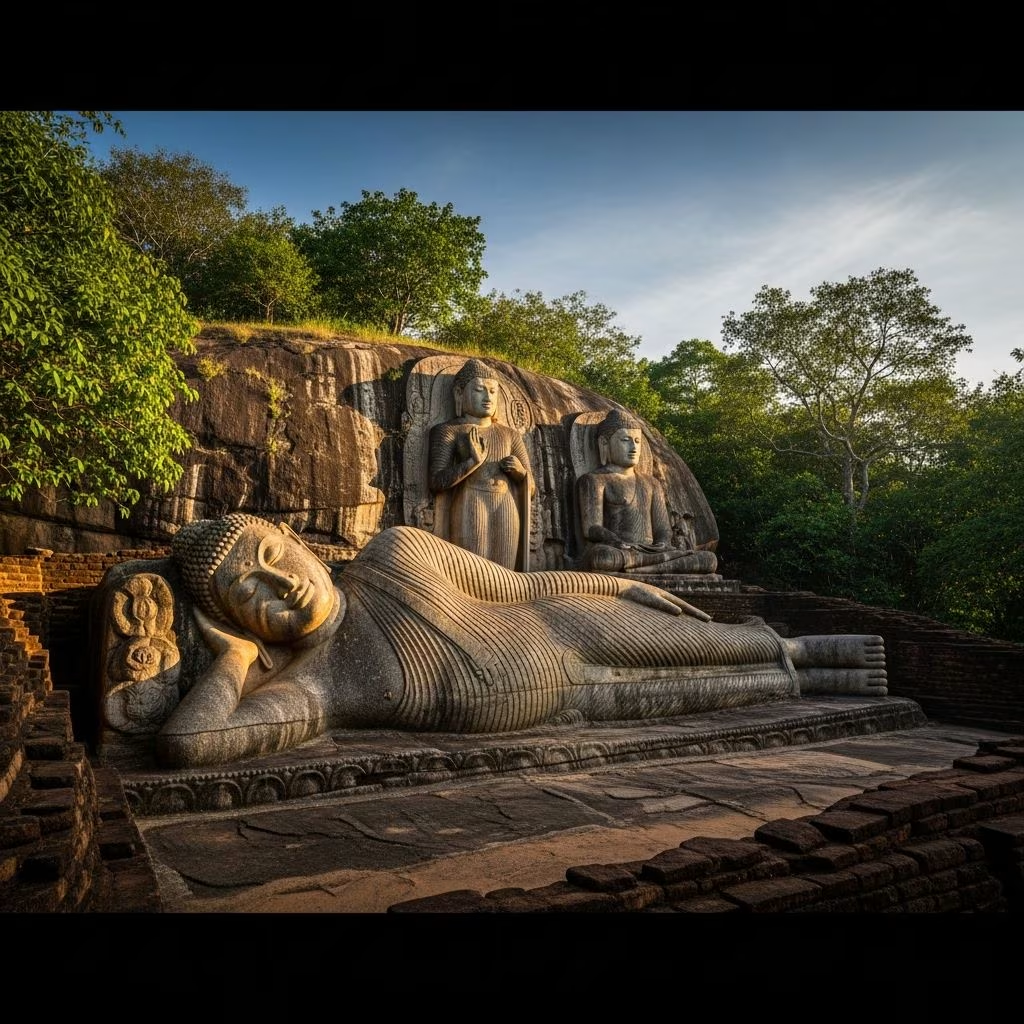
The **Gal Vihara** complex stuns with four colossal Buddha figures hewn from one granite cliff: standing (vigilant), seated (meditative), walking (graceful), and reclining (entering nirvana) at 14 meters. Crafted by Parakramabahu, they exemplify Anuradhapura school’s sculpture.
Other gems: the seven-story **Royal Palace** ruins, **Vatadage** relic shrines with moonstone steps symbolizing life’s path, and **Lankatilaka Temple**’s towering image house. Rent a bike to navigate the 2km quadrangle efficiently.
Nestled amid orchards, **Dambulla Cave Temple**—Sri Lanka’s largest rock temple complex—spans five caverns under a 150-meter overhang, active since the 3rd century BCE. A UNESCO site, it houses 157 statues and 2,000 square meters of murals in vivid ochre, blue, and gold, depicting Buddha’s life, deities, and kings.
Climb 500 steps to enter: Cave 1 (Devaraja Vihara) features a 15-meter reclining Buddha; Cave 2 bursts with 50+ statues. Renovated in the 18th century Kandy style, it blends Theravada and Hindu elements. The modern Golden Temple below adds a 30-meter seated Buddha.
**Pro tip:** Visit mid-morning post-Sigiriya; panoramic views reward the hike.
These lesser-known spots offer solitude amid opulent carvings and forgotten stupas.
**Itinerary Suggestion (7 Days):**
| Day | Focus | Activities |
|---|---|---|
| 1-2 | Sigiriya & Dambulla | Rock climb, cave exploration, museum. |
| 3-4 | Anuradhapura | Bike sacred sites, bodhi tree rituals. |
| 5-6 | Polonnaruwa | Ruins tour, Gal Vihara meditation. |
| 7 | Day trips | Avukana, local crafts. |
**Transportation:** Trains from Colombo (6-8 hours), buses, or private drivers (~$50/day). Stay in heritage guesthouses for authenticity.
**Costs:** Site entries $15-30 each; multi-site ticket saves 20%. Guides: $20/half-day.
These sites face threats from erosion, tourism, and climate. UNESCO and Sri Lanka’s Department of Archaeology enforce restoration—e.g., Jetavanarama’s brick repairs. Support by sticking to paths, avoiding flash photography in caves, and choosing eco-tours.
Start with Sigiriya-Dambulla (south), then Polonnaruwa, ending at Anuradhapura (north) for logical flow.
Sigiriya and Dambulla require moderate fitness (stairs); Polonnaruwa and Anuradhapura are flat, bike-friendly.
Avoid October-January rains; dry May-September ideal.
Long pants/skirts, covered shoulders; sarongs often provided.
Yes outside caves; no-flash inside to protect murals.
Available at major entrances, covering Cultural Triangle sites for ~$50.
