

 Travel Essentials
 Travel Essentials

A comprehensive guide to St. Lucia's most spectacular natural attractions, from rainforest reserves to geothermal wonders and the iconic Pitons.
 Travel Essentials
St. Lucia stands as one of the Caribbean’s most geologically and biologically diverse destinations, shaped by millions of years of volcanic activity and tropical climate conditions. The island’s distinctive character emerges not merely from its celebrated beaches, but from the remarkable interplay of lush rainforests, mineral-infused waterways, and dramatic mountainous terrain that define its interior landscape. Approximately 70% of the island remains covered in rainforest, creating a verdant ecosystem that supports hundreds of plant and animal species. This combination of volcanic geology and tropical biodiversity makes St. Lucia an ideal destination for travelers seeking to venture beyond conventional beach holidays and engage with authentic natural environments.
St. Lucia’s natural landscape owes its distinctive character to its volcanic origins, with geological formations dating back hundreds of millennia. The island’s soil, enriched by volcanic minerals, supports exceptionally lush vegetation that covers the landscape like a living tapestry. This volcanic heritage extends beyond mere soil composition; it has created unique geothermal features that continue to shape the visitor experience across the island.
The volcanic processes that shaped St. Lucia have produced several remarkable phenomena accessible to modern travelers. Sulfurous mineral springs bubble beneath the surface, creating natural spas and mud pools where visitors can immerse themselves in warm, mineral-laden waters. These geothermal features persist as active reminders of the geological forces that continue to influence the island’s environment and remain among the Caribbean’s most unusual natural attractions.
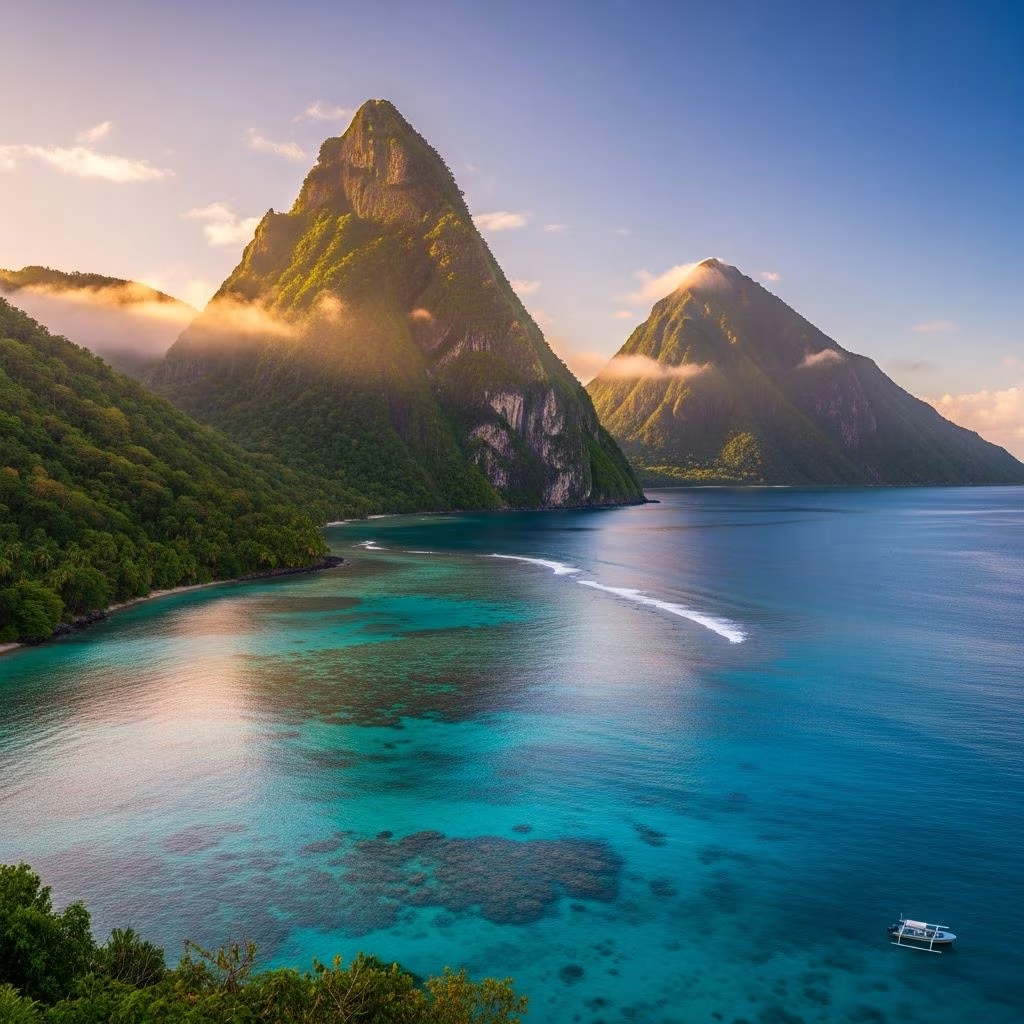
Two massive volcanic spires dominate St. Lucia’s southwestern coastline near the village of Soufrière: Gros Piton and Petit Piton. These twin peaks rise approximately 2,500 feet directly from sea level, creating one of the Caribbean’s most photographed natural landmarks. Designated as a UNESCO World Heritage Site alongside the surrounding Pitons Management Area, these formations represent geological significance that extends beyond their stunning visual appeal.
The Pitons present two distinct mountaineering experiences for visitors with varying fitness levels and technical climbing abilities. Gros Piton, the larger of the two peaks, actually offers a more manageable climbing route despite its greater height, rewarding successfully ascending climbers with panoramic vistas spanning both the Atlantic Ocean and Caribbean Sea. In contrast, Petit Piton’s deceptively modest appearance masks technical climbing challenges that have intensified due to recent erosion, making it a considerably more demanding undertaking. Visitors without mountaineering intentions can still appreciate these geological wonders through coastal boat tours that provide stunning sea-level perspectives of their dramatic silhouettes.
The Edmund Forest Reserve encompasses 18,000 acres of protected rainforest in the island’s interior, representing one of the Caribbean’s most significant tropical forest preserves. Access to this reserve requires advance planning: visitors must obtain permits through their accommodations and hire certified forest guides available at the reserve entrance. This managed access system ensures sustainable visitation while protecting the fragile ecosystems within.
The reserve accommodates multiple hiking routes designed for different physical capabilities and interests:
Bird enthusiasts particularly value the Millet Bird Sanctuary Trail, where interpretive signage and field guides help visitors identify local species. The St. Lucian parrot, endemic to the island and recognizable by its distinctive plumage, represents a species of considerable conservation interest, and sightings within the sanctuary provide memorable wildlife encounters.
St. Lucia’s abundant rainfall and mountainous topography create numerous waterfall formations, each with distinct characteristics and accessibility levels. The island’s waterfalls range from easily accessible roadside cascades to remote falls requiring substantial rainforest trekking.
Diamond Falls represents one of the island’s most distinctive waterfalls, distinguished by its striking rust-colored water that results from mineral oxidation occurring as the stream travels past volcanic deposits roughly two miles upstream. Located within the Diamond Botanical Gardens, this fifty-foot cascade cannot be used for swimming due to its high mineral concentration, but provides compelling photography opportunities and serves as the centerpiece of the garden’s visitor experience.
Toraille Falls offers a contrasting experience: a fifty-foot cascade positioned conveniently near the main road adjacent to Sulphur Springs. This accessible waterfall permits swimming, making it an ideal stop for travelers seeking refreshment during scenic drives around the island. For more adventurous visitors, numerous remote waterfalls accessible only through dense rainforest trails reward exploratory efforts with spectacular natural pools and pristine settings rarely crowded with other visitors.
The Diamond Botanical Gardens provide a curated natural environment where visitors can observe St. Lucia’s tropical flora in both wild and cultivated settings. This award-winning six-acre property integrates landscape design with conservation principles, creating a space that educates visitors about indigenous vegetation while maintaining the appearance and feel of natural growth.
Well-marked nature trails wind through the gardens, facilitating self-guided exploration. Informational placards help visitors identify local bird species, particularly the endemic St. Lucian parrot, transforming a simple walk into an educational opportunity. The gardens also incorporate natural hot springs sourced from the island’s geothermal features, allowing visitors to experience warm mineral-laden waters in a developed setting with both public and private bathing facilities.
St. Lucia’s marine conservation efforts extend to several protected island reserves accessible primarily by boat. The Maria Islands—Maria Major and Maria Minor—situated off the southeastern coast, represent among the region’s most pristine protected environments.
Located approximately twenty minutes by boat from Pointe Sable, Maria Major features a verdant nature trail traversing habitats supporting six endemic reptile species found nowhere else on Earth. This specialized ecosystem demonstrates how island isolation creates unique evolutionary pathways, with populations developing distinct characteristics across relatively small geographical areas. The reserve’s protected status ensures these vulnerable species continue undisturbed reproduction and feeding activities.
Coastal snorkeling destinations provide complementary marine experiences. Anse Chastanet, positioned on the leeward side of the island where calm waters support excellent visibility, offers the most reliable snorkeling conditions. Underwater reefs support colorful fish populations including parrotfish, trumpetfish, and clownfish, creating kaleidoscopic experiences for visitors exploring beneath the surface.
Beyond the Pitons and waterfalls, St. Lucia offers several geothermal attractions reflecting the island’s ongoing geological activity. Sulphur Springs represents the Caribbean’s only drive-in volcano, a unique attraction where visitors can drive to viewpoints and descend into the volcanic crater itself. This easily accessible geological phenomenon demonstrates volcanic processes in real-time, with bubbling mud pools and sulfurous emissions creating an otherworldly landscape.
New Jerusalem Mineral Baths provide a developed geothermal spa experience, where warm waters enriched with therapeutic minerals offer health-focused relaxation. Built upon the site of historical mineral bathing facilities, these baths combine traditional bathing practices with modern amenities, allowing visitors to experience the therapeutic properties that indigenous peoples recognized centuries ago.
Beyond hiking and observation-based activities, St. Lucia offers adventure experiences that immerse visitors in natural environments while providing adrenaline-inducing activities:
Accessing St. Lucia’s natural attractions requires consideration of seasonal weather patterns. The island receives substantial rainfall year-round, supporting the lush vegetation that defines its landscapes. However, specific seasons affect water levels in waterfalls, trail conditions in rainforest reserves, and accessibility to certain features. Travelers planning rainforest hikes should anticipate muddy trail conditions following rainfall and plan accordingly with appropriate footwear and physical conditioning.
Permit requirements and guided access policies protect sensitive ecosystems. Visitors planning Edmund Forest Reserve exploration should arrange permits and guides through their accommodations in advance rather than attempting same-day arrangements. Similarly, guided experiences at protected reserves like the Maria Islands ensure visitor activities remain compatible with conservation objectives.
St. Lucia’s natural treasures persist due to coordinated conservation efforts that balance visitor access with environmental protection. UNESCO World Heritage designations for the Pitons and surrounding management areas establish frameworks ensuring these geological features remain preserved for future generations. Protected wildlife reserves limit visitor numbers and require guided access, preventing overuse that could damage fragile ecosystems.
Responsible visitors contribute to these conservation objectives by adhering to established guidelines: remaining on marked trails to prevent vegetation disturbance, respecting wildlife observation distances to minimize animal stress, and avoiding removal of natural materials from protected areas. These practices ensure subsequent visitors encounter authentic natural environments rather than degraded landscapes diminished by overuse.
St. Lucia’s natural attractions position it as a significant destination within broader Caribbean travel planning. The combination of accessible activities suitable for casual visitors alongside challenging adventures for experienced naturalists creates multi-generational appeal. Coastal cruise itineraries frequently incorporate St. Lucia stops, offering passengers limited time to experience signature attractions like the Pitons through organized excursions.
Independent travelers benefit from the island’s manageable size, allowing multiple natural attractions to be visited within individual day trips from central accommodations. The proximity of Diamond Falls, Sulphur Springs, and main road-adjacent waterfalls to coastal tourism centers contrasts with more distant rainforest reserves requiring full-day commitment and advance planning.
Access to Edmund Forest Reserve requires permits obtainable through your guesthouse or hotel and a certified forest guide hired at the reserve entrance. Most other natural attractions including the Pitons, waterfalls, and botanical gardens remain freely accessible without permits, though some organized tours employ guide services.
Toraille Falls near Sulphur Springs permits swimming in its pools. Diamond Falls, despite its spectacular appearance, cannot be used for swimming due to high mineral concentrations in its rust-colored water.
Gros Piton, the larger peak, presents a more manageable climbing route suitable for reasonably fit individuals. Petit Piton features technical rock faces intensified by recent erosion, making it considerably more challenging and suitable only for experienced climbers.
Approximately 70% of the island remains covered in rainforest, creating extensive protected ecosystems.
These protected reserves are accessible via approximately twenty-minute boat rides departing from Pointe Sable. Guided tours ensure visitors remain compatible with reserve conservation objectives.
