

 Travel Essentials
 Travel Essentials

Uncover St. Lucia's hidden gems: from UNESCO-listed Pitons and drive-in volcanoes to bird-filled forests and mineral-rich waterfalls. Perfect for nature lovers seeking adventure beyond the beaches.
 Travel Essentials
St. Lucia stands out in the Caribbean for its dramatic volcanic origins, which have sculpted a landscape of towering peaks, steaming springs, and verdant canopies. This island paradise offers far more than sun-kissed shores; its interior pulses with life, from rare parrots flitting through misty forests to mineral-tinted waterfalls tumbling over ancient rocks. Visitors can immerse themselves in these wonders through guided hikes, boat trips, and therapeutic soaks, creating memories that blend adventure with serenity.
The island’s geology tells a story of fiery creation, with active features that draw thrill-seekers worldwide. At the heart of this is the world’s only drive-in volcano at Sulphur Springs, where visitors descend into a crater to witness bubbling mud pools and hissing vents. The air carries a sharp sulfur scent, a reminder of the earth’s restless energy beneath. Nearby, New Jerusalem Mineral Baths provide a soothing contrast, with waters warmed by geothermal activity and rich in healing minerals.
These sites highlight St. Lucia’s unique position as a living geological museum, where the ground itself reveals the island’s primal forces.
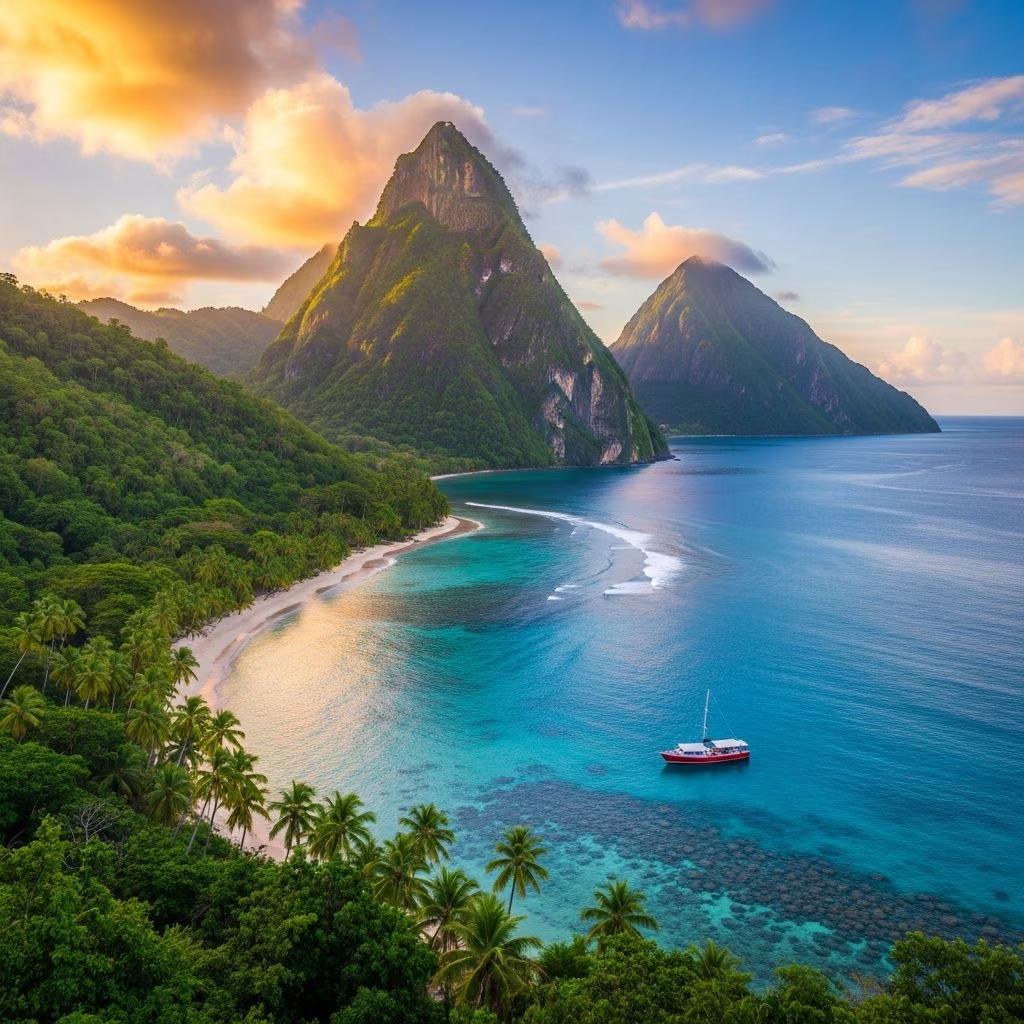
Dominating the southwestern horizon, the Pitons—Gros Piton and Petit Piton—are St. Lucia’s signature silhouettes. Rising sharply from the sea to over 2,600 feet, these volcanic plugs were inscribed as a UNESCO World Heritage Site in 2004 for their geological and ecological significance. Gros Piton, the larger of the two, offers a challenging yet rewarding hike for fit adventurers, culminating in sweeping vistas of the Caribbean Sea and Atlantic Ocean.
Petit Piton, steeper and more eroded, demands expert guidance and is not for the faint-hearted. For easier access, the nearby Tet Paul Nature Trail provides panoramic views without the climb, winding through lush vegetation with interpretive signs about local flora. Snorkeling around the Pitons reveals vibrant reefs teeming with parrotfish and turtles, accessible from calm waters at Anse Chastanet.
| Piton | Height | Hike Difficulty | Highlights |
|---|---|---|---|
| Gros Piton | 2,619 ft | Strenuous (4-5 hours) | 360° ocean views, rare orchids |
| Petit Piton | 2,461 ft | Expert only | Dramatic cliffs, marine access |
| Tet Paul Trail | N/A | Easy (45 min) | Views, sculpture garden |
St. Lucia’s central highlands shelter the Edmund Forest Reserve, an 18,000-acre expanse of montane rainforest teeming with over 100 bird species, including the endangered St. Lucian parrot (Amazona versicolor). Access requires a permit and guide, available via local accommodations. Trails vary in intensity: the Edmund Rainforest Trail is a demanding 7-mile trek to Mount Gimie’s summit, while the Des Cartier Trail offers gentler paths lined with heliconias and bromeliads.
The Millet Bird Sanctuary provides a shorter, 2-mile loop ideal for ornithologists, where hummingbirds and orioles dart among ferns. Further afield, the Maria Islands Nature Reserve—two tiny islets off the southeast coast—protects six endemic reptile species, reachable by a quick boat from Pointe Sable. A verdant trail on Maria Major showcases rare grasses and lizards in a pristine setting.
Waterfalls punctuate St. Lucia’s terrain, fed by abundant rainfall. Diamond Falls, within the Diamond Botanical Gardens, stuns with its rust-colored waters, stained by volcanic minerals from upstream. Though not swimmable, the site pairs with therapeutic hot springs for a full sensory experience. The gardens span six acres of exotic blooms, with easy nature trails for bird identification.
Toraille Falls, a 50-foot cascade near Sulphur Springs, is roadside accessible, while more remote gems like Sault Falls and La Tille demand guided rainforest treks. For swimmers, the Pitons Waterfall near Morne Coubaril Plantation offers a refreshing plunge amid jungle surroundings. Kayaking and sea treks expand aquatic adventures, revealing underwater realms.
Beneath the waves, St. Lucia’s fringing reefs host a kaleidoscope of life. Anse Chastanet’s calm leeward waters are prime for snorkeling, where trumpetfish and clownfish navigate coral gardens. The Pitons’ submerged slopes enhance this biodiversity, protected within marine reserves. Boat trips to Maria Islands often include glass-bottom views of sea fans and rays.
To fully embrace these treasures, plan ahead. Obtain permits for reserves through hotels; hire certified guides for hikes and volcano tours. Wear sturdy shoes, insect repellent, and sun protection. Best visited in dry season (December-April) to avoid slippery trails. Sustainable practices—staying on paths, no littering—preserve these sites for future generations.
Yes, mandatory for safety on Gros and Petit Pitons; guides provide insights into ecology and history.
No, due to mineral content, but adjacent hot springs are perfect for bathing.
Millet Bird Sanctuary’s 2-mile loop suits all levels, with rich birdlife.
Yes, with guided tours; wear old clothes for mud baths.
Early morning or dusk, when parrots are most active.
St. Lucia’s natural treasures weave a tapestry of adventure and tranquility, inviting every traveler to connect with its wild heart.
