

 Travel Essentials
 Travel Essentials

Explore St. Thomas Carnival's rich cultural heritage, featuring J'ouvert, parades, live music, authentic cuisine, and community celebrations that define Caribbean festivity.
 Travel Essentials
The island of St. Thomas in the United States Virgin Islands hosts one of the most vibrant and accessible Caribbean festivals, drawing visitors and locals alike to celebrate centuries of cultural heritage. Unlike many Caribbean carnival celebrations, St. Thomas Carnival requires no international travel documentation, making it an ideal destination for those seeking authentic cultural immersion without complicated logistics. The festival represents a unique blend of African traditions, Caribbean influences, and island community values, creating an experience that transcends typical tourism offerings.
The contemporary St. Thomas Carnival traces its roots to 1912, though the modern incarnation began in 1952 when community leader Ron de Lugo revived the tradition, establishing it as an annual celebration that has grown into the second-largest carnival cultural event in the entire Caribbean region. Over seven decades, the festival has evolved into a month-long celebration that transforms the island into a dynamic showcase of music, dance, cuisine, and artistic expression.
St. Thomas Carnival emerged from a complex historical context where African, European, and Caribbean cultural elements converged on a small island with significant maritime importance. The festival’s evolution reflects the broader story of the Virgin Islands, where formerly enslaved and colonized peoples created vibrant cultural traditions that persisted through generations. The post-Easter timing of the modern festival carries symbolic weight, representing renewal and celebration of community resilience and identity.
The decision to revive Carnival as an annual event in 1952 represented a conscious effort to preserve and celebrate local cultural traditions during a period of significant social change. Since that revival, the festival has become deeply embedded in the island’s identity, serving not merely as entertainment but as a vehicle for cultural transmission and community solidarity. Families pass down traditions through generations, children learn their heritage through participation, and artisans preserve techniques and artistic expressions that might otherwise fade from memory.
St. Thomas Carnival typically unfolds over approximately three weeks, with the most concentrated activities occurring during the final week of April extending into the first days of May. This timing positions the festival immediately following Easter, creating a natural transition into the Caribbean’s summer season and aligning with the region’s broader festival calendar.
The festival schedule encompasses multiple distinct event categories, each serving different purposes within the larger celebration:
The Carnival Village serves as the central gathering point for festival-goers, offering nightly entertainment from approximately 7 p.m. until midnight throughout the festival period. Importantly, Village Nights operates as a free event held in downtown Charlotte Amalie within the Fort Christian Parking Lot, dramatically lowering barriers to participation for budget-conscious visitors and local residents.
The Village programming showcases an impressive array of musical talent spanning multiple genres and geographic regions. The nightly lineup typically features local artists, regional performers, and occasionally international acts, creating diverse entertainment options across the festival period. Calypso, soca, and reggae dominate the musical programming, reflecting the Caribbean’s musical heritage while occasionally featuring contemporary crossover artists who appeal to broader audiences.
Beyond musical performances, the Village environment creates opportunities for social interaction, vendor engagement, and informal celebration. Local food vendors operate throughout the venue, offering refreshments and light meals that allow attendees to remain for extended periods. The atmosphere remains relaxed and family-oriented during evening hours, though energy intensifies as the night progresses and the crown celebrations approach midnight.
J’ouvert represents the most immediately recognizable St. Thomas Carnival experience, occurring at sunrise on a designated morning during festival week. This waterfront celebration features hundreds of revelers engaged in uninhibited street dancing, typically adorned with paint, powder, and elaborate costumes that transform participants into moving works of art.
The tradition derives from historical practices of liberation celebrations, where individuals shed social constraints and engaged in temporary role reversals and uninhibited expression. Modern J’ouvert retains this spirit of freedom while incorporating contemporary musical accompaniment from trucks equipped with powerful sound systems and live performers. The event typically begins around 5:30 a.m., though precise timing varies annually, with most activity concluding by mid-morning as participants prepare for additional festival events.
For first-time attendees, participating in J’ouvert requires mental preparation and appropriate clothing choices. Wearing washable garments is essential, as paint and powder inevitably permeate clothing, skin, and hair. Many experienced participants wear clothing they intend to discard or launder extensively after the event. The physical energy required for extended participation demands good cardiovascular fitness, as the celebration involves sustained dancing and movement in warm tropical conditions.
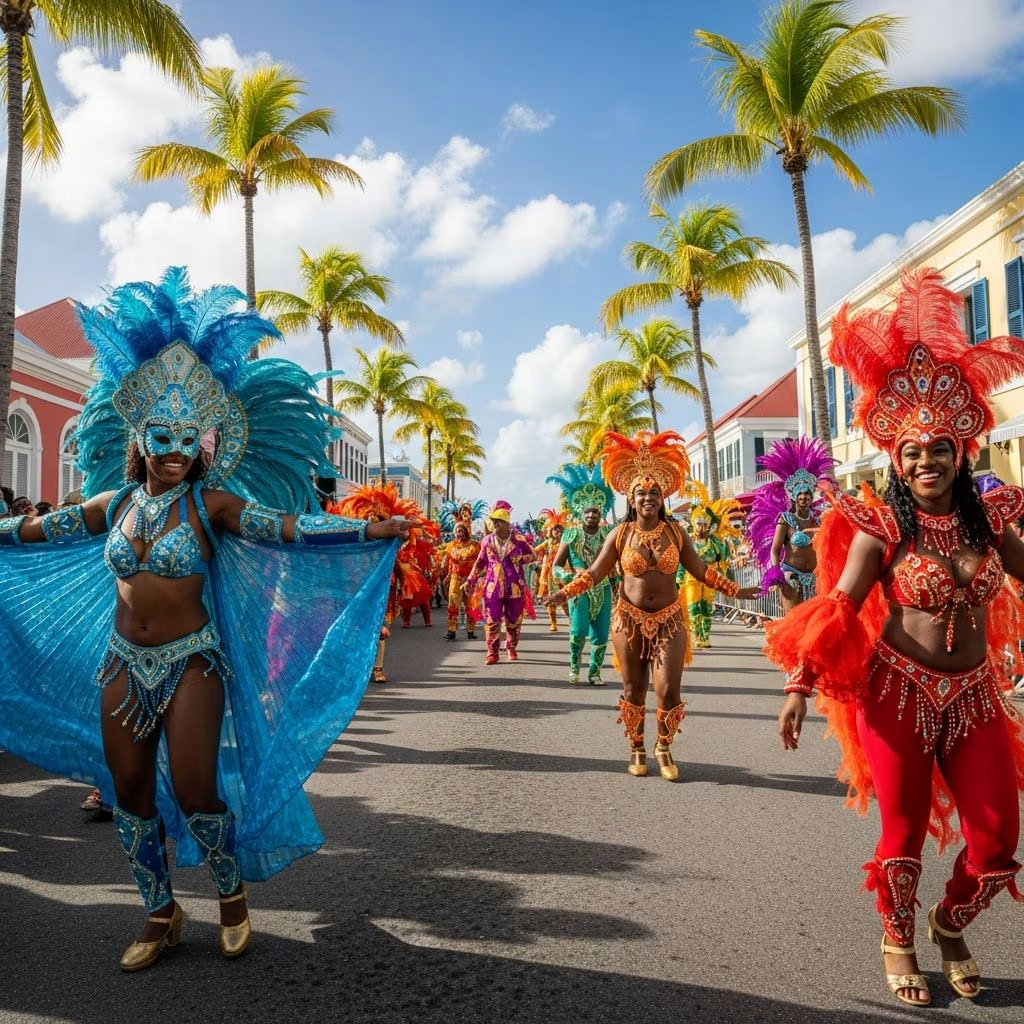
The children’s and adult parades represent the most visually spectacular components of the St. Thomas Carnival experience. These processions feature elaborate costumes that took months to design and construct, steel pan orchestras performing live music, synchronized dance troupes executing choreography perfected through months of rehearsal, and multi-story floats depicting cultural narratives and artistic themes.
Parade participation occurs on Main Street, with the children’s procession typically scheduled for Friday morning and the adult parade occupying Saturday morning time slots. The extended parade route means that spectators can position themselves at various points to capture different sections of the procession, each offering unique visual perspectives and performance moments.
Many travelers elect to participate in parades rather than simply spectate. Joining an organized troupe or costume band provides structured parade experience, access to coordinated costume themes, and community integration within a defined group. Many troupes offer all-inclusive packages that extend beyond parade participation to encompass access to exclusive fetes, accommodations within festival venues, meal provisions, and beverage service.
The Carnival Food Fair represents an essential component of the festival experience, showcasing authentic Virgin Islands cuisine alongside Caribbean regional specialties. Held at Crown Bay, this culinary exhibition offers visitors direct access to traditional dishes that define island food culture. Johnnycakes, a fried cornmeal creation that appears on local tables throughout the year, become festival staples. Stuffed lobster represents the height of seafood preparation, with fresh Caribbean lobster topped with breadcrumb mixtures and baked until golden. Beef and saltfish patés—fried pastry envelopes containing savory fillings—provide portable options for festival-goers moving between events.
Beyond these signature dishes, the Food Fair offers Trinidadian doubles (fried flatbreads topped with chickpea curry), mutton roti (curried lamb wrapped in thin flatbread), barbecued meats seasoned with local spice blends, and contemporary Caribbean fusion dishes that reflect modern culinary creativity. The cumulative olfactory experience—with chicken curry, grilled seafood, and fried foods creating a sensory symphony—becomes part of the festival’s memorable character.
Visitors often overlook the Food Fair’s cultural significance, viewing it simply as a dining opportunity. However, the festival’s culinary offerings represent intergenerational knowledge transmission, with family recipes and traditional preparation methods passed from cooks to apprentices and demonstrated through commercial preparation. Many food vendors represent family enterprises that operate year-round but attain prominence during Carnival through expanded production and festival market positioning.
The St. Thomas Carnival musical programming spans multiple performance categories, reflecting different festival traditions and contemporary entertainment trends. Calypso Monarch competitions feature artists performing original compositions that often address social issues, political topics, or playful social commentary through rhyming lyrics and memorable melodies. Steel pan performances by orchestras create distinctive Caribbean musical textures that energize parade participation and festival atmosphere.
Recent festival lineups have featured internationally recognized artists including performers like Busta Rhymes, Steel Pulse, and regional soca stars Destra and Alison Hinds. These headline performances typically occur during specific evening slots at the Carnival Village, with precise scheduling announced as the festival approaches. The inclusion of international acts reflects the festival’s evolution and growing appeal to tourists, though local and regional artists maintain programming prominence throughout the event calendar.
Navigating St. Thomas during Carnival requires advance planning, particularly regarding transportation. The Carnival Village and surrounding festival venues operate in downtown Charlotte Amalie, where vehicle parking becomes extremely limited during festival nights. Most experienced attendees coordinate taxi services or arrange rides through local drivers who maintain availability throughout festival evenings.
Establishing direct relationships with reliable drivers offers significant advantages over corporate car services, reducing costs substantially while ensuring familiarity between drivers and passengers. Many local drivers position themselves in anticipation of late-night demand, though having a pre-arranged contact number ensures reliable transportation access without depending on immediate street-side availability. Public transportation options remain limited during evening hours, making private transportation coordination essential for those without personal vehicles.
St. Thomas offers accommodation options across multiple price ranges, from luxury resort properties to budget-friendly guesthouses. Festival season typically involves premium pricing across all accommodation categories, with rooms commanding higher nightly rates than off-season periods. Advance booking becomes essential, particularly for popular properties and budget-conscious travelers seeking optimal value.
Budget planning for the Carnival experience benefits from advance consideration of anticipated expenditures. While the Carnival Village nightly programming remains free, meals, beverages, transportation, entertainment fetes, and parade participation through organized troupes represent significant expenses. Travelers with proper advance planning can experience the festival affordably compared to other Caribbean carnival celebrations, though the convenience of domestic travel (requiring no passport) creates price premiums relative to off-season island travel.
St. Thomas Carnival presents distinctive advantages for travelers experiencing Caribbean carnival celebrations for the first time. The absence of passport requirements eliminates international travel complexity, reducing administrative barriers to participation. The festival’s compressed timeframe compared to month-long celebrations elsewhere means that visitors can experience primary events within a manageable duration, making week-long trips feasible for those with limited vacation time.
The Carnival Village’s free programming ensures that budget-conscious travelers can access authentic entertainment and cultural experiences without premium event pricing. This accessibility distinguishes St. Thomas Carnival from certain other Caribbean celebrations where participation requires extensive advance ticket purchases or exclusive event access. The community-oriented atmosphere, rooted in genuine cultural celebration rather than purely commercial entertainment, provides first-time attendees with meaningful cultural engagement.
The post-Easter timing creates favorable travel conditions, as most North American Easter holidays conclude by late April, potentially reducing accommodation competition from other travelers. The tropical climate in late April typically features warm temperatures without the most intense heat of summer months. However, the season approaches the Atlantic hurricane season onset, necessitating travel insurance considerations despite generally stable late-spring weather patterns.
Visitors attending St. Thomas Carnival should recognize that the festival represents genuine community celebration rather than a staged tourist attraction. Approach the experience with cultural respect, recognizing that participants are celebrating their heritage and identity. Engage respectfully with locals, support small vendors and artists, and prioritize observation and participation over exploitation or mockery of traditions.
