

 Travel Essentials
 Travel Essentials

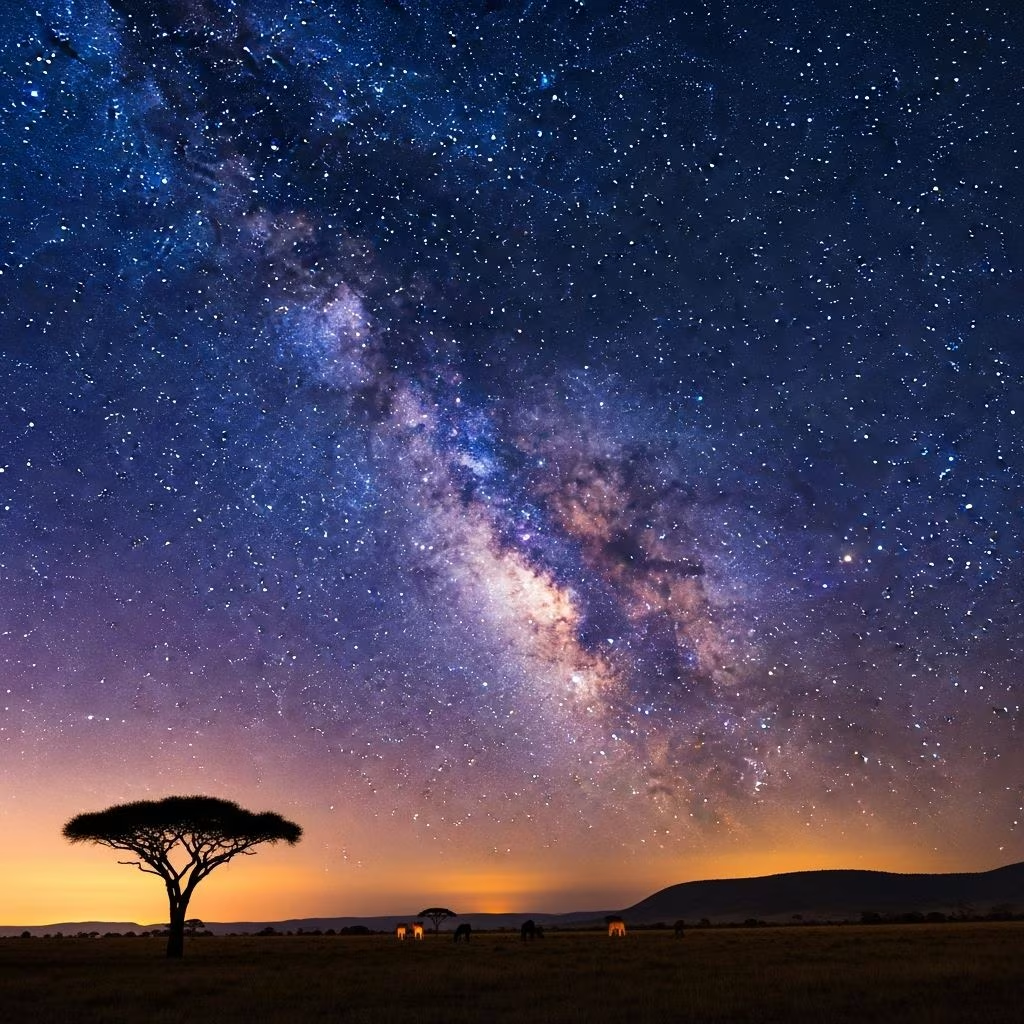
Explore Kenya's premier stargazing spots blending wildlife safaris with cosmic wonders under dark, unpolluted skies perfect for unforgettable nights.
 Travel Essentials
Kenya’s equatorial location and expansive wilderness create ideal conditions for stargazing, offering views of constellations from both the northern and southern hemispheres in a single night. Vast savannahs and remote conservancies provide dark skies with minimal light pollution, classified among the darkest on the Bortle Scale, perfect for witnessing the Milky Way’s luminous band and deep-sky objects.
Positioned near the equator, Kenya allows skywatchers to observe a unique blend of celestial phenomena. Open landscapes free from urban glow ensure thousands of stars emerge on moonless nights, while luxury lodges enhance the experience with star beds and guided astronomy sessions. The combination of wildlife safaris by day and cosmic spectacles by night defines this emerging astro-tourism trend.
Minimal atmospheric distortion in high-altitude and desert regions sharpens views of planets like Saturn and meteor showers. Seasonal green periods following rains further clarify the atmosphere, making April-May and October-November prime times. Kenya’s commitment to sustainable tourism preserves these pristine skies for future generations.
From iconic reserves to secluded conservancies, Kenya boasts diverse stargazing venues. Each spot pairs exceptional astronomy with thrilling wildlife encounters.
The Masai Mara’s endless plains near the Oloololo Escarpment deliver 360-degree sky views with little interference. Luxury camps feature star decks for astrophotography and casual observation of the Milky Way. Elephants roam nearby as guests recline under mosquito nets, blending safari adventure with stellar immersion.
Mount Kilimanjaro’s silhouette frames Amboseli’s wide-open vistas, where camping sites reveal vivid deep-sky objects. Low light pollution ensures meteor showers and galactic cores shine brightly against the horizon. This southern Rift Valley gem offers photogenic backdrops for capturing constellations.
Samburu’s Bortle 1 skies rank among Earth’s darkest, showcasing the Milky Way’s textured glow and multiple planets from September to January. Eco-lodges like Saruni Samburu elevate stays with stone decks overlooking volcanic rock formations. Remote positioning guarantees uninterrupted celestial displays.
High-altitude ranches in Laikipia, including Loisaba’s Star Beds, position guests amid scrubland where leopards prowl beneath the stars. Beds roll onto open decks for direct galaxy gazing, protected only by netting. This northern region’s conservancies prioritize dark sky preservation alongside conservation efforts.
The Jade Sea’s desert clarity at Central Island National Park rivals global hotspots, with volcanoes steaming below glittering skies. Virtually zero light pollution suits deep-sky enthusiasts amid crocodile-filled waters. Northern Kenya’s arid expanse, including Marsabit and Isiolo, remains underexplored for its cosmic potential.
Tucked in lesser-visited hills, Ol Donyo provides roof terraces and private pools for star beds. Sustainable practices maintain the area’s purity, offering romantic nights under endless canopies. Volcanic landscapes add drama to equatorial stargazing.
Ngare Ndare’s canopy walkways suspend campers amid trees, transitioning to star-filled voids overhead. North of Mount Kenya, this forested escape demands self-sufficiency but rewards with immersive Milky Way views. Mount Kenya’s slopes offer additional high-elevation clarity.
Kenya’s lodges integrate stargazing seamlessly into safari luxury.
Many offer guided tours with telescopes, nyama choma dinners, and equatorial hemisphere views.
Visit during new moon phases for peak darkness. Green seasons provide post-rain clarity.
| Season | Highlights | Weather Notes |
|---|---|---|
| September-January | Multiple planets, dry skies | Warm, low rain |
| April-May | Refreshed clarity post-rains | Lush landscapes |
| October-November | Green season stars | Mild showers |
Pack binoculars, red flashlights, and insect repellent. Book astronomy packages combining game drives and night walks. Respect no-trace principles to protect skies.
Equatorial latitude reveals northern and southern constellations, paired with Bortle 1 dark skies in remote areas.
Luxury lodges ensure security with guided experiences amid wildlife.
Lodges provide telescopes; personal binoculars enhance views.
Yes, many camps offer family-friendly star decks and educational sessions.
Day safaris transition to evening astronomy at the same conservancies.
Sustainable tourism limits lights in reserves, supporting biodiversity and astro-tourism growth. Visitors contribute by minimizing personal light use. Kenya leads Africa in balancing adventure with celestial heritage.
