

 Travel Essentials
 Travel Essentials

Discover Stockholm's unique island geography, eco-conscious lifestyle, culinary scene, and outdoor adventures across Scandinavia's most dynamic capital city.
 Travel Essentials
Nestled across fourteen distinct islands in southeastern Sweden, Stockholm represents one of Scandinavia’s most compelling urban destinations. The Swedish capital seamlessly blends historical significance with contemporary innovation, creating an environment where medieval architecture coexists with cutting-edge design, and pristine natural landscapes frame a thriving metropolis. This guide explores what makes Stockholm a distinctive travel destination and how to navigate its many offerings.
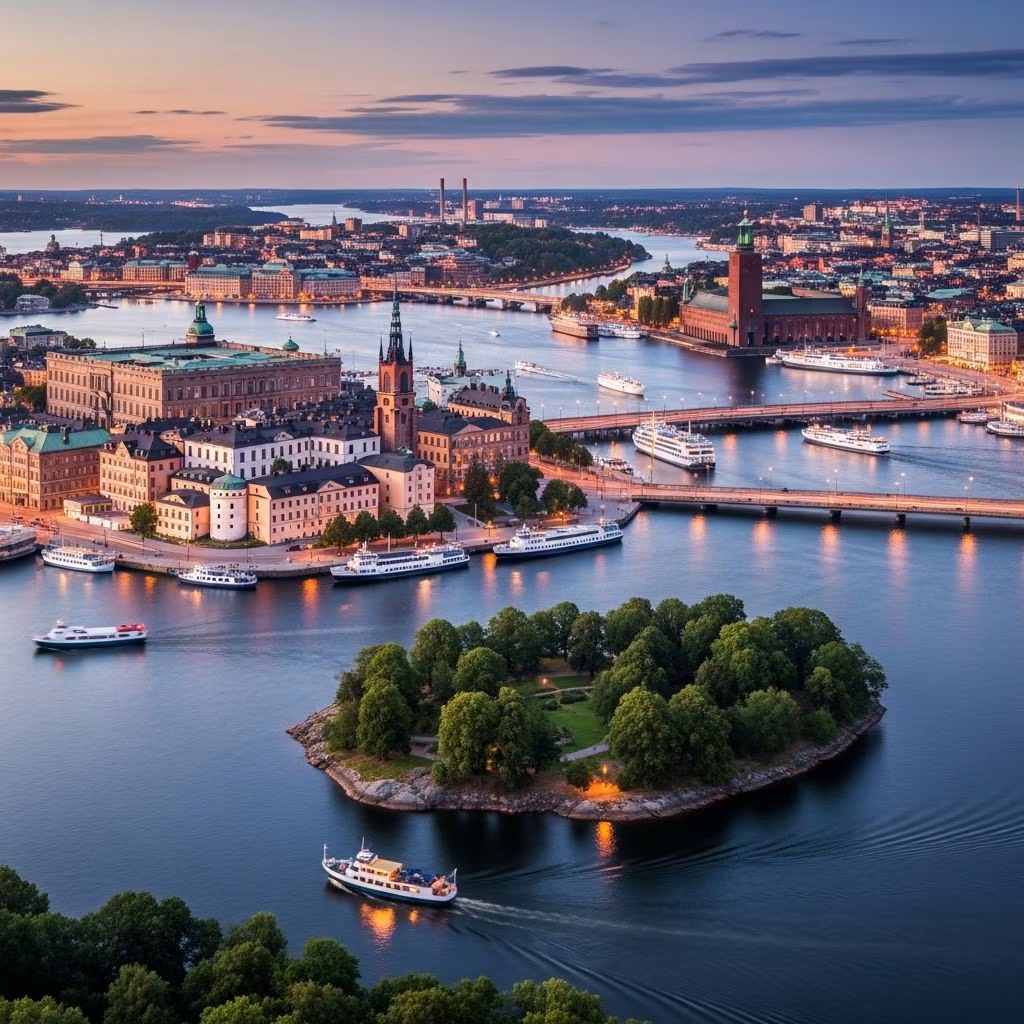
Stockholm’s distinctive character stems fundamentally from its unusual geography. Rather than developing as a traditional single-center city, Stockholm evolved across multiple islands, each contributing its own personality and function to the urban fabric. This archipelago setting means that water—whether canals, harbors, or open vistas—appears as a constant visual element throughout the city, distinguishing it from other European capitals.
The 14 islands that comprise Stockholm range from historic cores to residential neighborhoods, from cultural hubs to natural preserves. This distributed layout necessitates a different approach to urban exploration compared to cities built on continental landmasses. Rather than walking a linear route through neighborhoods, visitors navigate between distinct island communities, each accessible through bridges, ferries, or waterside pathways.
Each island or district within Stockholm offers distinct characteristics that appeal to different traveler interests and preferences:
Beyond its physical attributes, Stockholm embodies a particular approach to urban living that reflects broader Swedish values. The city has earned recognition as a model for sustainable, forward-thinking metropolitan development. This manifests in numerous ways that shape the visitor experience.
The prevalence of eco-conscious practices permeates Stockholm society. Environmental awareness influences everything from transportation choices to food sourcing. The city’s startup ecosystem particularly emphasizes sustainable technology and innovation. Meanwhile, a flourishing independent music scene, vibrant café culture, and outdoor recreation culture create an environment where personal health, social connection, and environmental stewardship intermingle.
Stockholm residents demonstrate a powerful affinity for outdoor activities despite its northern latitude. The combination of archipelago access, abundant parks, and forest trails means that water sports, hiking, cycling, and nature exploration constitute core recreational pursuits rather than occasional weekend activities.
Understanding Stockholm’s transportation landscape ensures smooth navigation during visits:
Stockholm’s food scene reflects both traditional Swedish gastronomy and contemporary culinary innovation. The city hosts numerous Michelin-starred establishments that showcase Nordic cuisine’s sophisticated evolution. High-end restaurants present tasting menus featuring local ingredients and seasonal preparations.
For visitors navigating dining expenses, understanding local customs proves valuable. Many restaurants display signs reading “Dagens rätt” or “Dagens Lunch,” designating the dish of the day at reduced prices. These offerings typically represent excellent value while providing authentic local cuisine. Casual dining options, food halls, and market-based eateries offer additional alternatives to fine dining venues.
Swedish food culture emphasizes seasonal ingredients, sustainability, and respect for natural flavors. Traditional preparations continue alongside modern reinterpretations, allowing visitors to sample both heritage dishes and innovative contemporary cuisine within single dining experiences.
Stockholm’s cultural institutions rival those of much larger European capitals. Beyond the Royal Palace, numerous museums explore Swedish history, art, design, and maritime heritage. Many concentrate on Djurgården, making that island a logical cultural destination.
The Vasa Museum houses the well-preserved 17th-century warship that sank during its maiden voyage. This unique artifact draws enormous international attention, representing a singular example of maritime history. Additional institutions explore everything from Nordic art traditions to Scandinavian design innovation, providing context for understanding Swedish cultural contributions to broader European narratives.
Stockholm’s exceptional natural setting enables outdoor recreation within or immediately adjacent to the urban core. The Royal National City Park encompasses 10.4 square miles of forests, meadows, trails, and water access—an expanse roughly eight times larger than New York City’s Central Park. This enormous protected area allows extensive hiking and exploration without requiring transportation far from central Stockholm.
Visitors can explore the city’s islands by foot, bicycle, kayak, or stand-up paddleboard. Each mode of transportation reveals different perspectives and enables access to distinct landscapes. Forest trails, waterfront paths, and park areas provide opportunities for both vigorous outdoor activity and leisurely nature observation.
The Stockholm archipelago extends beyond the urban islands, comprising thousands of islands—many tiny and uninhabited. Day trips to archipelago destinations like Sandhamn provide experiences of traditional Swedish coastal villages and pristine natural environments while remaining accessible from the city.
| Aspect | Key Information |
|---|---|
| Store Hours | Many shops and attractions open at 10-11 AM, close by 5-6 PM. Plan shopping and visits accordingly. |
| Transportation | Public transit preferred; cars discourage by congestion and parking limitations. |
| Dining Value | Look for “Dagens rätt” for discounted daily specials; eating out otherwise costs significantly. |
| Weather | Northern location means seasonal variations in daylight; summer offers extended daylight, winter brings darkness. |
| Island Navigation | With 14 islands to explore, prioritize based on interests; comprehensive coverage requires extended stays. |
Rather than attempting comprehensive coverage of all Stockholm neighborhoods during limited visits, prioritizing based on personal interests proves more satisfying. History enthusiasts gravitate toward Gamla Stan’s medieval streets and palace grounds. Nature lovers prioritize Djurgården’s parks and forest systems. Those seeking contemporary culture concentrate on Södermalm and surrounding areas hosting galleries, independent venues, and creative businesses.
Visitors with extended time benefit from island exploration via water-based transit. Canal cruises provide overviews of Stockholm’s 14 islands while narrating historical context and geographical significance. These journeys pass through narrow waterways, historic building façades, and verdant green spaces, offering perspectives impossible to achieve on foot.
Stockholm’s northern latitude creates dramatic seasonal variations affecting the visitor experience. Summer months feature extended daylight, with the sun barely setting in late June—ideal for maximizing outdoor exploration. Winter brings extended darkness and cold temperatures, but also snow-covered landscapes and unique Nordic atmospheric qualities. Spring and autumn offer moderate conditions and fewer tourists than peak summer.
These seasonal differences influence what activities prove practical and comfortable. Summer visitors maximize outdoor recreation, while winter visitors prioritize indoor museums and covered attractions. Each season presents distinct Stockholm experiences rather than simply variations on a single experience.
Stockholm offers diverse lodging options ranging from intimate boutique hotels to luxury waterfront establishments. The Grand Hôtel represents the classic grand hotel experience, overlooking Stockholm’s waterfront and skyline. Contemporary alternatives like Ett Hem provide smaller, more personal settings within historic townhouses, creating home-like atmospheres for extended stays.
Accommodation location significantly affects the Stockholm experience. Staying within Gamla Stan provides immediate historical immersion but involves older buildings and compact quarters. Djurgården accommodations prioritize nature access and quiet. Central locations facilitate convenient district exploration but reduce the peaceful atmosphere of residential islands.
Summer (June-August) provides extended daylight and pleasant weather ideal for island exploration and outdoor activities. However, this peak season brings larger crowds and higher prices. May and September offer moderate temperatures and fewer tourists. Winter appeals to those seeking Nordic atmosphere and snow-covered landscapes.
Three to four days allows exploration of major districts (Gamla Stan, Djurgården, Östermalm, Södermalm), museum visits, and casual island wandering. Extended stays enable more thorough neighborhood investigation and day trips to archipelago destinations.
Stockholm ranks among Europe’s pricier cities for dining and accommodations. However, many museums, parks, and outdoor activities offer free or low-cost access. Utilizing “Dagens rätt” dining specials and public transportation passes reduces expenditure.
Swedish constitutes the official language. However, English proficiency among younger Stockholmers is exceptionally high, with most providing assistance to English-speaking visitors.
Yes—car ownership is uncommon among Stockholm residents due to traffic congestion and parking limitations. Extensive public transit, ferries, and bicycle infrastructure make vehicles unnecessary for urban exploration.
