

 Travel Essentials
 Travel Essentials

Explore Stonehenge's 5,000-year history, from Neolithic origins to Bronze Age stones, its astronomical alignments, and modern visitor guide including tickets, access, and best times to visit.
 Travel Essentials
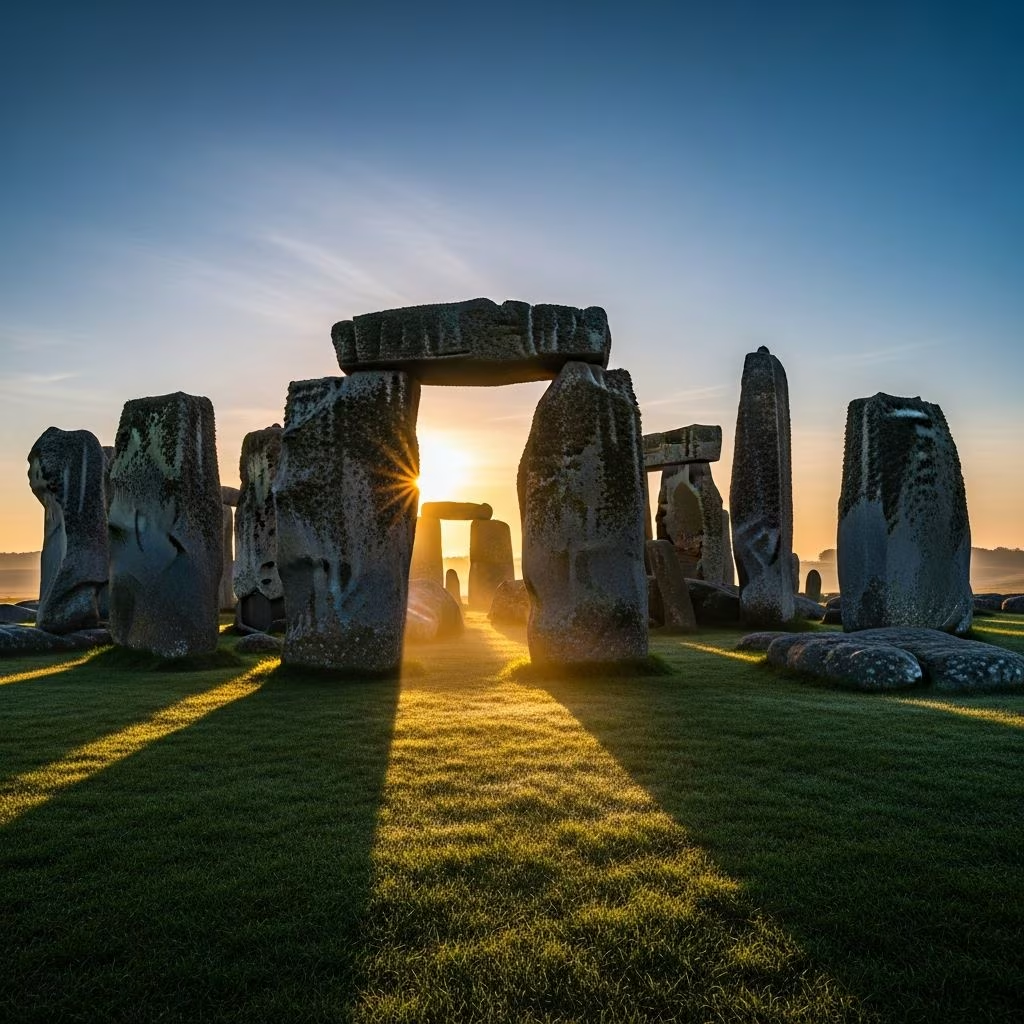
Standing majestically on the windswept Salisbury Plain in Wiltshire, England, Stonehenge captivates millions with its colossal stones arranged in a precise circular formation. Constructed over millennia, this prehistoric marvel served as a ceremonial center, burial ground, and astronomical observatory for ancient peoples.
The story of Stonehenge begins around 3100 BC during the late Neolithic period, when early farmers transformed the landscape by clearing woodlands on the chalk downlands. The initial phase involved digging a massive circular ditch, approximately 100 meters in diameter, surrounded by an outer bank formed from the excavated chalk. This henge enclosure featured two entrances, marking it as one of Britain’s earliest monumental structures.
Preceding this, the surrounding area buzzed with activity. Around 3500 BC, Neolithic communities erected causewayed enclosures like Robin Hood’s Ball and linear earthworks known as cursuses, including the Greater Cursus north of the site. These features likely influenced the choice of location, creating a sacred landscape that drew people for rituals and gatherings.
By 2900–2600 BC, the site saw further development with smaller postholes indicating timber structures, possibly roofs or alignments. Around 2600 BC, builders shifted to stone, digging Q and R Holes for what might have been a double ring, though these plans were abandoned.
The iconic phase arrived between 2600–2400 BC: massive sarsen stones, sourced from nearby Marlborough Downs, formed an outer circle of 30 uprights (up to 4.1 meters high, 25 tons each) topped with lintels. Inside, a horseshoe of five trilithons (two uprights with a lintel) dominated, the largest weighing 50 tons.
| Construction Phase | Date (BC) | Main Features |
|---|---|---|
| Phase 1: Earthwork Henge | ~3100 | Circular ditch, bank, Aubrey Holes |
| Phase 2: Timber Structures | 2900–2600 | Postholes for wooden posts |
| Phase 3: Sarsen Circle | 2600–2400 | Outer sarsen circle and horseshoe |
| Phase 4: Bluestones | 2400–2200 | Bluestone rearrangement from Wales |
Bluestones, smaller spotted dolerites (up to 4 tons), originated 225 km away in Wales’ Preseli Hills. Transported by sea and overland circa 3000 BC, they formed inner circles and may have marked graves. Final rearrangements occurred around 2400–2200 BC, with activity persisting until 1600 BC.
Stonehenge aligns with celestial events, its northeast entrance framing the midsummer sunrise (Heel Stone) and midwinter sunset. This solar calendar likely guided Neolithic farmers in tracking seasons for agriculture and festivals.
Spirituality permeated the site: enormous effort in quarrying, hauling, and erecting stones (using ramps, sledges, and levers) underscores its ritual importance. It hosted feasts, burials, and gatherings, evolving from a cremation cemetery to a Bronze Age healing center, evidenced by pig bones from distant regions indicating pilgrims.
After 1600 BC, use waned, but Iron Age hillforts like Vespasian’s Camp appeared nearby. Romans (AD 43 onward) visited frequently, leaving pottery and coins, possibly for rituals. Saxon burials followed, then medieval folklore linked it to Merlin and giants.
Rediscovered in the 17th century by scholars like John Aubrey and William Stukeley, it inspired Romantic artists. Today, protected as a UNESCO World Heritage Site since 1986, it’s managed by English Heritage.
Stonehenge lies 13 km north of Salisbury, accessible by car (A303), bus (Stonehenge Tour from Salisbury), or train to Salisbury then shuttle. The visitor center, 1.5 miles away, offers free shuttles; walking the full circuit takes 30 minutes.
Facilities include a Neolithic-style café, museum with 300+ artifacts (e.g., human remains, tools), and shop. Accessibility: wheelchairs available; paths are smooth.
Midsummer solstice (June 20/21) draws 20,000+ for sunrise; managed access from 19:00 previous day. Midwinter (Dec 21/22) offers sunset views. Book via English Heritage; expect crowds, security, and no alcohol.
Explore the Stonehenge landscape: Avenue to River Avon, Woodhenge (timber circle replica), Durrington Walls (feasting site). Avebury (larger henge, 40 km north) and Salisbury Cathedral (Magna Carta) complement visits.
| Site | Distance | Highlight |
|---|---|---|
| Avebury | 40 km | Largest stone circle; village within |
| Woodhenge | 3 km | Bronze Age timber monument |
| Salisbury Cathedral | 13 km | Tallest spire in UK |
Visitor numbers (1.5M/year) prompted a £27M visitor center (2013), moving parking away. A tunnel project on A303 aims to reduce traffic. Touching stones is prohibited; drones banned.
Over 1,500 years, from ~3100 BC to 1600 BC, in multiple phases.
Neolithic and Bronze Age peoples, likely farmers and herders from local and Welsh regions.
Yes, the axis aligns with summer solstice sunrise and winter sunset.
Standard tickets allow outer circle views; inner access via guided tours only.
Early morning or weekdays in spring/autumn; book ahead.
From its Neolithic beginnings as a henge to a Bronze Age icon, Stonehenge embodies human ingenuity and spirituality. Modern science reveals its complexities—DNA from remains shows diverse origins, isotope analysis confirms Welsh bluestones. Visiting transports you to prehistoric Britain, where ancient rituals echo in the stones.
Whether drawn by history, astronomy, or mystery, Stonehenge offers profound connection. Plan thoughtfully, respect the site, and witness a testament to our ancestors’ vision.
