

 Travel Essentials
 Travel Essentials

Explore the impact of the Strait of Hormuz blockade on cruise lines, from stranded vessels to canceled seasons and passenger disruptions.
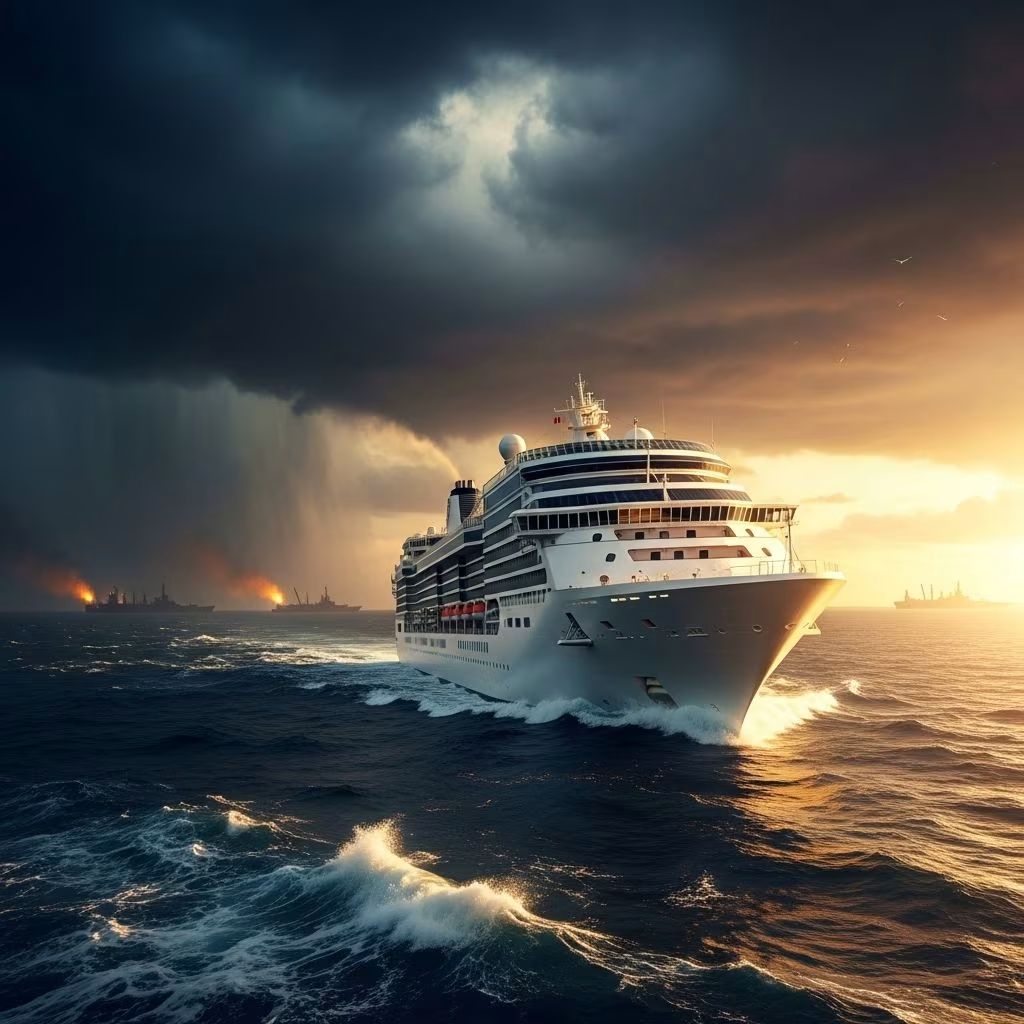 Travel Essentials
The Strait of Hormuz, a narrow waterway connecting the Persian Gulf to the Gulf of Oman, has become a flashpoint for global travel disruptions in 2026. Since late February, escalating tensions involving Iran, the United States, and Israel have led to a near-total halt in commercial traffic, stranding several cruise ships and prompting widespread itinerary changes across major lines.
This vital chokepoint, just 21 miles wide at its narrowest, handles about 20% of the world’s oil trade under normal conditions. Iranian forces issued warnings on February 28, effectively closing it to most maritime movement, citing security concerns amid regional conflicts. The blockade persisted for two months, creating unprecedented challenges for the cruise industry operating in the Arabian Gulf.
Cruise operators with vessels in ports like Dubai, Doha, and others faced immediate dilemmas: remain docked indefinitely or risk transit amid threats of military action. Reports indicate demands for high tolls—up to a million dollars per passage—further complicated safe passage.
Several high-profile ships were caught in the Gulf when the strait closed. Here’s a breakdown of key affected vessels based on recent tracking:
At its peak, up to 10 ships were impacted, including those from Costa, AIDA, and Explora Journeys, which abandoned Middle East deployments entirely. Passengers on board during the initial closure experienced extended stays in ports, with cruise lines providing meals and activities while arranging potential air charters.
The ripple effects extended far beyond the Gulf. Lines canceled entire seasons:
| Cruise Line | Affected Ships | Actions Taken |
|---|---|---|
| MSC Cruises | MSC Euribia | Canceled European voyages; resumed post-transit. |
| TUI Cruises | Mein Schiff 4, 5 | Canceled Mediterranean sailings; relocated to Europe. |
| Celestyal Cruises | Discovery, Journey | April sailings axed; eyeing May Greece restart. |
| Costa, AIDA, Explora | Various | Full Middle East season abandonment; shifts to Caribbean/Europe. |
Repositioning voyages—essential for seasonal shifts from winter Gulf runs to summer Mediterranean or Northern Europe—were delayed by weeks, costing millions in lost revenue and logistics. TUI, for instance, scrapped mid-April Crete-bound sailings for Mein Schiff 5.
On April 17-18, Iran briefly declared the strait open to commercial traffic, sparking a rush of transits. Four ships passed in 45-minute intervals on Saturday, followed by a fifth on Friday, per tracking data. This window closed swiftly less than 24 hours later after U.S. refusal to lift its naval measures, with reports of gunfire incidents halting further movement.
Cruise companies emphasized coordinated efforts with local and international authorities, highlighting the precarious security situation. MSC noted its Euribia’s passage was “completed in close coordination,” allowing a return to original schedules.
For those onboard during the crisis, life shifted to port-based routines. Forums report passengers enjoying onboard amenities while docked, though anxiety over escalation was common. Cruise lines prioritized safety, avoiding risky transits and exploring air evacuations.
U.S. Navy escorts for oil tankers raised questions about passenger vessel protection, but no such program extended to cruises, leaving them reliant on diplomatic channels. Travelers received refunds or credits, but disruptions to summer plans lingered.
Beyond cruises, the blockade slashed overall strait traffic by over 95%, per trackers. For vacationers, Middle East itineraries vanished, with operators pivoting to the Mediterranean, Caribbean, and Alaska. Bookings for alternative routes surged, but at higher costs due to rushed redeployments.
Insurance claims spiked, and ports like Dubai saw prolonged ship berthings, straining facilities. The fluid situation—reopening rumors persist—advises monitoring advisories from the U.S. State Department and cruise lines.
As of late April 2026, the strait remains tense, with no guaranteed stability. Lines are cautiously optimistic: Celestyal hopes for Greek restarts, while MSC affirms its Europe schedule. Long-term, expect scaled-back Gulf presence, favoring safer Red Sea or Indian Ocean routes.
Geopolitical analysts warn of prolonged volatility, potentially reshaping cruise maps for 2026/27. Operators may invest in flexible itineraries and contingency fleets.
As of April 2026, passages are sporadic and risky following a brief April 17-19 window. Most traffic halted again amid tensions.
If originally from a Gulf-repositioned ship, yes—many were canceled or delayed. Confirm with your operator.
Yes, major lines offer full refunds or future cruise credits. Contact guest services promptly.
Currently high-risk; lines prioritize docking over transit. Follow official advisories.
Northern Europe, Caribbean, and Alaska are seeing increased deployments from affected ships.
