


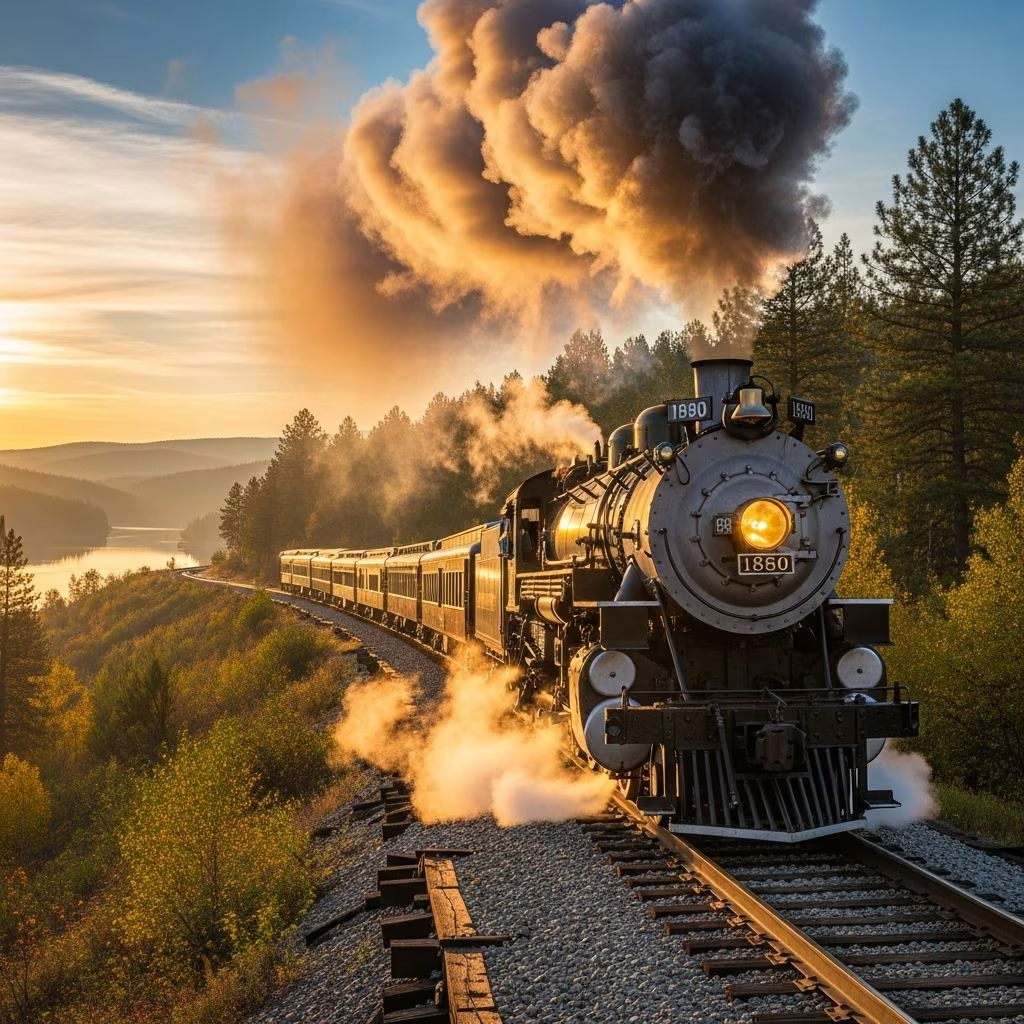
The romance of rail travel has captivated travelers for nearly two centuries, and one historic railroad continues to preserve this golden era of transportation. Established in 1832, this venerable institution represents a living museum of railway heritage, transporting passengers through picturesque countryside while maintaining the authentic experience of early 20th-century train travel.
A Century and a Half of Continuous Operation
Founded on June 9, 1832, this heritage railroad stands as the oldest continuously operating standard-gauge railroad in the western hemisphere and holds the distinction of being the oldest public utility in its state. The railroad was conceived with practical economic purposes in mind—local residents sought to establish a direct connection to broader trade networks and increase their town’s commercial prosperity. What began as a strategic transportation solution has evolved into one of the nation’s most beloved heritage attractions.
The original vision for the railroad involved creating a short line that would connect with larger regional rail networks, allowing passengers and freight to move efficiently through rural areas. Over its nearly two-century existence, this railroad has witnessed dramatic transformations in American society, including the Civil War, both World Wars, the rise of automobile travel, and the digital revolution. Despite these seismic shifts, the railroad has maintained continuous operations, making it a remarkable testament to heritage preservation and community commitment.
The Steam Locomotives: Engineering Marvels of Yesterday
The railroad currently operates an impressive fleet of five steam engines, representing some of the most powerful and beautifully crafted locomotives from the early 20th century. These mechanical masterpieces are complemented by the largest collection of historic wooden passenger coaches still in active service. Each locomotive tells a story of industrial innovation and craftsmanship.
The crown jewel of the fleet includes locomotive number 90, a coal-fired steam engine manufactured in 1924. This powerful machine exemplifies the engineering excellence of its era, producing dramatic plumes of black smoke as its massive wheels turn and clank rhythmically against steel rails. The locomotive reaches speeds of up to 40 kilometers per hour, sufficient to provide passengers with a genuine yet safe journey through the countryside.
Unlike many heritage railroads that operate replica trains or modern equipment disguised as historic vehicles, this institution maintains an authentic approach. The operational fleet consists entirely of carefully preserved period locomotives, each maintained to rigorous standards that ensure both mechanical functionality and historical accuracy.
The Passenger Experience: Stepping Into History
A journey aboard these heritage trains represents a complete sensory immersion into 19th and early 20th-century travel. The typical excursion covers approximately 45 minutes of round-trip travel, navigating through 2,500 acres of spectacular farmland in rural Pennsylvania. The landscape unfolds gradually from the train windows, revealing rolling hills, traditional agricultural fields, and charming settlements that appear largely unchanged from decades past.
The railroad offers passengers multiple accommodation options, catering to different preferences and budgets. The most economical choice features open-air cars with simple wooden seating, allowing travelers to experience the elements and feel a direct connection to the landscape. More refined passengers can opt for first-class accommodations featuring windows, dark green velvet upholstered chairs, and polished wood paneling that evokes the elegance of early 20th-century luxury travel.
The Mechanics of Journey
An interesting operational detail distinguishes this heritage railroad’s method of operation. The locomotive actually travels in reverse for the first portion of the journey, demonstrating the practical complexities of operating on a relatively short line. At the terminus, the locomotive is decoupled from the passenger cars. The locomotive then repositions itself at the opposite end of the train, where it is recoupled for the return journey. This operational technique reflects the ingenuity of railroad engineers in maximizing efficiency on limited track infrastructure.
Geographic Setting and Scenic Appeal
The railroad operates in Lancaster County, Pennsylvania, a region renowned for its agricultural heritage and picturesque Amish and Mennonite communities. This location provides an ideal setting for heritage rail tourism, as the surrounding landscape has retained much of its 19th-century character. Travelers experience genuine rural America rather than developed commercial areas, creating an authentic sense of historical transportation through a bygone era.
The specific route traverses farmland that has been cultivated for generations, passing by traditional structures and settlement patterns that reflect the region’s cultural heritage. The combination of preserved landscapes and operating heritage equipment creates a comprehensive historical experience that extends beyond merely riding in vintage trains.
Historical Timeline and Operational Evolution
The establishment of this railroad in 1832 responded to specific economic needs of a developing community. Town residents requested and obtained a railroad charter, and construction proceeded to lay approximately four-and-a-half miles of track—a distance that remains virtually unchanged to the present day. The railroad initially functioned as a connector line, linking local communities with the Philadelphia and Columbia Railroad, facilitating broader commerce.
Ongoing historical research continues to refine understanding of the railroad’s earliest operations. While precise documentation of the first train journey requires further investigation, current scholarship suggests scheduled train service began in December 1851. The railroad recently commemorated its 190th anniversary in 2022, marking nearly two centuries of continuous operation.
Evolution from Freight to Tourist Focus
The railroad’s primary function has shifted substantially over its lifetime. Originally conceived to transport both passengers and freight, the railroad eventually became integrated into larger Pennsylvania Railroad operations, with freight service becoming its primary function. The rise of automobile travel in the 20th century fundamentally altered transportation patterns, threatening the railroad’s economic viability. Rather than disappearing, however, the railroad successfully transitioned to heritage and tourist operations, discovering a new economic model based on preserving and celebrating its own history.
Operational Characteristics and Fleet Details
The heritage railroad maintains strict operational standards that balance historical authenticity with modern safety requirements. The fleet of five steam locomotives represents different eras and manufacturing standards, though all operate within contemporary regulatory frameworks.
| Aspect | Specifications |
|---|---|
| Track Length | 4.02 miles (6.47 kilometers) |
| Round-Trip Duration | Approximately 45 minutes |
| Maximum Speed | 40 kilometers per hour |
| Active Steam Locomotives | Five units |
| Fleet Type | Coal-fired steam engines with historic wooden coaches |
| Service Area | 2,500 acres of farmland |
Operational Services Beyond Passenger Excursions
While heritage passenger excursions represent the primary attraction, the railroad maintains additional operational capabilities. The organization provides contract railroad mechanical services to external customers, leveraging its substantial technical expertise and historic infrastructure. Freight service continues to serve area shippers, demonstrating that the railroad remains an active transportation asset rather than purely a museum attraction. This diversified operational model helps maintain the technical skills, equipment maintenance protocols, and workforce necessary to preserve and operate the heritage trains.
Preservation Challenges and Modern Considerations
Maintaining heritage railroad operations in the 21st century presents distinctive challenges. Steam locomotive technology, while magnificent, requires specialized knowledge, maintenance expertise, and supply chains that have largely disappeared from commercial operations. The railroad must train and retain personnel capable of maintaining these mechanical systems, a process requiring substantial investment in education and apprenticeship programs.
Simultaneously, the railroad operates under contemporary regulatory requirements, safety standards, and environmental considerations that did not exist during the original operational era. Balancing authentic historical reproduction with modern compliance requirements demands creative engineering solutions and ongoing investment in infrastructure upgrades.
Economic and Cultural Significance
The railroad generates substantial economic benefits for the surrounding region. Heritage rail tourism attracts thousands of visitors annually, creating employment opportunities and supporting local hospitality, dining, and retail businesses. Families traveling to experience the heritage railroad often extend their stays, visiting regional attractions including museums, artisanal establishments, and agricultural heritage sites.
Beyond economic considerations, the railroad serves as a vital cultural institution. It preserves tangible connections to transportation history, industrial heritage, and early American commerce. The railroad demonstrates how communities can creatively preserve historical assets while adapting to contemporary economic realities, offering lessons applicable to heritage preservation efforts nationwide.
Visitor Considerations and Practical Information
- Seasonal Operations: The railroad typically operates on a seasonal schedule, with expanded service during spring and summer months when weather conditions favor comfortable rail travel.
- Advance Planning: Popular travel periods often require advance reservations, particularly during weekends and holiday seasons when family visitation peaks.
- Accessibility: Passengers should inquire about accessibility accommodations, as historic equipment may present limitations for individuals with mobility challenges.
- Photography: The dramatic appearance of steam locomotives, particularly with smoke plumes, creates exceptional photography opportunities throughout the journey.
- Weather Preparedness: Open-air cars expose passengers to weather conditions; appropriate clothing for prevailing weather ensures comfort.
Frequently Asked Questions
- When was this railroad originally established?
- The railroad was founded on June 9, 1832, making it the oldest continuously operating standard-gauge railroad in the western hemisphere.
- How long is the train journey?
- The round-trip excursion requires approximately 45 minutes of travel time through rural farmland.
- What propels the trains?
- The trains are hauled by authentic coal-fired steam locomotives maintained in original or restored condition.
- Are there different seating options?
- Yes, passengers can choose between open-air cars with basic wooden seating or first-class accommodations featuring windows and upholstered seating.
- What is the track length?
- The operational track measures 4.02 miles (6.47 kilometers), nearly identical to the original track laid in the 1830s.
- Can the railroad be visited year-round?
- Operations typically follow a seasonal schedule, with expanded service during warmer months.
Future Perspectives and Ongoing Preservation
The railroad’s continued success depends on sustained community commitment, visitor interest, and economic viability of heritage rail tourism. Museum institutions and historical organizations nationally recognize this railroad as a significant cultural asset requiring preservation. Ongoing restoration projects ensure that historic equipment continues operating safely while maintaining historical integrity.
As America increasingly recognizes the value of heritage preservation and authentic historical experiences, institutions like this heritage railroad occupy an increasingly important position in cultural tourism and educational programming. The railroad demonstrates that historical assets, when thoughtfully preserved and creatively operated, can contribute meaningfully to contemporary communities while serving educational and entertainment purposes.
References
- Strasburg Rail Road Wikipedia — Wikipedia. Accessed April 2026. https://en.wikipedia.org/wiki/Strasburg_Rail_Road
- All Aboard America’s Oldest Operating Railroad — Voice of America. https://www.voanews.com/a/arts-culture_all-aboard-americas-oldest-operating-railroad/6172405.html
- Oldest Operating Railroad — Voice of America. https://www.voanews.com/a/6165151.html
- How We Became America’s Oldest Continuously Operating Railroad — Strasburg Rail Road Official Site. https://strasburgrailroad.com/strasburg-rail-roads-history/
- Insider’s Guide to the Strasburg Rail Road — Discover Lancaster. https://www.discoverlancaster.com/blog/strasburg-rail-road/
- Strasburg Rail Road Home — Strasburg Rail Road Official Site. https://strasburgrailroad.com

