

 Travel Essentials
 Travel Essentials

Discover the real Setouchi locations behind Studio Ghibli films, from Spirited Away’s Dogo Onsen to Ponyo’s Tomonoura and cloud-castle views.
 Travel Essentials
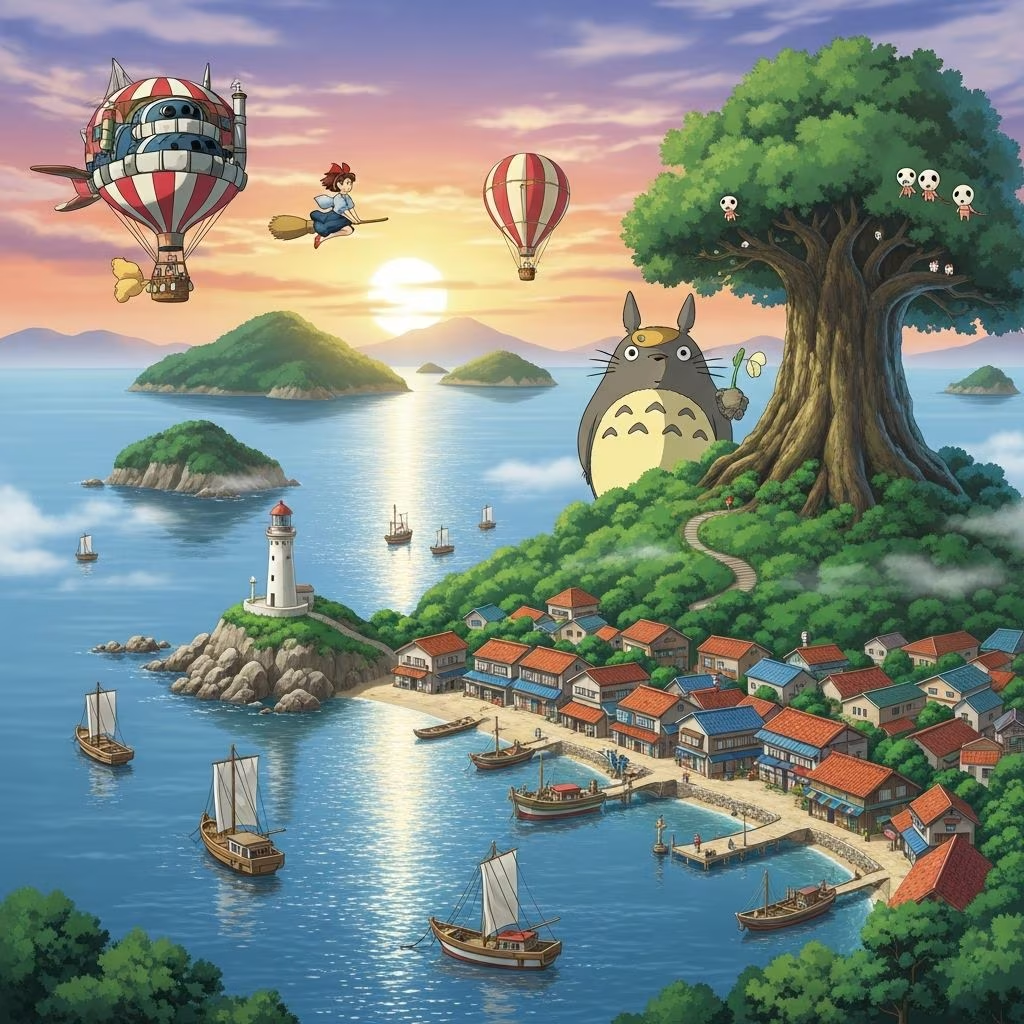
The enchanting worlds created by Studio Ghibli have captivated audiences worldwide, transporting viewers to fantastical realms filled with wonder and imagination. What many fans may not realize is that beneath the animated magic lies a rich tapestry of real locations that inspired director Hayao Miyazaki and his creative team. The Setouchi region, an expansive area comprising seven prefectures and thousands of islands positioned within and around the Seto Inland Sea, serves as a primary muse for some of Studio Ghibli’s most celebrated films. This comprehensive guide explores how travelers can connect with the authentic landscapes and cultural sites that shaped these cinematic masterpieces.
The Setouchi area represents far more than merely a collection of scenic destinations. This region encompasses a substantial portion of Japan’s cultural and historical heritage, with the Seto Inland Sea functioning as both a natural wonder and a historical crossroads. Described more accurately as an enormous bay rather than a traditional sea, these waters maintain a characteristically calm demeanor, with tides that have historically facilitated trade and cultural exchange across centuries.
The accessibility and inherent beauty of Setouchi have captivated visitors and creative minds alike for generations. From ancient maritime traders to contemporary artists and filmmakers, the region continues to inspire those seeking authentic cultural experiences and natural splendor. The landscape’s gentle mountains, pristine waters, and well-preserved traditional towns create an atmosphere uniquely suited to creative inspiration.
One of Studio Ghibli’s most internationally recognized films, Spirited Away, features an enchanting bathhouse that has become iconic in animation history. The film’s depiction of Yubaba’s opulent onsen draws significant inspiration from Dogo Onsen, a historic hot spring establishment located in Matsuyama within Ehime Prefecture. This architectural and cultural landmark was constructed during the Meiji Period, making it not merely a setting for animation but a living testament to Japan’s preserved heritage.
Dogo Onsen holds the distinction of being Japan’s oldest hot spring, boasting an impressive 3,000-year history. Visitors to this location can experience the same atmosphere that influenced Miyazaki’s imagination while bathing in thermally heated waters that have drawn travelers for millennia. The bathhouse’s traditional wooden architecture, multi-story layout, and ornate decorative elements directly parallel the fantasy setting depicted in the film, allowing visitors to step into a real-world version of the animated world.
The experience of visiting Dogo Onsen transcends simple tourism; it represents an immersion into both Japanese cultural traditions and the creative inspiration behind one of animation’s greatest achievements. The bathhouse operates continuously, welcoming guests who wish to experience the same waters and ambiance that inspired a global cinematic phenomenon.
The picturesque fishing town of Tomonoura provided the foundational inspiration for Studio Ghibli’s film Ponyo, with director Hayao Miyazaki personally residing in the town for two months during the film’s development phase. This extended immersion allowed the filmmaker to capture the authentic essence of coastal Japanese life and maritime culture. Located within the Setonaikai National Park in eastern Hiroshima, Tomonoura represents one of Japan’s most charming preserved seaside communities.
The town earned historical acclaim when a Korean envoy famously described it as possessing “the most beautiful view in Japan,” a testament to its enduring aesthetic appeal. This accolade, combined with Miyazaki’s creative vision, transformed Tomonoura into a destination of pilgrimage for Studio Ghibli enthusiasts. The success of the film and Miyazaki’s public advocacy for the city triggered a revitalization of the local tourism sector, breathing new economic life into small businesses and providing locals with compelling arguments for preserving their town’s traditional character.
Walking through Tomonoura’s streets offers glimpses into the inspiration behind Ponyo’s setting, with traditional fishing boats, waterfront markets, and well-maintained historic structures creating a landscape that feels simultaneously animated and real. The town’s connection to Studio Ghibli has not merely preserved its cultural identity but has elevated it to international recognition.
For enthusiasts seeking multiple Ghibli-inspired experiences, the island of Shōdo-shima presents opportunities for adventure and exploration. The Kankakei Gorge represents a natural wonder accessible via hiking trails or a scenic gondola ride that ascends to panoramic overlooks. This location captures the spirit of exploration present throughout many Studio Ghibli narratives, offering visitors chances to experience nature’s grandeur firsthand.
Studio Ghibli’s Castle in the Sky introduced audiences to the concept of magnificent fortifications suspended above clouds, a visual spectacle that combines fantasy with atmospheric phenomena. The Setouchi region offers two authentic locations where visitors can witness similar magical occurrences: Bichu Matsuyama Castle in Okayama Prefecture and Takeda Castle in Hyogo Prefecture.
When atmospheric and meteorological conditions align properly, both castles appear to float majestically above a sea of clouds, a natural phenomenon known as unkai. This occurrence transforms these historical structures into real-world versions of Miyazaki’s imaginative creations, providing visitors with opportunities to witness animation-inspired moments in actual natural settings. The castles’ positioning on elevated terrain, combined with specific weather patterns, creates visual spectacles that rival fictional depictions.
Beyond visual inspirations and architectural parallels, the Setouchi region offers distinctive culinary traditions that reflect its maritime heritage. The nutritionally rich waters of the Seto Inland Sea sustain abundant seafood populations, resulting in some of Japan’s most distinctive and flavorful local cuisine. Travelers navigating routes between major cities like Kyoto and Hiroshima discover opportunities to sample fresh catches that have sustained coastal communities for centuries.
The region’s cultural depth extends beyond Studio Ghibli connections. Towns throughout Setouchi maintain historical museums, cultural centers, and seasonal festivals that celebrate local heritage. In communities like Ushimado, visitors encounter the Mifune Danjiri, an elaborately crafted ceremonial float recognized as one of Japan’s Important Cultural Properties. Such artifacts document the region’s connections to historical diplomatic missions and cultural exchanges that shaped Japanese civilization.
The unkai phenomenon at floating castles occurs most frequently during specific seasons when temperature gradients and humidity levels create ideal conditions for cloud formation. Autumn and spring typically offer the best opportunities for witnessing these magical occurrences, though early morning visits generally provide optimal viewing windows.
The Setouchi region maintains well-developed transportation networks connecting major attractions. Regional trains, ferry services, and local buses facilitate movement between islands and coastal towns. Many travelers combine multiple transportation methods to fully experience the region’s geography and maritime character.
Dogo Onsen in Matsuyama and Tomonoura in Hiroshima represent the most prominently featured and easily accessible locations. Both maintain regular visitor facilities and clear connections to their respective film inspirations.
Yes, Dogo Onsen operates as a functioning bathhouse welcoming public visitors. Guests can experience traditional onsen bathing in a setting that directly inspired one of animation’s most iconic scenes.
While comprehensive visits offer richer experiences, travelers with limited time can select specific locations aligned with their favorite films. Each major location provides independent cultural and scenic value beyond Studio Ghibli connections.
Unkai refers to the visual effect of castles or structures appearing to float above clouds, created by specific atmospheric conditions. This phenomenon occurs most frequently during autumn and spring months, particularly in early morning hours.
Yes, other films drew inspiration from locations throughout Japan. Yakushima Island inspired Princess Mononoke, while Sayama Hills in Saitama influenced My Neighbor Totoro. However, Setouchi concentrates the highest density of major film inspirations.
Visiting Studio Ghibli-inspired locations in Setouchi represents more than standard tourism; it constitutes a pilgrimage through landscapes that shaped creative imagination. These real-world settings transformed abstract artistic vision into tangible experiences that audiences can physically inhabit. The region’s preservation of historical architecture, natural features, and cultural traditions ensures that future generations can continue experiencing the inspirations that animated beloved films.
The Setouchi region demonstrates how geographic location, cultural heritage, and natural beauty converge to inspire artistic creation. By visiting these locations, travelers connect not merely with fictional narratives but with the authentic landscapes, communities, and traditions that elevated animation into a form of cultural commentary and aesthetic expression. The region invites visitors to experience both the fantasy and reality that Studio Ghibli’s creative process synthesized into cinematic magic.
