

 Travel Essentials
 Travel Essentials

Explore how San Francisco’s Haight-Ashbury became the heart of the 1967 counterculture, powered by music, psychedelics, and flower power.
 Travel Essentials
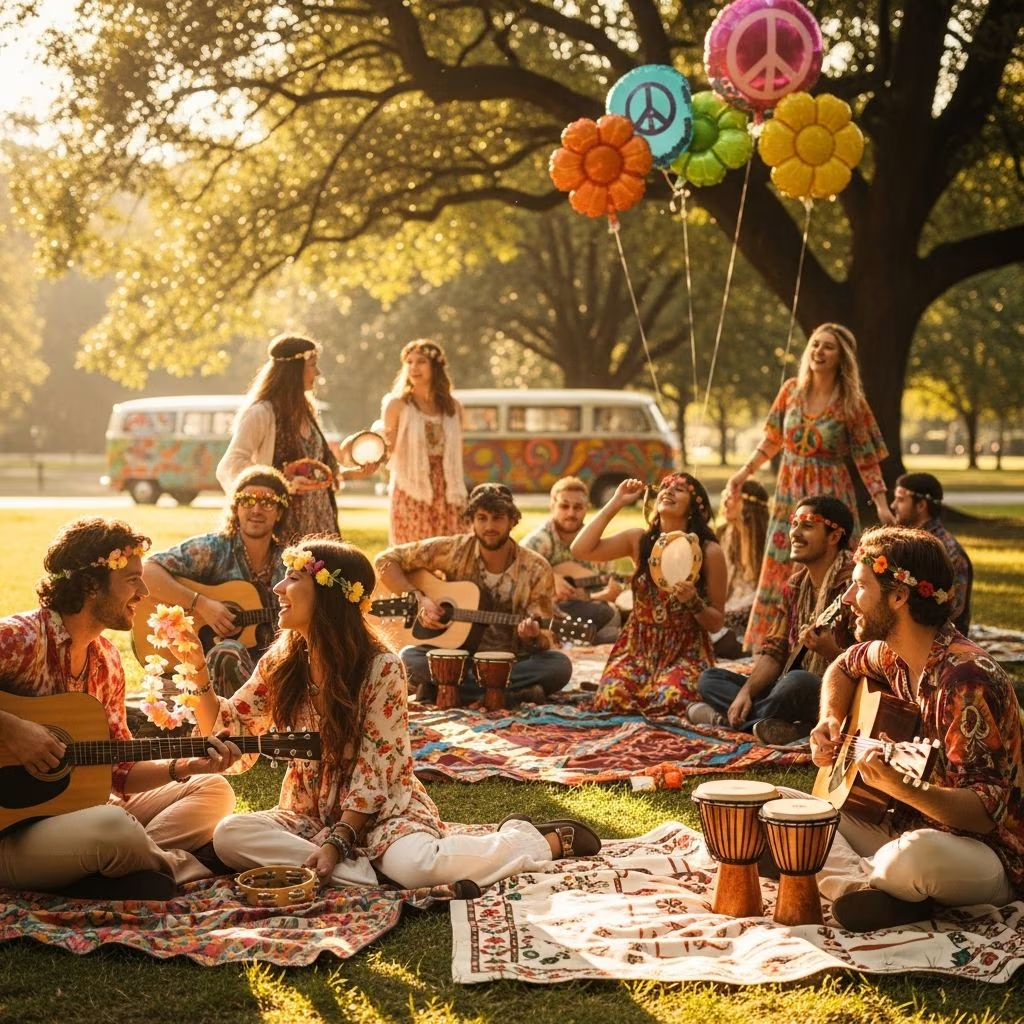
The Summer of Love in 1967 stands as a pivotal moment in American history, when San Francisco’s Haight-Ashbury district became the beating heart of a youth-driven countercultural revolution. Drawing tens of thousands of idealistic young people, this era fused music, psychedelics, anti-war sentiment, and communal living into a vibrant tapestry that challenged societal norms.
In the mid-1960s, San Francisco emerged as a fertile ground for dissent against the Vietnam War and materialistic postwar conformity. The Haight-Ashbury neighborhood, once a modest working-class area, transformed into the epicenter of the hippie movement. Inspired by the Beat Generation’s earlier rebellion in North Beach, young seekers flocked here, embracing free love, communal sharing, and psychedelic exploration.
By early 1967, the neighborhood buzzed with street performers, vendors peddling handmade crafts, and impromptu gatherings. Golden Gate Park, adjacent to Haight-Ashbury, served as an open-air playground for festivals and rallies. This influx peaked during the summer, with estimates of up to 100,000 visitors converging on the city, turning it into a global symbol of youthful rebellion.
Several key events set the stage for the Summer of Love. The Human Be-In on January 14, 1967, in Golden Gate Park drew around 20,000-30,000 attendees. Organized by activists and artists, it blended Eastern spirituality, LSD advocacy, and anti-war protests, coining the phrase ‘A Gathering of the Tribes’ to unite diverse counterculture factions.
Preceding this was the smaller Love Pageant Rally in October 1966, which foreshadowed the larger gatherings. Media coverage amplified these events, with a pivotal press conference on April 5, 1967, forming the Council for the Summer of Love. This group aimed to manage the anticipated youth migration, promoting safety amid the chaos.
Central to the Summer of Love was the widespread use of LSD and cannabis, viewed as tools for expanding consciousness and fostering empathy. LSD, popularized by figures like Ken Kesey and his Merry Pranksters, fueled visionary experiences that hippies believed could dismantle rigid social structures.
Cannabis, readily available in Northern California, symbolized relaxation and creativity, often shared in joints or pipes during park gatherings. This ‘flower power’ philosophy rejected violence, advocating peace symbols, daisies in gun barrels, and vibrant attire adorned with beads and fringe.
However, the idyllic image masked challenges: disease outbreaks, drug overdoses, and crime strained resources. Local authorities struggled with the unmanaged influx, leading to ‘Death of Hippie’ declarations by year’s end.
Rock music propelled the movement, with San Francisco bands like Jefferson Airplane, the Grateful Dead, and Janis Joplin defining the psychedelic sound. Venues such as the Fillmore Auditorium and Avalon Ballroom, run by promoters Bill Graham and Chet Helms, hosted immersive concerts without seats, encouraging dancing and communal vibes.
Iconic tracks amplified the call: Scott McKenzie’s ‘San Francisco (Be Sure to Wear Flowers in Your Hair)’ topped charts in May 1967, written to promote the Monterey Pop Festival. The Beatles’ ‘All You Need Is Love,’ released in July, encapsulated the era’s optimism.
The Monterey Pop Festival (June 16-18, 1967) marked a high point, featuring Jimi Hendrix’s fiery guitar smash, Otis Redding’s soulful set, and Ravi Shankar’s sitar. Attended by 90,000, it bridged underground scenes to mainstream fame.
| Band/Artist | Key Contribution | Notable Venue/Performance |
|---|---|---|
| Jefferson Airplane | Psychedelic rock pioneers | Monterey Pop, Fillmore |
| Grateful Dead | Jam band legends, acid tests | Avalon Ballroom |
| Jimi Hendrix | Guitar innovation, fire show | Monterey Pop |
| Janis Joplin | Raw blues vocals | Monterey Pop |
| The Who | Explosive energy | Monterey Pop |
Hippie style exploded with tie-dye shirts, bell-bottoms, headbands, and love beads, often thrift-sourced or handmade. Psychedelic posters by artists like Wes Wilson and Victor Moscoso advertised shows with swirling fonts and vibrant colors, becoming collectible art.
Communes dotted Haight-Ashbury, where residents pooled resources for ‘free stores’ offering clothes and food without money. Street theater, poetry readings, and body painting added to the carnival atmosphere.
Beneath the euphoria, harsh realities emerged. Overcrowding led to sanitation issues, heroin influx caused fatalities, and police crackdowns intensified. By October 1967, the Diggers staged a ‘Death of Hippie’ funeral to reclaim authenticity from commercialization.
Many youth returned home disillusioned, but the movement’s seeds spread nationwide, influencing environmentalism, civil rights, and later festivals like Woodstock.
The Summer of Love’s influence endures. In 2007, San Francisco marked the 40th anniversary with events culminating in a Golden Gate Park concert for 150,000. The 50th in 2017 featured exhibitions at the de Young Museum on art, fashion, and rock.
Today, Haight-Ashbury retains vintage shops, murals, and the Haight-Ashbury Free Clinic legacy. Annual gatherings and tours evoke the past, while psychedelic research revives LSD’s therapeutic potential.
Walk Haight Street to feel lingering energy amid boutiques and cafes.
It was a 1967 counterculture peak in San Francisco, marked by peace rallies, music festivals, psychedelics, and anti-war protests in Haight-Ashbury.
Up to 100,000 young people from across the U.S. and beyond.
Songs like ‘San Francisco’ by Scott McKenzie and performances at Monterey Pop by Hendrix, Joplin, and others.
Mostly, but overcrowding, drugs, and crime posed challenges.
Haight-Ashbury tours, Golden Gate Park, and anniversary events.
