

 Travel Essentials
 Travel Essentials

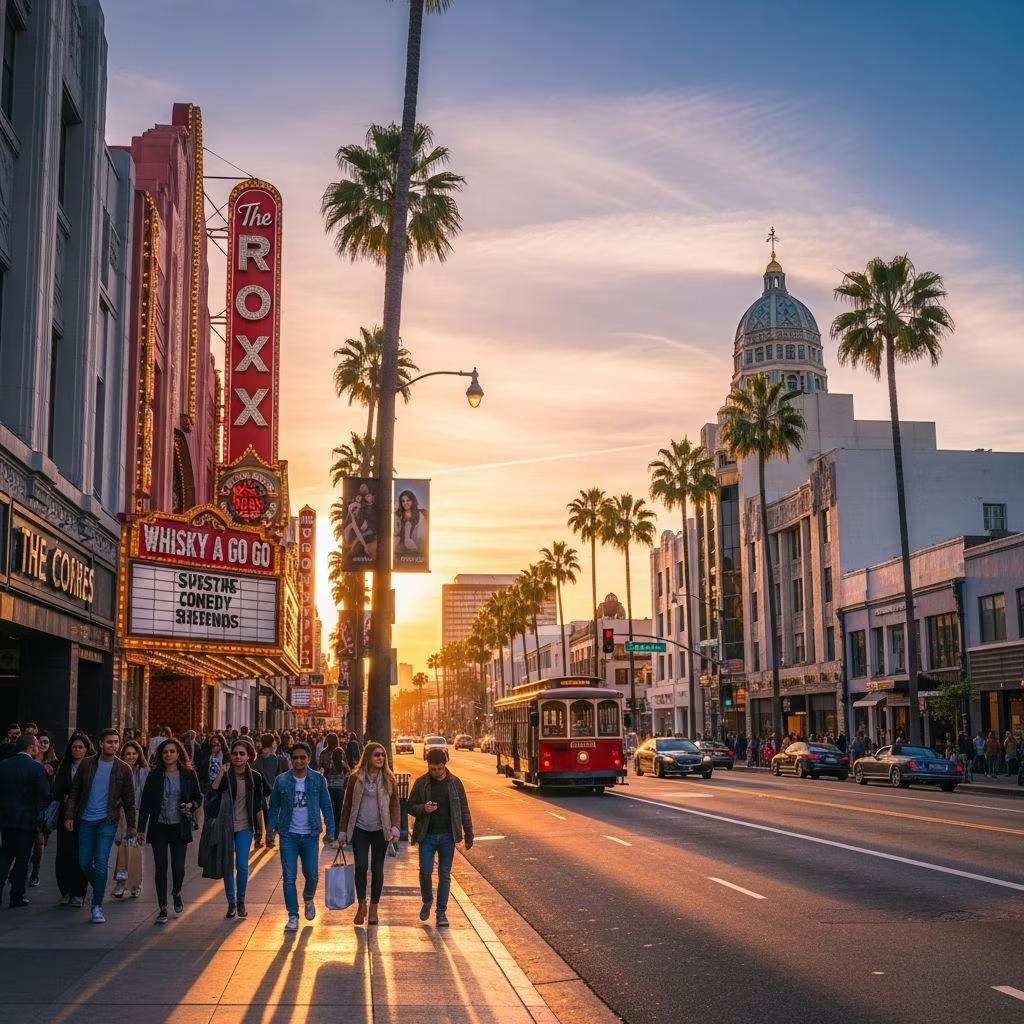
Complete walking guide to West Hollywood's Sunset Boulevard featuring historic hotels, legendary music venues, trendy restaurants, and cultural landmarks perfect for exploring on foot.
 Travel Essentials
When most visitors think of Los Angeles, images of the famous Sunset Boulevard typically come to mind. However, the reality of experiencing this legendary thoroughfare extends far beyond what most tourists capture in photographs. Located in the independent city of West Hollywood, a 1.6-mile section of this iconic boulevard represents the beating heart of LA’s entertainment scene, offering an authentic glimpse into decades of Hollywood history, contemporary culture, and glamorous living.
Unlike the stereotypical image of Los Angeles as an automobile-dependent metropolis, West Hollywood distinguishes itself as remarkably pedestrian-friendly. The city’s thoughtfully designed streets, tree-lined avenues, and intimate side roads create an atmosphere that feels more European than typically associated with Southern California. This walkability transforms the area into an ideal destination for visitors who prefer exploring on foot rather than navigating through traffic.
The Sunset Strip occupies a compact yet densely packed section of Sunset Boulevard, stretching from Crescent Heights Boulevard on the eastern boundary to the edge of Beverly Hills at Phyllis Street and Sierra Alta Way on the western end. Despite its relatively short distance, this corridor contains an remarkable concentration of cultural institutions, hospitality establishments, and entertainment venues that have shaped popular culture for nearly a century.
The boulevard itself forms the backbone of any exploration, but the true character of the neighborhood reveals itself through the perpendicular streets and hidden passages that branch off from this main artery. Streets like La Cienega, Santa Monica Boulevard, and various residential lanes offer quieter alternatives and unexpected discoveries that provide context and depth to the more famous attractions.
Understanding the transformation of this area adds valuable perspective to any visit. During the 1930s through the 1950s, the Sunset Strip evolved into a glamorous destination for Hollywood’s elite, with legendary nightclubs such as Ciros, the Mocambo, and the Trocadero defining an era of sophisticated entertainment. During this period, the entertainment industry controlled much of the venue landscape, though some establishments operated under less savory management structures.
The subsequent decades witnessed dramatic shifts in the cultural and musical character of the neighborhood. By the 1970s and 1980s, the area became synonymous with rock and roll culture, attracting musicians, bands, and enthusiasts from around the world. While the wild excesses of that era have mellowed considerably, the neighborhood retains its connection to musical heritage through the survival of several iconic venues and the ongoing evolution of its entertainment offerings.
The Chateau Marmont serves as an ideal launching point for any walking adventure through this neighborhood. Perched above Sunset and Marmont Lane at the eastern terminus of the Strip, this 1929 architectural landmark features distinctive turrets and commanding views that make it instantly recognizable. The property’s historical significance extends beyond its architecture; it represents a particular moment in Hollywood’s development when European-inspired luxury began shaping the city’s architectural identity.
From this vantage point, visitors gain perspective on the boulevard’s trajectory westward. The gentle downhill slope of Sunset as it progresses toward Beverly Hills provides natural momentum for the walking experience while offering gradually changing views and surroundings.
Moving west from the starting point, visitors encounter several remarkable examples of mid-century hospitality design. The Sunset Tower, completed in 1931, presents itself as an art deco masterpiece that rises prominently above its surroundings. The building’s geometric facade and decorative elements reflect a design philosophy that emphasized elegance and permanence. Inside, the mahogany bar represents the craftsmanship standards of that era, offering a tangible connection to Hollywood’s golden age.
Directly across the boulevard sits the Andaz hotel, which holds particular significance in rock music history. During the 1970s, this establishment gained renown as a preferred residence for touring musical acts, with famous bands sometimes occupying multiple floors simultaneously. The contrast between these architectural styles—the geometric formality of the Tower versus the more modern sensibilities of the Andaz—illustrates how the street has continuously evolved while maintaining its essential character.
Contemporary additions like The Pendry and 1 Hollywood West represent the latest chapter in the boulevard’s architectural narrative. Alongside these newer properties, more modestly priced accommodations like the Hotel Ziggy cater to budget-conscious visitors, demonstrating that the area serves diverse tourism segments.
The most magnetic draws for many visitors are the venues that have hosted decades of musical performances and cultural events. The Viper Room stands out as a particularly storied establishment, having served as a launching pad for countless emerging artists while maintaining connections to rock and roll heritage. The venue’s intimate scale belies its outsized cultural influence.
Similarly significant is the Whisky a Go Go, which holds a central place in the history of rock music in Los Angeles. This venue played instrumental roles in introducing new sounds and artists to audiences, with particular historical importance in the development of punk and new wave music during the late 1970s.
The Rainbow Bar and Grill represents another legendary establishment where musicians, industry professionals, and enthusiasts have gathered for decades. The venue’s longevity in an ever-changing entertainment landscape speaks to its importance within the community of musicians and rock music enthusiasts.
Dining establishments along and near the boulevard offer opportunities to experience contemporary Los Angeles food culture while enjoying people-watching opportunities. Mel’s Drive-In operates as one of the last remaining examples of classic American diner culture, serving visitors and locals 24 hours daily. This establishment provides a nostalgic dining experience where visitors can observe the constant flow of humanity along the boulevard.
Dialog Cafe has established itself as a premier location for experiencing the neighborhood’s social dynamics over coffee and light meals. The venue functions as an observation point where the street’s cultural mix becomes immediately apparent. Newer dining establishments continually emerge along the boulevard, reflecting evolving culinary trends while maintaining the area’s reputation as a destination for distinctive dining experiences.
Stepping away from the main boulevard reveals an entirely different character that many hurried visitors miss. The quiet residential streets that intersect with Sunset provide peaceful respites from the more hectic commercial areas. Santa Monica Boulevard represents a significant north-south corridor where visitors can access different neighborhoods and gain new perspectives on the broader geography.
La Cienega Boulevard, running perpendicular to Sunset, leads toward different districts and offers its own collection of cultural attractions, restaurants, and galleries. The Pacific Design Center, visible from certain vantage points, represents the creative industries that extend beyond the entertainment sector in the greater Los Angeles area.
Streets like Alta Loma Road, though steep, reward adventurous explorers with views and access to the Sunset Marquis hotel, which occupies a unique hillside position offering perspective on the neighborhood’s topography.
Timing matters significantly when exploring this neighborhood. The boulevard takes on entirely different character and atmosphere depending on the time of day. Evening hours bring heightened activity as venues prepare for nightlife, restaurants fill with diners, and the street assumes its most celebrated persona. Afternoon visits offer different advantages, including better visibility for photographing architecture and observing the daytime service industry activities that support the evening scene.
Weather in Los Angeles typically cooperates with outdoor exploration, though sun exposure and comfortable walking shoes warrant serious consideration. The generally gentle slope of the boulevard westward means that returning requires climbing back uphill, a factor worth acknowledging when planning route and pace.
Beyond the major landmarks, numerous details reward careful observation. Public art installations, architectural ornaments, and quirky sculptures appear throughout the neighborhood, including unexpected elements like statuary commemorating popular culture references. Billboards advertising films and entertainment products create a visual landscape that constantly changes and reflects current cultural preoccupations.
Specialty retailers, bookstores, and vintage shops offer browsing opportunities for visitors interested in material culture and consumer history. These establishments often contain connections to the neighborhood’s entertainment heritage, with merchandise and inventory reflecting decades of popular culture.
Bicycling represents an alternative to walking that extends the geographical range of exploration. Services offering guided e-bike tours provide structured experiences for visitors preferring mechanical assistance. This option proves particularly valuable for visitors with mobility considerations or those interested in covering greater distances while still maintaining the benefits of non-automobile exploration.
Public transportation connections exist for visitors arriving from other parts of Los Angeles, though navigating the broader transit system may prove complex for first-time visitors. Personal vehicles remain common for many travelers, with various parking options available, though the pedestrian-focused experience remains superior to vehicular exploration for understanding the neighborhood’s character.
The neighborhood continues evolving with changing consumer preferences and cultural trends. Modern technology increasingly appears in the urban landscape, including delivery robots and digital infrastructure that represent ongoing adaptation to contemporary needs. These elements coexist with historical architecture and vintage establishments, creating layered experiences that reflect both continuity and change.
The glamorous reputation persists despite transformations in the specific venues and establishments that anchor the neighborhood. The area continues attracting visitors, businesses, and residents seeking connection to Hollywood culture and entertainment industry proximity.
| Time of Day | Best For | Considerations |
|---|---|---|
| Morning/Afternoon | Photography, quieter exploration, retail browsing | Some venues may have limited hours; better natural lighting |
| Evening | Dining, nightlife, experiencing peak atmosphere | More crowded; parking may be challenging; higher prices typical |
| Weekday | Fewer crowds, easier access to venues | Some venues may be closed during day |
| Weekend | Peak activity, more venues open, social atmosphere | Significantly more crowded; advance reservations recommended |
A leisurely exploration of major attractions typically requires two to three hours, though visitors interested in entering establishments, dining, or detailed observation may spend considerably longer. The relatively compact distance allows flexibility in pacing and route selection.
The main boulevard and primary tourist areas maintain active commercial and pedestrian activity that generally supports safety, particularly during daylight and evening hours. Standard urban precautions apply, and visitors should exercise awareness consistent with other urban entertainment districts.
The boulevard itself remains public and free to access. Walking, observing architecture, people-watching, and photographing landmarks require no payment. Some museums and galleries may offer free or reduced admission during specific hours.
Starting from the eastern end at Chateau Marmont and proceeding westward allows travelers to work with the gentle downhill slope while building momentum toward the Beverly Hills boundary. Returning via alternative routes or transportation provides flexibility.
Public areas of hotels remain accessible for exploration, though some venues maintain more restricted access policies. Respecting property boundaries and operating hours ensures positive experiences and maintains access for future visitors.
Walking the Sunset Strip offers experiences that automobile-based tourism cannot provide. The opportunity to observe architectural details, encounter street-level culture, interact with the human scale of the neighborhood, and develop a genuine sense of place transforms visiting from passive consumption into active engagement. The convergence of historical significance, contemporary vitality, and continuous evolution makes this neighborhood worthy of serious exploration and repeated visits.
