

 Travel Essentials
 Travel Essentials

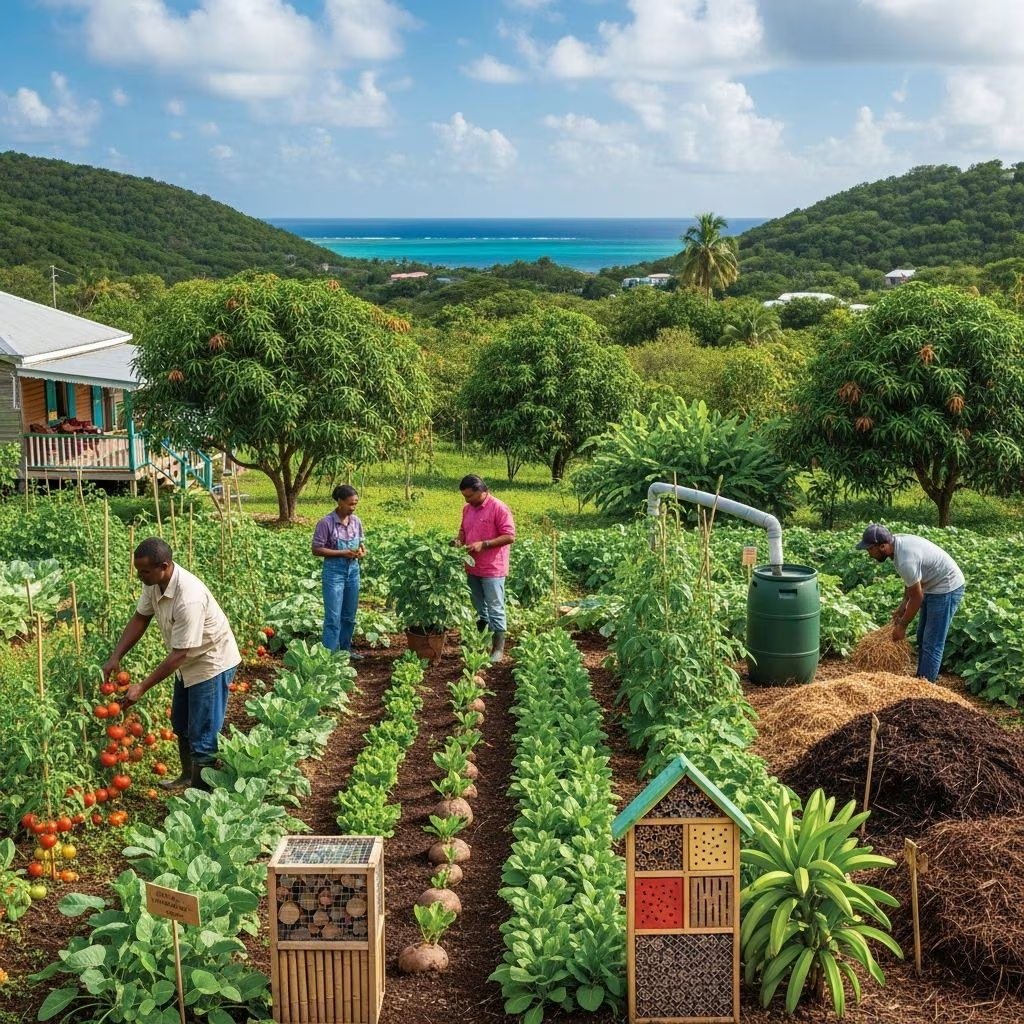
Climate-smart farming is helping Caribbean islands grow more food with less water, stronger hurricane resistance, and better local livelihoods.
 Travel Essentials
The Caribbean region, renowned for its stunning beaches and vibrant culture, faces mounting pressures from climate change, including hurricanes, droughts, and rising seas. These challenges threaten traditional farming, pushing islands to adopt eco-friendly practices that ensure food security and economic stability. From hydroponic systems to climate-smart techniques, innovative approaches are transforming agriculture into a resilient pillar of island life.
Agriculture in the Caribbean has long struggled with external vulnerabilities. Traditional open-field methods suffer from erratic rainfall, high temperatures, and devastating storms, leading to crop failures and heavy reliance on food imports. In tourism-heavy islands like Aruba and St. Kitts, farming contributes less than 1% to GDP, yet it remains vital for employment and local diets in places like Guyana and Jamaica.
Global trade shifts, such as the end of preferential EU quotas for sugar and bananas, have further eroded competitiveness. Today, about 16% of regional employment ties to agriculture, with higher rates in rural areas—30% in Guyana, 25% in Dominica. Without adaptation, rural poverty could surge as production declines.
Hydroponics, a soilless growing method using nutrient-rich water, is gaining traction for its water efficiency—up to 90% less than conventional farming—and ability to produce year-round in controlled settings. In 2023, the Caribbean Climate-Smart Accelerator (CCSA) launched a pilot installing 12 mobile Flex Farms across Anguilla, Cayman Islands, and Barbados. These units yield over 25 pounds of greens, herbs, and veggies in 28 days, targeting food insecurity in vulnerable communities.
Early outcomes show reduced import needs and enhanced resilience, with educational programs engaging students in practical learning.
Controlled Environment Agriculture (CEA), encompassing greenhouses and vertical farms, shields crops from Category 4-5 hurricanes while optimizing resources. Ideal for water-scarce Antigua and Barbados, CEA supports high-value crops like strawberries and herbs demanded by luxury resorts.
Successful pilots in Barbados, Cuba, Puerto Rico, and Trinidad integrate renewable energy, proving CEA’s viability for cutting import dependence. Precision tools like sensor irrigation and drought-resistant seeds, as in Jamaica’s Climate Smart Agriculture plots, boost yields and efficiency.
Islands are harnessing wind, solar, and groundwater for sustainable operations. In Curacao, farms like those using wind-driven pumps access reliable water for fruits, veggies, and livestock, supplying farm-to-table menus. Food waste from partner restaurants feeds pigs and enriches compost, closing nutrient loops.
Puerto Rican establishments, such as the 1919 restaurant at Vanderbilt hotel, buy directly from farmers, funding solar installations that diversify income and provide clean power. This model recirculates tourism dollars into agriculture.
Farmer co-ops in Puerto Rico streamline sales, cutting costs and boosting efficiency. Weekly markets in the Cayman Islands showcase local produce and sustainable seafood, while groceries dedicate shelves to island-grown goods, encouraging consumer support.
| Initiative | Island Examples | Key Benefits |
|---|---|---|
| Hydroponic Pilots | Anguilla, Cayman, Barbados | 90% water savings, year-round yield |
| CEA Greenhouses | Barbados, Puerto Rico | Hurricane resistance, premium crops |
| Co-ops & Markets | Puerto Rico, Cayman | Efficient sales, local support |
| Renewable Integration | Curacao, Puerto Rico | Cost savings, waste recycling |
CARICOM guides emphasize project support for sustainable shifts, targeting nations like Dominica, Guyana, Jamaica, St. Lucia, and Suriname. Finance access, highlighted at CIF 2025, enables agri-tech adoption. Vetiver grass in the U.S. Virgin Islands aids erosion control and slope stabilization.
Broader efforts, like FAO’s green agriculture push in Latin America and the Caribbean, stress implementation over declarations for transformation.
Post-Hurricane Maria, co-ops have thrived with hotel partnerships buying fruits and eggs, alongside solar aid. This sustains farms and menus with fresh, local ingredients.
Hofi-style operations pump groundwater renewably, repurpose restaurant scraps, and guide other businesses via resources like Sustainable Curacao directories.
CCSA Flex Farms combat insecurity, training communities and supplying nutritious produce consistently.
Digital platforms from St. Kitts to Guyana, smart greenhouses, and precision farming signal a scalable future. Private partnerships and development aid accelerate climate-smart adoption, positioning agriculture as an investment sector.
Challenges persist—finance gaps, training needs—but successes prove potential. By prioritizing local production, the Caribbean reduces vulnerabilities, creates jobs, and nourishes tourism with authentic flavors.
Hydroponics grows plants in nutrient water without soil, saving 90% water and enabling indoor production resilient to hurricanes and droughts.
They purchase local produce, fund solar panels, and donate waste for compost or animal feed, bolstering farm viability.
Barbados, Puerto Rico, Cuba, and Trinidad lead with greenhouses supplying resorts year-round.
They offer efficient, cost-effective market access, vital for smallholders post-disasters.
Demonstration plots use drought seeds, sensors, and forecasts to cut losses and hike productivity.
