

 Travel Essentials
 Travel Essentials

Explore Suzhou's classical gardens: their rich history from Wu Kingdom origins, design principles like borrowed scenery, nine UNESCO sites, and tips for an immersive visit to these serene retreats.
 Travel Essentials
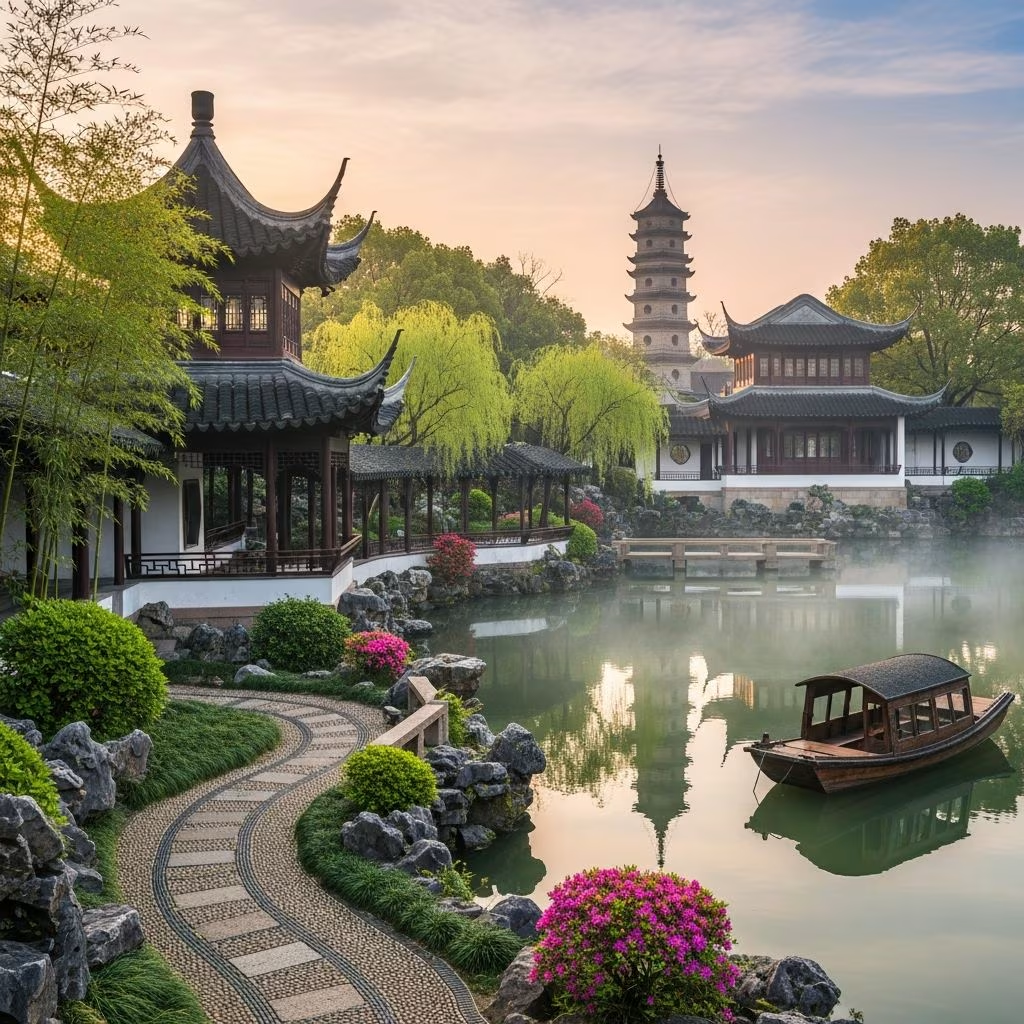
Suzhou’s classical gardens stand as unparalleled exemplars of Chinese landscape architecture, ingeniously compressing vast natural vistas into intimate urban spaces. These masterpieces, recognized collectively as a UNESCO World Heritage site, embody centuries of philosophical depth, artistic ingenuity, and scholarly refinement.
The story of Suzhou’s gardens begins in the 6th century BCE, when the city emerged as the capital of the Wu Kingdom. Royal hunting grounds laid the groundwork, inspiring private estates by the 4th century BCE that evolved into sophisticated retreats by the 18th century’s peak. During the Tang Dynasty (618-907 CE), garden-building flourished, particularly in Suzhou, then a hub of prosperity amid canals reminiscent of Venice.
The Song Dynasty (960-1279 CE) marked early milestones, with Canglang Pavilion—Suzhou’s oldest surviving garden—constructed in the 11th century on a princely site from the Five Dynasties period (907-960 CE). Ming (1368-1644 CE) and Qing (1644-1912 CE) eras saw explosive growth, yielding over 200 gardens within city walls and 100 more nearby; today, more than 60 endure, with nine earning UNESCO distinction for their cultural pinnacle.
Classical Suzhou gardens prioritize four elements—water, rocks, plants, and architecture—to evoke boundless nature in bounded realms. Unlike European gardens’ geometric planting, these are meticulously constructed landscapes, drawing from Chinese painting’s freehand style and poetry’s evocative power.
Key techniques include:
These gardens reflect Daoist harmony, scholarly reclusion, and urban adaptation, offering intellectuals aesthetic escape amid city bustle.
Nine gardens, spanning 11th to 19th centuries, exemplify Suzhou’s artistry under UNESCO Criteria (i), (iv), and (v): artistic mastery, regional typology, and residence-nature fusion. Here’s a comparative overview:
| Garden Name | Size & Era | Key Features | Notable History |
|---|---|---|---|
| Humble Administrator’s Garden | Largest; Ming (1510) | Central pond, Suxiang Hall, Mandarin Duck Hall for operas | Built by retired official Wang Xianchen |
| Lingering Garden | Second largest; Ming (1520) | Three zones: mountains/ponds east, performance hall center | Expanded post-1873 private purchase |
| Canglang Pavilion | Oldest (11th C.); 0.38 ha | Surging Waves Pavilion amid rocks/water | Scholar Su Zimei’s Song rebuild |
| Master of the Nets Garden | Intimate; Qing | Minimalist elegance, fishing motifs | Scholarly retreat epitome |
| Couple’s Retreat Garden | Qing; Paired elements | Symmetric designs symbolizing love | Romantic motifs throughout |
| Lion Grove Garden | Ming; Rockery focus | Labyrinthine Taihu stones resembling lions | Zen Buddhist origins |
| Retreat & Reflect Garden | Qing; Compact | Serene pavilions, subtle vistas | Introspective scholarly space |
| Network of Heaven Garden | Smallest; Qing | Intricate rockeries, heavenly net illusion | Poetic naming tradition |
| Ouyang Shanzun Residence | Residential focus; Qing | Blends living quarters with landscape | Showcases etiquette/customs |
Suzhou gardens transcend decoration, embodying metaphysical reverence for nature. Their craftsmanship—latticed windows framing views, yellowed ginkgo evoking autumn, bamboo whispering zen—mirrors painting’s brushwork. Scholarly ethos permeates: built by officials post-retirement, they hosted poetry, opera, and contemplation, insulating against worldly strife.
Preservation honors this legacy. Local authorities minimize interventions, using dynastic techniques for repairs while curbing urbanization’s encroachment, sustaining authenticity. Over 186 gardens survive citywide, fueling ongoing study of their artistic traits like spatial illusion and natural simulation.
Suzhou, a Shanghai suburb, lures with canal-laced charm. Dedicate 2-3 days; spring (cherry blossoms) or autumn (ginkgo gold) ideal. Tickets: 40-90 CNY/garden; combo passes save. Early mornings dodge crowds; audio guides/apps enhance lore.
Combine with pingjiang road strolls or silk museum for fuller immersion.
They miniaturize nature via constructed elements, scholarly symbolism, and techniques like borrowed scenery, distinguishing from imperial pomp.
Most yes, 7:30 AM-5 PM; check seasonally for closures.
Nine, collectively inscribed in 1997, expanded 2000.
Yes, clustered; prioritize top four for depth.
Early morning or late afternoon for soft light on rockeries/ponds.
These gardens inform contemporary design: urban green spaces borrow their spatial tricks for biophilic calm. They preserve East Yangtze Delta lifestyles, from 11th-century etiquette to Qing-era tech, bridging past-present. In Suzhou’s evolution from ancient capital to modern haven, they remind us: true beauty blooms in harmony with nature.
