

 Travel Essentials
 Travel Essentials

Discover how to plan your Arctic expedition to Svalbard, from seasonal timing and wildlife encounters to transportation options and must-see attractions.
 Travel Essentials
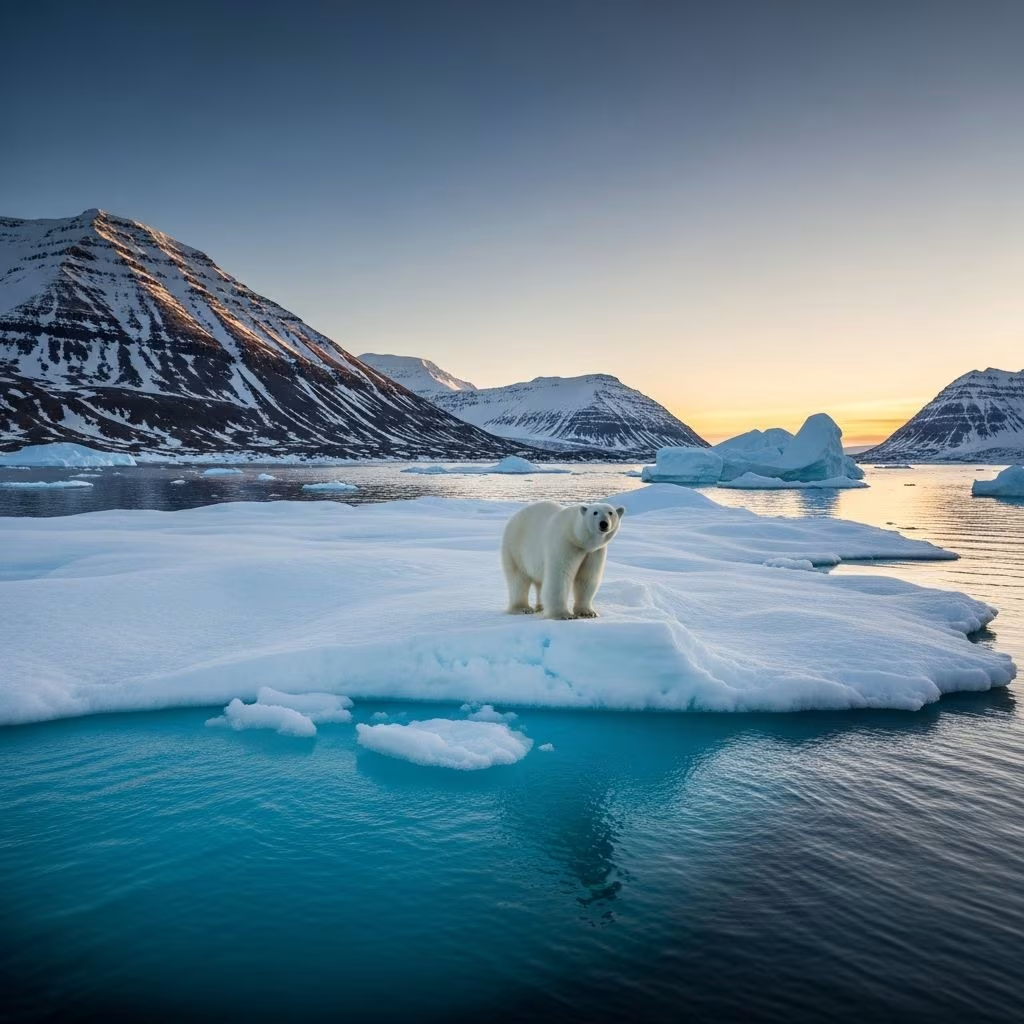
Nestled between mainland Norway and the North Pole, Svalbard represents one of Earth’s final frontiers—a land where glaciers dominate the landscape, polar bears roam freely, and the sun refuses to set during summer months. This Norwegian archipelago offers an unparalleled Arctic experience that attracts adventurers, nature enthusiasts, and photographers seeking something genuinely extraordinary. Whether you dream of kayaking past walruses, riding dogsleds under the northern lights, or simply standing in a place few humans will ever reach, Svalbard delivers experiences that redefine what travel can be.
Svalbard consists of three primary islands: Spitsbergen, Edgeøya, and Nordaustlandet. However, the vast majority of visitors concentrate their time on Spitsbergen, which hosts Longyearbyen—the archipelago’s primary settlement and the gateway for most tourism activities. Longyearbyen, with a population of approximately 2,400 residents, holds the distinction of being the northernmost town in the world where substantial numbers of people maintain permanent residency. The town showcases remarkable Arctic infrastructure, including a school built on stilts to accommodate the frozen tundra beneath it.
Beyond Longyearbyen, intrepid travelers may venture to Barentsburg, an active mining settlement that provides insight into the industrial heritage that shaped Svalbard’s development. This frontier outpost, accessible primarily through guided tours, represents a tangible connection to the region’s past and the harsh conditions that define Arctic settlement.
Svalbard’s extreme latitude creates dramatic seasonal variations that fundamentally alter the visitor experience. The choice between visiting during peak season or shoulder months significantly impacts available activities, wildlife viewing opportunities, and the fundamental experience of Arctic travel.
The summer months represent Svalbard’s tourism zenith, drawing visitors worldwide for compelling reasons. Beginning in May, snow gradually melts, improving ground accessibility and enabling a wider range of outdoor activities. Airline schedules expand substantially, with more frequent flights from Oslo, and cruise ship traffic increases noticeably. The period from June through August offers exceptional wildlife-viewing opportunities, with favorable conditions for spotting walruses, polar bears, whales, and Arctic foxes during boat-based expeditions and zodiac excursions.
Perhaps most remarkably, summer visitors experience the phenomenon of the midnight sun. From late May through early August, the sun never fully sets, creating twenty-four hours of daylight. This extended illumination enables unconventional activities—hiking at 2 AM, conducting business in natural light at midnight, or photographing landscapes bathed in perpetual daylight. For many visitors, this astronomical spectacle alone justifies a summer journey to the Arctic.
Winter months, extending from approximately September through March, present an entirely different Arctic experience. While conditions are undeniably harsh, winter offers the potential for observing the northern lights—an ethereal display of aurora borealis that illuminates the night sky. Specialized northern lights expeditions operate during winter, though success depends on clear skies and solar activity. Spring months provide a transition period, offering some northern lights opportunities through March while snow conditions gradually improve for outdoor activities.
Lodging in Svalbard reflects the archipelago’s remote nature and limited infrastructure. Accommodation options concentrate in Longyearbyen and remain relatively constrained compared to more accessible destinations. The primary lodging category consists of traditional hotels offering standard amenities and facilities. These establishments provide the most reliable option for first-time visitors seeking comfort and consistent service.
For budget-conscious travelers, a limited number of hostel rooms provide more economical alternatives, though availability fluctuates seasonally. Self-catering apartments and cabin rentals appeal to visitors planning extended stays or those seeking greater independence in meal preparation and daily routines. The relatively limited accommodation inventory means booking well in advance is strongly recommended, particularly for peak summer season visits.
Navigating Svalbard’s landscape requires understanding the distinctive transportation culture adapted to Arctic conditions.
Snowmobiles represent the most prevalent form of transportation throughout Svalbard, parked outside virtually every residence. These vehicles dominate the landscape as ubiquitously as automobiles in temperate regions. Numerous tour operators offer snowmobile rentals for visitors, including increasingly available electric models that reduce environmental impact in this fragile ecosystem. Operating a snowmobile provides an exhilarating way to traverse Svalbard’s frozen terrain, though proper training and safety briefings are essential prerequisites.
Contrary to assumptions about Arctic severity, locals actively explore Longyearbyen on foot throughout the year. Visitors can emulate this practice by equipping themselves with crampons—specialized footwear attachments that prevent slipping on ice and packed snow. This simple tool transforms walking from a frustrating challenge into an enjoyable activity, enabling pedestrians to safely navigate Longyearbyen’s streets and nearby terrain.
Travelers venturing beyond Longyearbyen typically travel via organized guided tours. These professionally managed excursions handle all logistical details, including transportation to and from accommodations. Tours provide access to ice caves, fjords, and remote settlements while ensuring visitor safety in an environment where polar bears and unpredictable Arctic conditions demand respect and expertise. Tour operators employ experienced guides trained in Arctic safety protocols and wildlife awareness.
Svalbard offers distinct activity menus depending on seasonal timing, ensuring visitors can tailor experiences to their interests and available timeframes.
| Season | Primary Activities | Best For |
|---|---|---|
| Summer (May-September) | Kayaking, hiking, boat cruises, walrus safaris, ATV expeditions, fishing trips, fat tire biking, dog sledding on wheels | Midnight sun experiences, abundant wildlife viewing, extended daylight hiking |
| Spring (March-May) | Hiking, snowmobile excursions, boat cruises, walrus expeditions, northern lights trips, ski expeditions | Northern lights (through March), transitional conditions, fewer crowds |
| Winter (September-February) | Northern lights expeditions, dogsledding, snowmobile adventures, ice hotel experiences | Aurora borealis observation, dramatic Arctic landscapes, authentic winter conditions |
Svalbard hosts one of the Arctic region’s most significant wildlife populations. Approximately 500 to 600 polar bears inhabit the archipelago, making this one of the world’s highest concentrations of these magnificent predators. Summer months offer optimal conditions for wildlife observation through zodiac excursions and boat-based tours, where walruses, whales, seals, and the elusive Arctic fox make regular appearances. Winter visitors concentrating on northern lights expeditions trade daytime wildlife viewing for nocturnal astronomical phenomena.
The archipelago also supports Svalbard reindeer, indigenous to the islands and adapted to Arctic conditions. These animals contribute to the landscape’s unique character while representing adaptation strategies developed over millennia in one of Earth’s most challenging environments.
Beyond outdoor adventures, Svalbard offers cultural and historical attractions that contextualize Arctic settlement and development.
Perhaps Svalbard’s most internationally recognized feature is the Global Seed Vault, a repository preserving millions of seed samples from around the world. Unfortunately, visitors cannot access the vault’s interior without special authorization. However, photography enthusiasts can capture compelling images of the distinctive structure’s entrance, which remains one of the Arctic’s most photographed locations.
The Svalbard Museum merits several hours of exploration, offering comprehensive displays documenting the archipelago’s maritime history. Exhibits chronicle the lives and experiences of whalers, trappers, seal hunters, walrus hunters, and miners who shaped Svalbard’s development. These historical narratives provide essential context for understanding Arctic settlement, resource extraction industries, and the human determination required to thrive in extreme environments.
Longyearbyen itself functions as an attraction, offering the Longyearbyen Church, an array of restaurants and bars, and one of Earth’s smallest universities. The town’s architecture, infrastructure adaptations, and frontier character provide fascinating observations about human resilience and adaptation to extreme climates.
Visiting Svalbard requires acknowledging that humans share this landscape with apex predators and extreme environmental conditions. Polar bears represent real hazards, necessitating specific safety precautions outside populated areas. Most guided excursions include mandatory briefings on bear awareness and safety protocols. Visitors hiking or exploring remote terrain must complete proper safety training and typically carry bear deterrent devices.
Arctic weather conditions demand respect and preparation. Appropriate cold-weather gear, including insulated outerwear, protective eyewear, and thermal protection, transforms Arctic conditions from threatening to manageable. Temperature extremes, wind speeds, and rapidly changing conditions require constant awareness and adjustment to activity plans.
Most international visitors reach Svalbard by flying to Oslo, then connecting to Longyearbyen via direct flights. The journey involves traveling further north than most people ever venture, crossing into territory where conventional assumptions about geography and climate dramatically shift.
Longyearbyen maintains a dedicated tourist information center providing comprehensive visitor guidance. The official Visit Svalbard website offers detailed information about activities, accommodations, operators, and current conditions. These resources help visitors navigate the archipelago’s unique requirements and opportunities.
Svalbard represents a fragile Arctic ecosystem requiring conscious visitor behavior. Familiarizing oneself with Svalbard’s Guidelines for responsible travel ensures visitors minimize environmental impact and contribute positively to ecosystem preservation. Sustainable tourism practices protect this remarkable environment for future generations.
This depends on priorities. For midnight sun and maximum wildlife viewing, visit June through August. For northern lights observation, plan for winter months (September through March), particularly November through January when darkness dominates the daily cycle.
Svalbard ranks among Earth’s pricier destinations. Budget accommodations, meals, and activities accordingly. Guided excursions, transportation, and Arctic-specific requirements increase overall expenses compared to mainland European travel.
For travelers seeking transformative Arctic experiences, unique wildlife encounters, and a genuine sense of Earth’s extreme environments, Svalbard justifies the investment. Few destinations offer such distinctive natural phenomena and adventure opportunities.
While Longyearbyen itself can be explored independently, venturing into surrounding wilderness almost universally requires professional guides. Local operators handle logistical complexities and safety requirements effectively.
