

 Travel Essentials
 Travel Essentials

Discover efficient ways to travel across Switzerland by train, bus, boat, and beyond. Learn about passes, tickets, and tips for budget-friendly, stress-free journeys through stunning landscapes.
 Travel Essentials
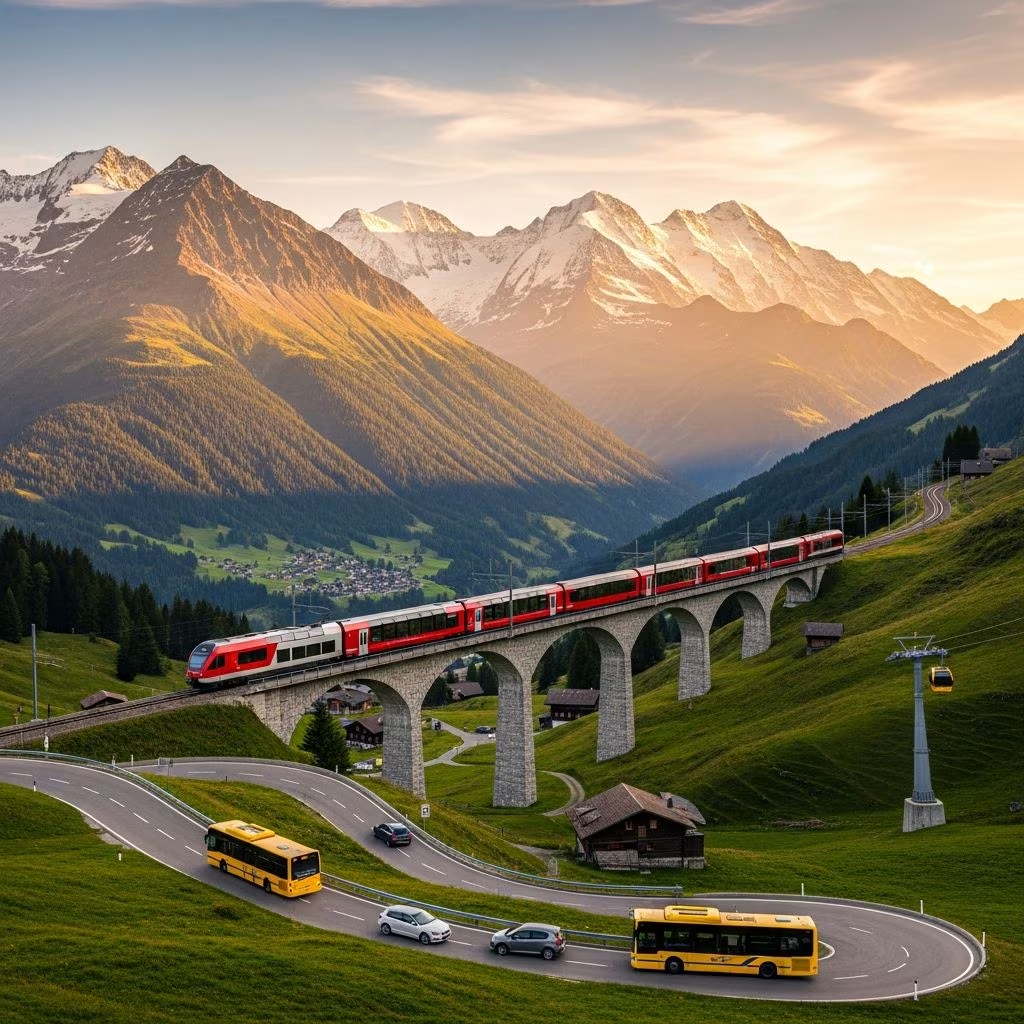
Switzerland boasts one of the world’s most reliable and extensive public transportation networks, making it easy for visitors to explore its alpine wonders, vibrant cities, and serene lakes without a car. From punctual trains connecting major hubs to local buses weaving through charming villages, the system integrates seamlessly for hassle-free travel.
The Swiss transport infrastructure is renowned for its precision, coverage, and integration. Trains, buses, boats, trams, and even cable cars operate like clockwork, reaching nearly every corner of the country. This efficiency stems from a unified network managed primarily by Swiss Federal Railways (SBB/CFF/FFS) and complemented by regional operators. With the nation’s compact size, journeys between key cities like Zurich and Geneva take under four hours, often just one to two hours from Zurich to most destinations.
Public transport here prioritizes sustainability and accessibility, with frequent services and clear signage in multiple languages. Stations feature intuitive displays, making navigation straightforward even for first-timers. Unlike many countries, Switzerland’s system minimizes the need for transfers, ensuring smooth intermodal connections.
Trains dominate intercity travel in Switzerland due to their speed, comfort, and frequency. High-speed options link major cities directly, while regional lines serve smaller towns. From Zurich, expect 1-2 hour trips to Bern, Basel, or Lucerne, with services running multiple times hourly. Prices for one-way tickets range from 30 CHF for short hops to 60-70 CHF for longer routes.
Trains are commuter favorites too, with peak-hour crowds in cities like Zurich and Geneva. Always board promptly—Swiss trains depart on schedule without exception.
PostBuses, or Postautos, extend the network to remote alpine areas where trains don’t reach, famous for their yellow vehicles navigating hairpin turns. City buses provide frequent local service, with stops every 300-500 meters in places like St. Gallen. Intervals range from 2-30 minutes in larger cities.
Long-distance buses like Flixbus offer cheaper alternatives to trains but run less frequently (a few times daily) and take longer due to traffic and lower speeds. For example, a bus from St. Gallen to a shopping center might cost far less than the train equivalent but add 10 minutes to the journey.
Trams thrive in Zurich, Basel, Bern, and Geneva, linking suburbs to city centers every 2-30 minutes. Boats ply lakes like Geneva and Zurich, offering scenic cruises included in many passes.
Mountain transport—cable cars, funiculars, and cogwheel trains—access peaks like Jungfraujoch. While partially covered by passes, some require supplements. These add adventure to hikes and ski trips.
Taxis are pricey (expect 5-7 CHF/km) and best for short, late-night trips. Rideshares like Uber operate in cities but less reliably in rural areas. Driving is scenic but challenging due to tolls (vignette sticker: 40 CHF/year), traffic in tunnels, and parking woes. Public options outperform cars for tourists.
Single tickets are available via SBB app or machines, but passes unlock unlimited travel. The Swiss Travel Pass (from 254 CHF) covers trains, buses, boats, urban transit, and 500+ museums nationwide, plus high-mountain discounts. Kids 6-15 travel free with a parent via Family Card.
| Pass Type | Duration | Price (2nd Class, Adult) | Key Benefits |
|---|---|---|---|
| Swiss Travel Pass | 3/4/6/8/15 days | From 254 CHF | All public transport, boats, museums |
| Swiss Travel Pass Flex | 3-15 flex days/month | Similar to full pass | Flexible activation |
| Half-Fare Card | 1 month | 120 CHF | 50% off most tickets |
For short stays, Half-Fare Cards halve costs. Always validate tickets—fines start at 100 CHF.
Use the SBB Mobile app for real-time schedules, tickets, and disruptions. Google Maps works well too. Check platforms via station screens; trains rarely delay but confirm for construction.
Winter sees ski crowds; book ahead. Summer hiking boosts mountain lines. All transport is wheelchair-friendly with ramps and priority seating. English signage aids non-German speakers.
Rent bikes at stations (Swiss Bike Pass covers rentals). Extensive trails link with transit for hybrid trips.
Yes, for 3+ days of multi-city travel, it covers unlimited rides and extras like museums, saving hundreds.
Extremely—over 90% on time; they depart precisely.
Many yes, with discounts on others like Jungfrau.
Mostly yes, but carry cash for small vendors.
SBB Mobile for comprehensive, real-time info.
Switzerland’s transport system transforms travel into an effortless extension of your adventure. Embrace it to unlock hidden gems efficiently.
