

 Travel Essentials
 Travel Essentials

Comprehensive guide to navigating Switzerland's world-class rail system, featuring iconic routes, practical travel tips, and curated itineraries.
 Travel Essentials
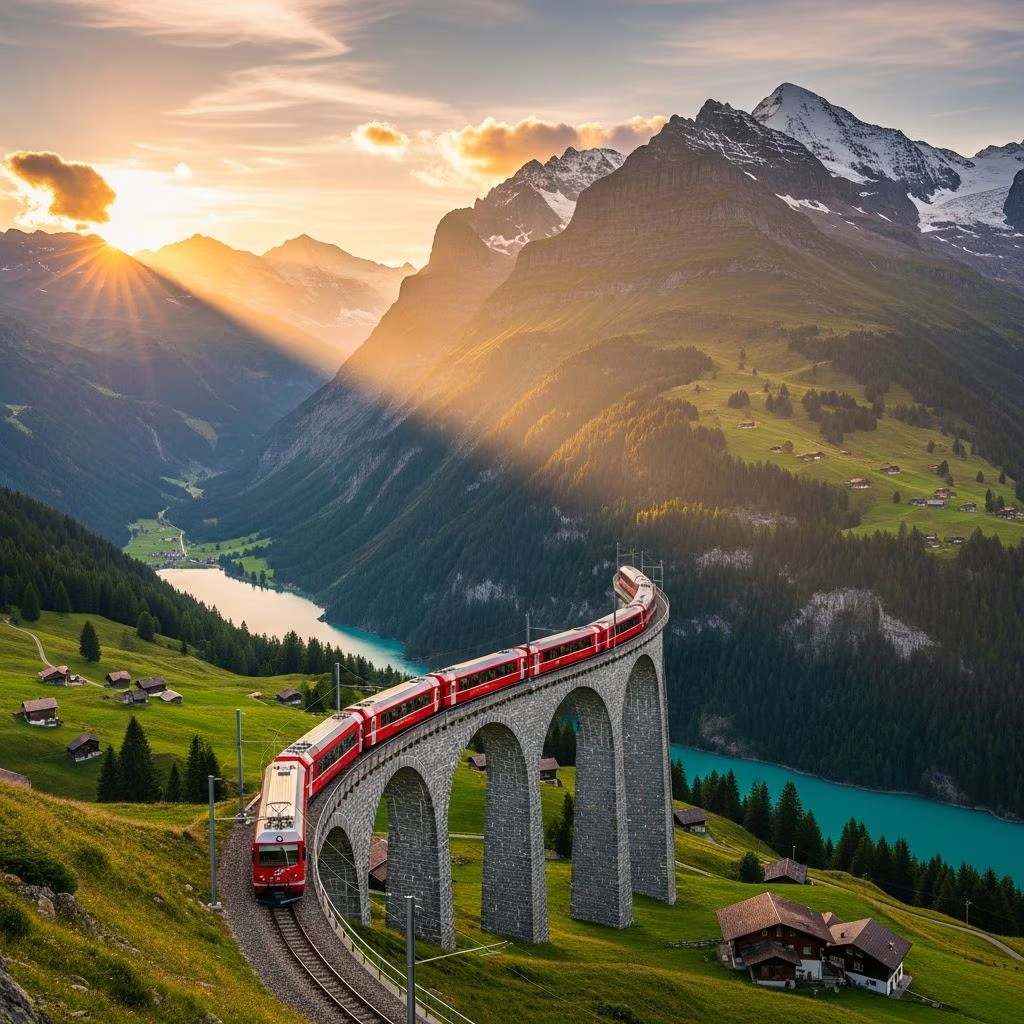
Switzerland’s reputation as a premier rail destination stems from its meticulously engineered network of trains that traverse some of Europe’s most dramatic landscapes. The country’s efficient transportation infrastructure transforms what could be ordinary commutes into extraordinary experiences, connecting charming valley towns with breathtaking mountain vistas. For travelers seeking to maximize their Swiss adventure, understanding how to navigate and experience the rail system opens doors to regions that would be considerably more challenging to access by road or on foot.
The backbone of Swiss rail transportation consists of multiple operators working in coordinated harmony. The Swiss Federal Railways (SBB), known by various regional names depending on language—CFF in French regions and FFS in Italian-speaking areas—manages the majority of mainline services. However, this centralized system represents only part of the picture. Numerous smaller private operators run specialized regional and local routes throughout the country, creating a comprehensive network that reaches even remote Alpine communities.
This decentralized approach actually benefits travelers. While the primary operator handles major routes connecting principal cities, specialized mountain railways operated by regional companies provide access to peaks, valleys, and scenic passages that define the Swiss experience. The integration between these operators creates a seamless journey, allowing passengers to transfer between services without complications or significant delays.
Swiss trains operate with legendary precision. Schedules are maintained with remarkable consistency, making it possible to plan complex multi-leg journeys with confidence. Real-time information systems and digital displays at stations eliminate confusion about departure platforms and train numbers, particularly at larger terminals with multiple levels and numerous platforms.
One of the most critical decisions for Swiss rail travel involves selecting an appropriate fare structure. Rail passes offer substantial advantages compared to purchasing individual point-to-point tickets, particularly given Switzerland’s relatively high per-ticket costs. For travelers planning multiple journeys or extended stays, passes typically represent exceptional value.
The versatility of Swiss rail passes extends beyond standard regional trains. Coverage includes specially designated scenic routes, with the entire Glacier Express route included in most pass offerings. Many international trains, such as services connecting Brig to Domodossola to Locarno and the Bernina Express route from Lugano to Tirano, are also covered by comprehensive passes.
However, travelers should note important limitations. High-altitude mountain railways, particularly those in the Berner Oberland region like the Jungfraubahn, typically offer only partial coverage with varying discount levels depending on pass type. These specialized mountain railways represent supplementary experiences rather than primary transportation, and separate tickets or upgrade fees generally apply.
Several specific train routes have achieved legendary status among Switzerland’s rail network, each offering distinctive perspectives of Alpine geography and Swiss culture.
This signature route traverses one of Europe’s most dramatic mountain passages. The journey connects communities nestled in the Alps, providing panoramic views of glaciers, peaks, and pristine valleys. The entire route qualifies for Swiss Travel Pass coverage, making this premium experience accessible without additional reservation fees.
This route creates a compelling contrast by linking the famous ski resort region of Gstaad with the distinct characters of Interlaken and Lucerne. Recent infrastructure improvements simplified this journey; until late 2022, this route required three separate train changes, but current service enables travelers to complete the primary segments with just two connections—one from Montreux to Interlaken and a second from Interlaken to Lucerne. The route’s flexibility accommodates both direct travelers and those preferring to pause at intermediate destinations.
This connection showcases Switzerland’s remarkable railway engineering. The route ascends through the Brünig Pass, creating a visual feast of crystal-clear alpine lakes, charming villages, and dramatic mountain scenery. The journey passes Lake Lungern and Lake Brienz, with each segment revealing new perspectives of the Swiss landscape.
This route crosses international boundaries, descending from Swiss Alpine regions toward Italian territories. The combination of mountain grandeur transitioning to sunlit Mediterranean-influenced landscapes creates a journey that encapsulates the dramatic topographical transitions of the region.
An effective Swiss rail journey balances travel time with meaningful time spent in destination communities. A five-day structure provides optimal balance for first-time visitors seeking to experience multiple regions without excessive travel fatigue.
Begin in Zurich and travel to Lucerne. The EC/IC2 train covers this distance in approximately 45 minutes, providing an initial taste of Swiss rail efficiency. This relatively short journey allows time to settle into accommodation and explore Lucerne’s charming lakeside character during afternoon hours.
Depart Lucerne using the IR15 train to Fribourg, a journey of approximately 1 hour and 25 minutes. This small, walkable city offers authentic Swiss character without overwhelming tourist infrastructure. The stop provides contrast to larger Alpine destinations while maintaining accessibility to significant attractions.
Travel from Lausanne toward Zermatt. This journey spans approximately 3 hours and 10 minutes using direct connections, though it involves multiple train changes—first to Visp on the IR90 (approximately 1 hour and 10 minutes), then transferring to the final mountain train connection to Zermatt (approximately 1 hour). This route traverses the Rhône Valley with views of terraced vineyards and quaint villages before ascending toward the Matterhorn region.
Board the Glacier Express toward Chur or St. Moritz, arriving in Chur around 13:52 during summer months or 14:52 in winter. This signature route represents the pinnacle of Swiss scenic rail travel. The journey encompasses the high Alpine experience, making it a highlight for most travelers.
From Chur, travelers may return to Zurich or continue exploring other regions depending on interests and available time.
Checking train times and purchasing tickets utilizes the Swiss Federal Railways website (www.sbb.ch). This centralized platform provides comprehensive scheduling across all operators and facilitates straightforward booking. The process requires minimal advance planning for regular scheduled services, though reservations are advisable for popular scenic routes, particularly the Belle Époque Train on the GoldenPass Line, which departs only twice daily.
Travelers holding second-class passes can upgrade to first-class accommodations by paying the difference. For Instagram-worthy experiences on famous routes, first-class reservations should be secured online in advance. This strategy balances budget consciousness with experiential enhancement.
Modern Swiss stations display departure information on prominent blue boards clearly indicating train numbers and platform assignments. For travelers carrying luggage or unfamiliar with station layout, blue directional signs guide passengers toward appropriate platforms. Most rail stations occupy central locations within towns and villages, placing attractions within walking distance.
Traveling with a Swiss Travel Pass or equivalent rail pass eliminates the need to purchase individual tickets. Simply board with your valid pass documentation. For discounted pass holders, purchase tickets at reduced rates through the SBB website or station ticket windows. The system operates on an honor system, though occasional ticket inspections occur throughout journeys.
Understanding different train classifications helps optimize travel planning. Express trains (EC/IC categories) connect major cities with limited stops, prioritizing speed. Regional trains (IR designations) serve intermediate communities, requiring longer journey times but stopping at smaller stations. Regio trains and S-Bahns provide suburban connections, typically serving commuters and local travelers.
Specialized Panorama Express trains (PE designation) cater specifically to tourists, featuring enhanced windows and interior design optimized for sightseeing. These services command premium fares but provide superior viewing experiences compared to standard regional services.
Several approaches minimize rail travel expenses. Multi-day rail passes provide superior value compared to purchasing individual tickets for journeys covering significant distances. The Swiss Half Fare Card offers an alternative for travelers making occasional train journeys, reducing individual ticket costs by approximately 50%.
Supersaver tickets provide additional discounts for advance bookings, though these typically require purchase several days ahead and restrict flexibility regarding train selection. For travelers with fixed itineraries, advance booking yields meaningful savings.
Certain routes justify premium pricing or pass allocation. The Belle Époque Train represents a historical dining experience, combining travel with multi-course meals served in period-appropriate carriages. Reservations must be secured considerably in advance during peak seasons. The first-class experience includes exclusive carriage access and enhanced service amenities, creating an unforgettable journey regardless of base pass type.
Alpine rail routes operate year-round, though seasonal variations affect schedules and experiences. Summer months maximize daylight hours, enabling fuller appreciation of mountain scenery. Winter operations sometimes necessitate alternative routings or modified schedules due to Alpine weather conditions. The Glacier Express, for instance, arrives in Chur approximately one hour later during winter months compared to summer schedules.
Switzerland’s rail network represents far more than functional transportation—it embodies a commitment to seamlessly integrating travelers into stunning mountain landscapes. Whether traversing the famous Glacier Express, ascending Alpine passes on regional services, or discovering charming valley communities, rail travel provides an authentically Swiss perspective unavailable through alternative transportation methods. By understanding pass options, planning efficient itineraries, and appreciating the diverse train categories available, travelers unlock experiences that transform Swiss journeys from pleasant trips into profound memories of Alpine grandeur and Swiss hospitality.
