

 Travel Essentials
 Travel Essentials

Comprehensive preparation guide covering logistics, culture, transportation, and practical tips for first-time visitors to Taipei, Taiwan.
 Travel Essentials
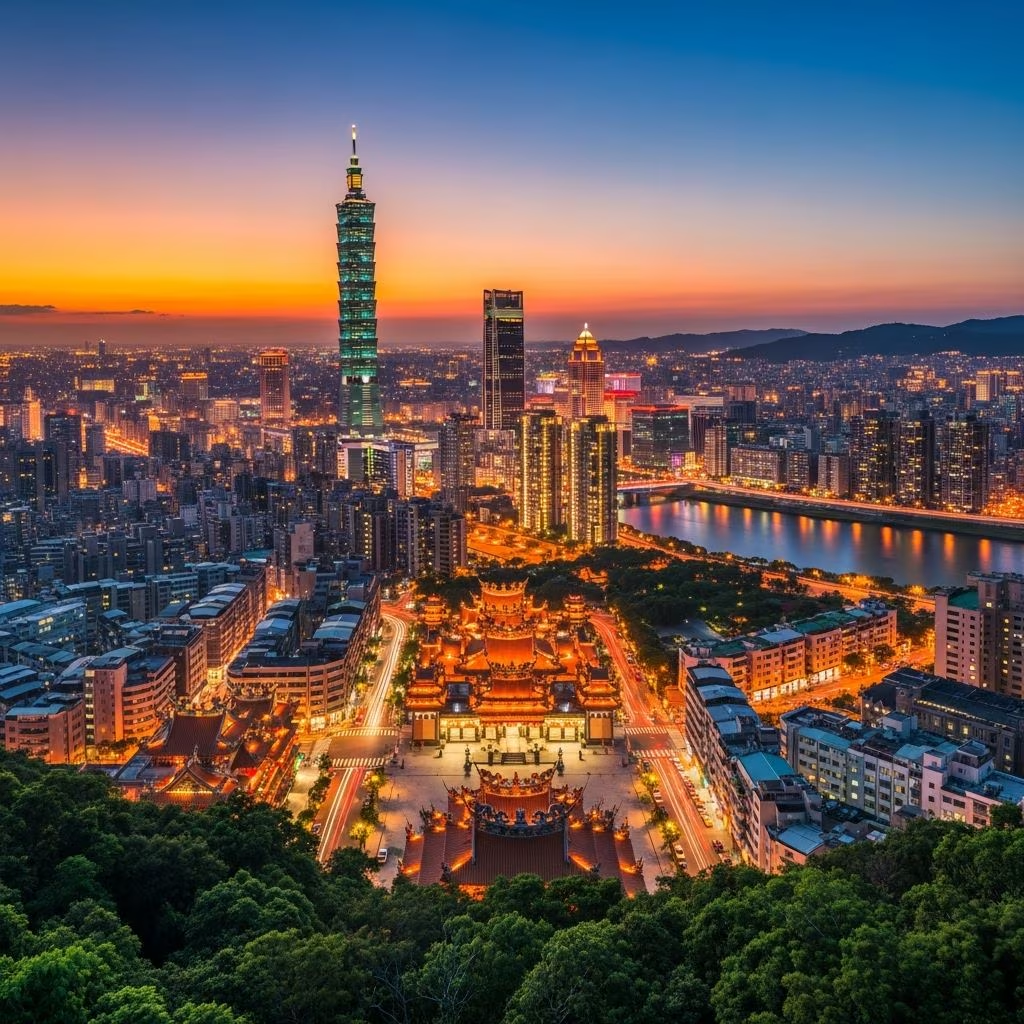
Taipei, Taiwan’s vibrant capital, welcomes millions of visitors annually with its blend of cutting-edge modernity and deep cultural heritage. Whether you’re planning your inaugural visit or returning for another exploration, understanding the fundamentals of traveling to this dynamic metropolis ensures a smoother, more enriching experience. This comprehensive guide covers everything you need to know before embarking on your Taipei journey.
Taiwan is significantly larger and more geographically diverse than many first-time visitors anticipate. The island encompasses high mountain ranges, pristine beaches, and stunning national parks alongside its famous urban centers. This geographical diversity directly influences travel planning, particularly regarding transportation options and regional exploration possibilities.
The capital city, Taipei, serves as the primary gateway for most international visitors. Located in northern Taiwan, Taipei’s strategic position makes it an ideal starting point for exploring both the capital itself and venturing into surrounding regions. Understanding Taiwan’s historical context enriches the travel experience, as the island’s complex past shapes its contemporary culture, architecture, and local customs.
Selecting the appropriate season significantly impacts your Taipei experience. The ideal periods for visiting are autumn (October to November), winter (December to February), and spring (March to May). These seasons offer comfortable temperatures and lower humidity levels compared to the summer monsoon period.
Autumn provides crisp, clear days perfect for outdoor activities and sightseeing. Winter, while occasionally cool, rarely experiences extreme cold in Taipei and offers excellent visibility for viewing landmarks like Taipei 101. Spring brings pleasant weather and blooming vegetation, creating picturesque conditions for exploring the city’s parks and outdoor attractions.
Summer months (June to September) bring intense heat, high humidity, and the typhoon season, which can disrupt travel plans. Planning around these months helps ensure more comfortable conditions and reduces weather-related complications.
International travelers must carry a valid passport with at least six months of remaining validity from the entry date. Many countries’ citizens enjoy visa-free entry to Taiwan for tourism purposes, though duration limits and specific conditions vary. Verifying your country’s entry requirements well in advance of your departure prevents last-minute complications.
Taiwan’s healthcare system ranks among Asia’s finest, with modern facilities available throughout Taipei. Travel insurance covering medical expenses provides additional peace of mind, particularly for extended stays. Pharmacies are abundant and easily accessible throughout the city, with many staff members capable of communicating in English at central locations.
Taiwan’s official currency is the New Taiwan Dollar (NT$). The exchange rate fluctuates based on international markets, with current rates available through major financial institutions and currency conversion platforms.
Automated Teller Machines (ATMs) are ubiquitous throughout Taipei, with international networks (Cirrus, Plus, Visa) widely supported. Most major ATMs in central business districts, hotels, and shopping areas accept foreign cards without difficulty. Banking hours typically run from Monday to Friday, 9 AM to 3 PM, though ATM accessibility eliminates dependence on business hours.
Credit cards enjoy extensive acceptance in modern establishments, shopping centers, and restaurants. However, traditional markets, smaller eateries, and temple areas may operate on cash-only bases. Maintaining a mix of both payment methods ensures flexibility throughout your stay.
Taiwan utilizes 110 volts at 60 Hz frequency, differing from many countries’ 220-240 volt standards. Power outlets typically feature two flat pins (Type A) or three flat pins (Type A with ground). Travelers from countries using different electrical standards should bring appropriate voltage converters and plug adapters.
Internet connectivity in Taipei presents no challenges. Most hotels, cafés, restaurants, and shopping centers provide complimentary Wi-Fi access. Mobile data plans from international carriers function adequately, though purchasing a local SIM card offers more economical rates for extended stays. Airport terminals provide convenient locations for obtaining local SIM cards upon arrival.
Taipei’s public transportation system represents one of Asia’s most efficient and extensive networks. The Taipei Metro (MRT) connects major attractions and residential areas through multiple color-coded lines, making navigation intuitive even for first-time users.
The Easy Card system streamlines fare payments across MRT and bus services, eliminating the need for individual tickets. Purchased at convenience stores or airport terminals, these rechargeable cards accept payment via stored value or credit cards. Journey costs remain significantly lower than comparable cities, with most trips costing NT$20-65 (approximately $0.65-$2.10 USD).
Airport Connectivity: The Airport MRT connects Taoyuan International Airport directly to central Taipei in approximately 35-40 minutes. For budget-conscious travelers, the 24-hour Kuo Kuang bus line 1819 operates from the airport to Taipei Main Station for around NT$140 (approximately $4.50 USD), though travel time extends to 50-55 minutes depending on traffic conditions.
Regional Travel Considerations: The High Speed Rail (HSR) connects Taipei to destinations throughout Taiwan, enabling day trips or extended regional exploration. Travel to locations like Sun Moon Lake involves HSR connections to Taichung followed by local bus services, with total journey times typically requiring 2-3 hours.
Mandarin Chinese serves as Taiwan’s official language, written using Traditional Chinese characters rather than the Simplified versions used in mainland China. English proficiency varies considerably throughout Taipei. International hotels, shopping centers, and major attractions typically employ English-speaking staff. However, neighborhood restaurants, smaller shops, and local markets may have limited English capabilities.
Learning basic Mandarin phrases—particularly greetings, thank you expressions, and directional inquiries—enhances interactions and demonstrates cultural respect. Smartphone translation applications bridge language gaps effectively in modern Taipei.
Taipei Main Station functions as the city’s central transportation nexus, where the MRT, High Speed Rail, and traditional railways converge. This strategic location makes it an ideal accommodation base for visitors prioritizing accessibility and transportation convenience. The area surrounding the station offers numerous hotels at varying price points, from budget hostels to luxury establishments.
Major neighborhoods cater to different visitor interests. Ximending appeals to shopping enthusiasts and younger travelers with fashion boutiques, entertainment venues, and abundant dining options. Dihua Street in the Dadaocheng district preserves Taipei’s historical character through 17th-century architecture and restored traditional buildings from the 19th-century commercial period. Beitou draws visitors seeking hot spring experiences and unique thermal architecture reflecting Japanese influences.
Taipei embraces a vibrant nighttime culture, with numerous establishments remaining open far beyond typical business hours. Popular hot pot restaurants like Hai Di Lao operate until 3-4 AM or later, accommodating diverse schedules and social gatherings. This extended accessibility makes spontaneous evening explorations feasible regardless of timezone adjustments or individual preferences.
Night markets represent quintessential Taipei experiences, offering concentrated food stalls, shopping opportunities, and authentic street food encounters. Shilin and Raohe Street markets provide particularly strong selections of local delicacies and unique merchandise, attracting both tourists and residents seeking casual dining and entertainment.
Taipei’s food scene encompasses everything from refined fine dining to humble street stalls, reflecting Taiwan’s diverse culinary traditions. Early risers can access traditional Taiwanese breakfasts at specialized vendors like Fu Hang Dou Jiang and Yong He Soy Milk King, which open around 5:30 AM.
Food-focused exploration offers meaningful cultural immersion. Organized food tours like those offered by Taipei Eats guide visitors through neighborhood food cultures, explaining ingredient selections, preparation methods, and historical significance of various dishes. These experiences provide context that transforms casual eating into cultural education.
Dietary restrictions or preferences merit advance communication at restaurants. While Taipei accommodates most dietary needs, explicitly stating requirements ensures accurate preparation rather than relying on assumptions.
Taipei’s tropical climate presents distinct seasonal characteristics requiring appropriate packing considerations. Rainfall occurs throughout the year, particularly during monsoon seasons, making compact umbrellas essential items. Humidity levels, especially during summer months, necessitate breathable, lightweight clothing and adequate sun protection including hats and high-SPF sunscreen.
The aforementioned typhoon season (typically June through September) occasionally disrupts transportation and outdoor activities. Travel insurance covering weather-related cancellations provides financial protection for trips scheduled during these months.
Taipei maintains high safety standards compared to global urban centers, with low violent crime rates and efficient emergency response systems. Petty theft, particularly in crowded markets and public transportation, remains the primary concern for travelers. Standard urban precautions—securing valuables, remaining aware of surroundings in crowded areas, and using hotel safes for important documents—suffice for most visitors.
Emergency services respond promptly to requests, with English-speaking operators available in major emergencies through the 112 or 999 numbers.
Taipei’s streets feature dense motor scooter and increasingly popular e-scooter traffic, requiring heightened crossing awareness. E-scooters, in particular, move silently through streets and sidewalk areas, necessitating vigilant observation before stepping into traffic patterns. Intersection signals clearly mark crossing procedures, and following local pedestrian patterns proves safer than attempting independent navigation strategies.
Taiwan’s tropical environment supports mosquito populations throughout the year, with increased activity during warmer months. While dengue fever and similar mosquito-borne illnesses occur occasionally, the risk for short-term travelers remains minimal with appropriate precautions. Applying insect repellent, wearing long sleeves during dawn and dusk hours, and maintaining hotel room screens in good condition minimizes exposure.
Successful Taipei travel begins with thorough preparation addressing practical logistics while maintaining flexibility for unexpected discoveries. Confirming documentation, understanding transportation systems, and familiarizing yourself with neighborhood layouts reduces stress while maximizing enjoyment of this remarkable city.
Download offline maps, establish emergency contacts, and communicate your itinerary with trusted individuals before departure. These precautions, combined with the comprehensive information provided throughout this guide, position you for an outstanding Taipei experience that balances planned activities with spontaneous exploration of this captivating destination.
