

 Travel Essentials
 Travel Essentials

Explore Taiwan's modern transportation infrastructure including rail, metro, buses, and alternative options for seamless island travel.
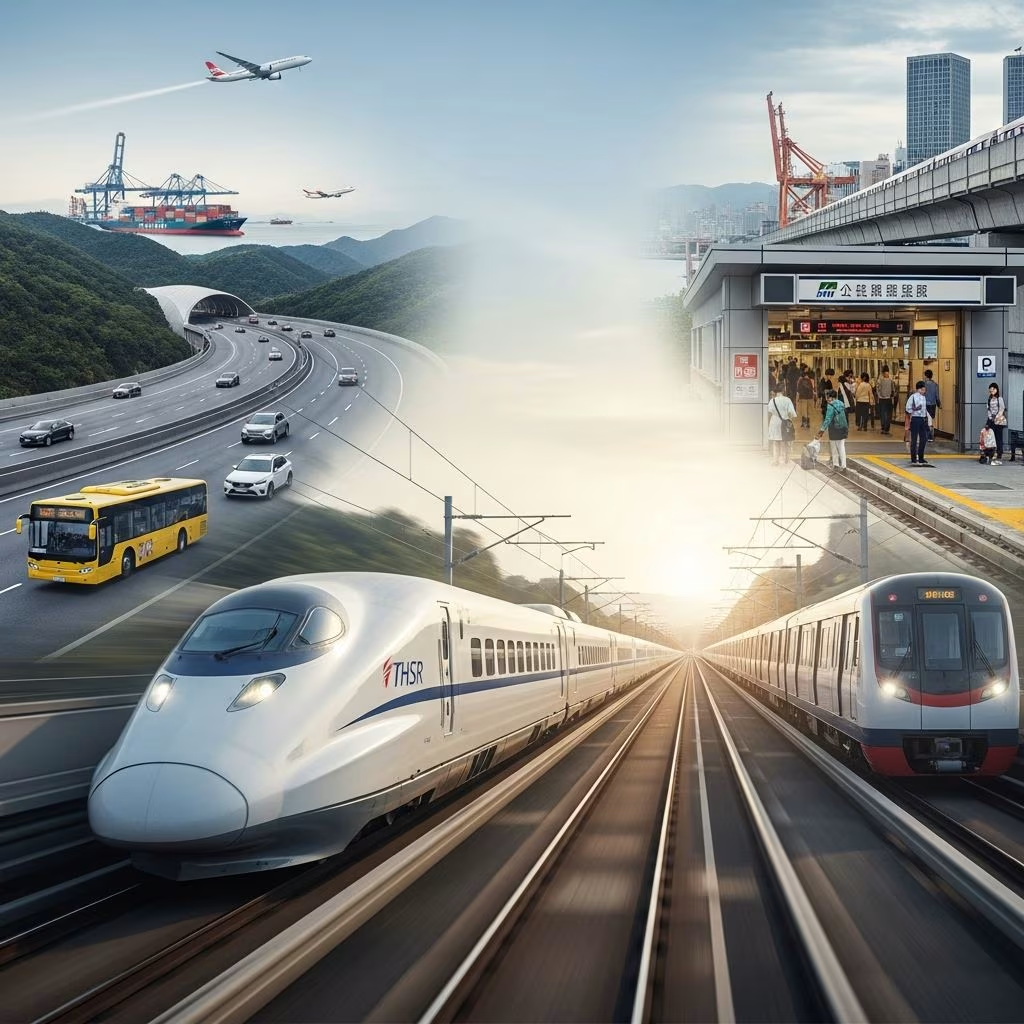 Travel Essentials
Taiwan stands out as one of Asia’s most accessible destinations, offering travelers a sophisticated and interconnected transportation ecosystem. The island’s commitment to modern infrastructure means that navigating between cities, exploring urban centers, and reaching remote mountain villages has become remarkably straightforward. Whether you’re arriving at an international airport, planning inter-city travel, or discovering hidden neighborhoods, understanding your transit options will transform your Taiwan experience from potentially stressful to genuinely enjoyable.
The foundation of Taiwan’s transportation success rests on decades of strategic infrastructure investment and technological advancement. The island has developed a comprehensive network that seamlessly connects major population centers while extending service to rural communities. What makes this system particularly effective is its integration—different modes of transport work in harmony rather than competing, allowing travelers to mix and match options based on their specific needs and preferences.
The efficiency metrics tell a compelling story. Taiwan’s urban transit systems process millions of daily journeys while maintaining exceptional punctuality and cleanliness standards. This reliability creates a travel environment where you can confidently plan activities without worrying about whether transportation will cooperate with your schedule.
The Taiwan High-Speed Rail (THSR) represents the country’s most transformative transportation innovation for longer-distance travel. This system revolutionized how people move across the island when it opened in 2007, fundamentally changing travel times between major cities. The THSR connects Taiwan’s primary population centers along the western corridor, stretching approximately 350 kilometers from Taipei in the north to Kaohsiung in the south.
The speed advantage is remarkable. What once required over five hours via conventional rail now takes merely ninety minutes on the High-Speed Rail. For passengers traveling the full Taipei-to-Kaohsiung route, the journey concludes in under two hours. The trains themselves represent cutting-edge engineering—modern, immaculately maintained, and designed for passenger comfort during rapid transit.
Pricing and Ticket Strategy: General fares for long-distance High-Speed Rail journeys typically range around NT$1,500 (approximately US$50) for standard seating. While this represents a premium compared to conventional trains, the time savings often justify the expense for business travelers or those with limited vacation days. Tickets are readily available through automatic vending machines at THSR stations, with credit card payment accepted alongside Taiwanese currency.
For travelers prioritizing cost savings or preferring a slower pace that allows landscape appreciation, Taiwan’s conventional railway system offers an excellent alternative. The Taiwan Railway Administration (TRA) operates an extensive network of local and express trains that connect all major cities and towns throughout the island. With over 200 stations across Taiwan’s geography, the TRA reaches destinations that the High-Speed Rail bypasses entirely, particularly on the eastern coast.
The economic advantage is substantial. Short-distance fares begin at approximately NT$50 (roughly US$1.70), while even extended journeys cost approximately half the High-Speed Rail equivalent. This affordability makes the conventional rail system ideal for budget-conscious travelers, backpackers, or anyone seeking an authentic, leisurely exploration of Taiwan’s countryside and smaller communities.
Train Categories and Their Purpose:
For visiting nearby destinations like the lantern festivals of Jiufen, the waterfall attractions near Shifen, or the mountain landscapes surrounding Hualien, conventional trains provide ideal connectivity.
Taiwan’s rapid transit systems have transformed urban navigation in major metropolitan areas. Currently available in five major cities—Taipei, Kaohsiung, Taoyuan, New Taipei City, and Taichung—the Mass Rapid Transit (MRT) systems provide the fastest method for traversing urban landscapes.
Taipei’s MRT system exemplifies the sophistication of Taiwan’s urban transit infrastructure. Operating eighteen hours daily from 6:00 AM to midnight, the Taipei Metro serves as the foundation for city exploration. With six lines spanning 131 stations, this system connects critical transportation hubs like Taoyuan Airport and Taipei Main Station while providing convenient access to renowned attractions including Taipei 101 and the Chiang Kai-shek Memorial Hall. The service extends geographically to the Maokong Gondola in the east, Xindian in the south, and Danshui in the north.
What makes this system particularly impressive is its operational excellence despite extraordinary demand. Processing over eight million daily journeys, the Taipei Metro maintains exceptional efficiency, with train intervals varying from as brief as ninety seconds during peak periods to approximately fifteen minutes during off-peak times. This frequency means you’ll rarely wait extended periods for your next departure.
Navigating MRT Systems: Multiple payment options exist for MRT travel. The EasyCard remains the simplest approach, particularly within Taipei where special discounts apply to regular users. Alternative payment methods include cash or credit card purchases at station ticket machines, though these require stopping to acquire individual tickets. Stations are strategically positioned near popular tourist attractions, shopping districts, and transportation hubs, making the MRT an intuitive navigation tool even for first-time visitors.
Your first transportation decision in Taiwan typically occurs immediately upon landing. Major airports have developed efficient transit connections to central city locations, though your choice depends on timing, luggage volume, and budget parameters.
Taoyuan International Airport Connections: The Purple Line Express MRT provides the most efficient option for travelers arriving at Taipei’s primary international gateway. This dedicated service reaches Taipei Main Station in just thirty-five minutes for NT$160 (approximately US$5). However, a critical timing consideration applies: MRT service concludes at 11:30 PM. Passengers arriving after 11:00 PM must arrange taxi or private transfer services, as public transit will be unavailable.
Songshan Airport Access: The smaller Songshan Airport, located directly within Taipei, offers geographic convenience. The Brown Line MRT operates directly outside terminal facilities, or alternatively, taxis to central business districts like Xinyi or Daan require merely ten minutes and cost approximately NT$150-250 (roughly US$4.50-8).
Budget Airport Transportation: For passengers traveling light or seeking maximum affordability, the Airport MRT Commuter option offers fifty minutes of travel with additional stops at a slightly reduced cost compared to express service. Alternatively, dedicated airport shuttle buses (routes 1819, 1960, and 1961) operate around NT$140 and work well for travelers whose hotels lack proximity to Taipei Main Station.
While MRT systems dominate urban transit discussions, buses and bicycle sharing deserve recognition as valuable transportation alternatives. Buses extend their network reach beyond MRT coverage areas and serve neighborhoods where rail infrastructure doesn’t exist. Long-distance bus services additionally connect cities and mountains that rail networks bypass—destinations like Alishan, Sun Moon Lake, and Taroko Gorge become accessible through comprehensive bus networks.
YouBike, Taiwan’s public bicycle sharing system, offers innovative micro-mobility solutions. In Taipei specifically, the first thirty minutes of YouBike usage remain completely free, making this an excellent option for covering short distances between MRT stations or exploring neighborhoods at leisurely pace. Bike-share stations cluster near MRT station exits, creating seamless connections between these transportation modes.
Simplifying fare payment across Taiwan’s various transportation systems, several prepaid card options have emerged as invaluable travel tools. The EasyCard works across Taipei MRT systems, buses, and many merchants. The iPASS extends functionality beyond Taipei to other regions, offering nationwide compatibility. The THSR Pass specifically addresses High-Speed Rail travel.
| Payment Method | Best For | Typical Benefits |
|---|---|---|
| EasyCard | Taipei MRT and local transit | Discounted fares, convenient tap payment |
| iPASS | Regional and nationwide travel | Nationwide compatibility, flexible usage |
| THSR Pass | High-Speed Rail journeys | Streamlined ticket purchases, reserved seating options |
| Cash/Credit | Single journeys, occasional travel | No advance purchase required, maximum flexibility |
Taiwan’s famous mountain destinations—including Alishan’s forest railways and Taroko Gorge’s dramatic landscapes—present unique accessibility challenges. The eastern coast and mountain regions experience lower public transit frequencies and more complex scheduling compared to western urban corridors. For these destinations, booking a private driver emerges as the most pragmatic option, guaranteeing door-to-door comfort and reliable arrival times for scheduled tours or dining reservations.
Beyond the primary transportation modes, Taiwan offers supplementary options for specific travel scenarios. Taxi services provide on-demand convenience, particularly valuable during late-night hours or when public transit has concluded service. Car rental enables independent exploration for those comfortable with Taiwan’s traffic patterns and road systems. Ferry services connect Taiwan’s offshore islands to main island ports. Domestic flights, while less commonly utilized by budget travelers, provide rapid access to distant regions.
Maximize your Taiwan transportation experience through thoughtful planning. Securing rail tickets in advance proves essential during weekends and holiday periods, guaranteeing seating availability and maintaining travel momentum. Pairing the MRT subway system with occasional taxi rides bypasses tropical humidity exposure and eliminates station navigation fatigue during peak summer temperatures. Understanding your accommodation’s proximity to transit hubs will dramatically influence your daily transportation choices and budget allocations.
Taiwan’s transportation infrastructure represents a remarkable achievement in urban planning and regional connectivity. From the rapid velocity of High-Speed Rail connections to the accessible charm of local trains exploring quiet countryside communities, the transportation system accommodates diverse travel styles and budgets. Whether you’re a first-time visitor or returning traveler, understanding these options empowers you to navigate the island with confidence and efficiency.
