

 Travel Essentials
 Travel Essentials

Comprehensive guide covering permits, transport, dining, weather patterns, and cultural etiquette for Taiwan travelers.
 Travel Essentials
Taiwan stands as one of Asia’s most welcoming and accessible destinations for international travelers. With its combination of modern infrastructure, natural beauty, and vibrant culture, the island nation attracts visitors seeking both urban exploration and outdoor adventure. However, successful travel to Taiwan requires understanding several key considerations that can significantly enhance your experience and help you navigate potential challenges. This comprehensive guide addresses the practical, cultural, and environmental factors that every traveler should know before arriving.
One of the most critical aspects of Taiwan travel involves advance planning. Unlike some destinations where spontaneity works well, Taiwan requires visitors to think ahead in several key areas. The island’s popularity among travelers means that accommodations book quickly, particularly during peak seasons. Securing lodging well in advance—ideally several weeks before your travel dates—prevents disappointment and ensures access to quality options in your preferred locations.
Dining represents another area where advance booking significantly improves your experience. Taiwan’s restaurant scene ranges from casual street food vendors to Michelin-starred establishments, and popular venues frequently reach capacity. Making reservations ahead of time, particularly for dinner services at well-regarded restaurants, eliminates the frustration of arriving only to find no available tables. This applies especially to specialized restaurants in major cities and popular tourist areas.
Mountain hiking and national park exploration demand even more extensive preparation. Taiwan’s stunning high-altitude peaks and protected natural areas require official permits that can take weeks to obtain. The permit application process involves navigating bureaucratic procedures and may depend on factors like trail difficulty, seasonal access, and accommodation arrangements. Those interested in hiking Taiwan’s challenging summits should begin their permit applications at least four to six weeks before their intended travel date.
Taiwan’s transportation infrastructure ranks among Asia’s most efficient and user-friendly systems. The island features an integrated network of options that makes independent travel straightforward for visitors without local knowledge. Modern metro systems connect major urban centers, intercity buses link distant destinations, and regional trains provide scenic routes through diverse landscapes.
The EasyCard system revolutionizes transportation convenience for visitors. This contactless payment card works across multiple transport modes including metro systems, buses, trains, and even many convenience stores. Obtaining an EasyCard at the airport upon arrival eliminates the need to purchase individual tickets for each journey and streamlines repeated transit usage. The card functions as both a transit pass and a digital wallet, accepting top-ups at convenience stores throughout the country.
Motor scooters represent the dominant personal transport mode across Taiwan’s cities and towns. First-time visitors should exercise heightened caution when crossing streets, particularly in areas with high scooter traffic. The silent operation of increasingly common electric scooters adds another safety consideration that urban pedestrians must factor into their navigation strategies.
Understanding and respecting local customs creates positive interactions and demonstrates cultural sensitivity. Taiwan’s culture blends traditional Chinese heritage with modern sensibilities, resulting in specific behavioral expectations that travelers should recognize.
Public Transportation Conduct: Taiwan’s metro commuters maintain unusually strict standards regarding onboard behavior. Eating and drinking are generally prohibited, and this rule receives serious enforcement through social disapproval. Even water consumption during commutes is considered inappropriate in many contexts. Chewing gum also violates public transit norms. Metro carriages maintain exceptionally quiet atmospheres, creating peaceful but distinctly reserved travel experiences. Visitors should adjust their behavior to match these standards, avoiding eating or loud conversations during metro rides.
Temple Visitation Protocols: Taiwan’s abundance of temples and shrines reflects the population’s diverse spiritual beliefs incorporating Buddhism, Taoism, and folk traditions. Proper temple etiquette involves entering through the right-side entrance and exiting via the left-side exit. This directional convention stems from deep cultural traditions and shows respect to both the sacred space and other visitors. Wearing appropriate clothing—avoiding overly revealing garments—demonstrates proper deference to the spiritual significance of these locations.
Hot Springs and Bathing Culture: Taiwan’s volcanic geology creates numerous hot spring opportunities, particularly around locations like Beitou near Taipei. While visitors may legally enter hot springs regardless of tattoo status (unlike some Japanese onsen with restrictive policies), bathing caps are mandatory at many establishments. These facilities typically provide towels, robes, and sandals as part of the standard amenities.
Taiwan’s geography encompasses remarkable diversity within a compact area. Approximately seventy percent of the island consists of mountainous terrain, earning Taiwan designation as the world’s most mountain-dense island. Despite this dramatic topography and high population density of approximately 650 people per square kilometer, roughly sixty percent of Taiwan’s land remains covered in forests and green spaces. This combination creates stunning national parks and extensive hiking opportunities that attract nature-focused travelers.
Sun Moon Lake, Taiwan’s largest freshwater lake, attracts visitors seeking natural scenery and recreational activities. Notably, swimming restrictions apply year-round except for designated festival days when controlled swimming events draw tens of thousands of participants. Most visits center on bicycle routes circling the lake, boat excursions across its waters, and hiking trails through surrounding mountains. The landscape offers peaceful respite from urban environments and opportunities for photography and contemplation.
Taiwan experiences a subtropical to tropical climate with distinct seasonal variations. The most favorable periods for travel occur during autumn (October to November), winter (December to February), and spring (March to May), when temperatures remain moderate and precipitation decreases. These seasons provide optimal conditions for outdoor exploration and sightseeing.
Typhoon season presents a significant consideration for Taiwan travel planning. Running from May through November, this period averages five typhoon warnings annually from Taiwan’s Central Weather Bureau, with three to four typically making landfall. Typhoons bring heavy rains, strong winds, and potential infrastructure disruptions. During this season, visitors should monitor weather forecasts regularly and be prepared for possible schedule changes, particularly for island ferry services and mountain excursions. Heavy rains can trigger landslides in mountainous areas and cause cross-island bus routes to close temporarily.
Taiwan sits just west of the Pacific Ring of Fire tectonic zone, subjecting the island to regular seismic activity. Earthquakes occur frequently, ranging from barely perceptible tremors to occasionally severe events. The most recent significant earthquake struck on April 3, 2024, measuring 7.4 magnitude and resulting in 18 deaths and over 1,100 injuries. While this shouldn’t deter travel, visitors should understand basic earthquake response procedures: if shaking occurs, remain calm, take cover under sturdy furniture, or move to open spaces if outdoors. Staying informed through local news and government alerts helps travelers respond appropriately to seismic events.
Floods and landslides frequently accompany heavy rainfall, particularly in mountainous regions. Visitors should avoid mountain areas immediately following earthquakes or intense precipitation until local authorities confirm safety. The combination of steep terrain and concentrated rainfall creates landslide risks that can affect hiking trails and transportation infrastructure.
Convenience stores appear ubiquitously throughout Taiwan, typically within short walking distance in urban areas and towns. These establishments provide far more than snacks and beverages—they function as de facto service centers offering meal options, EasyCard top-ups, bill payments, package delivery services, and various other conveniences. This infrastructure allows travelers to travel lighter, knowing they can obtain necessary items easily throughout their journey.
Taiwan’s service culture emphasizes responsiveness and helpfulness. English-language proficiency varies depending on location, with better English support in major tourist destinations and less in rural areas. Learning basic Mandarin phrases or downloading translation applications helps bridge communication gaps and enriches interactions with local residents.
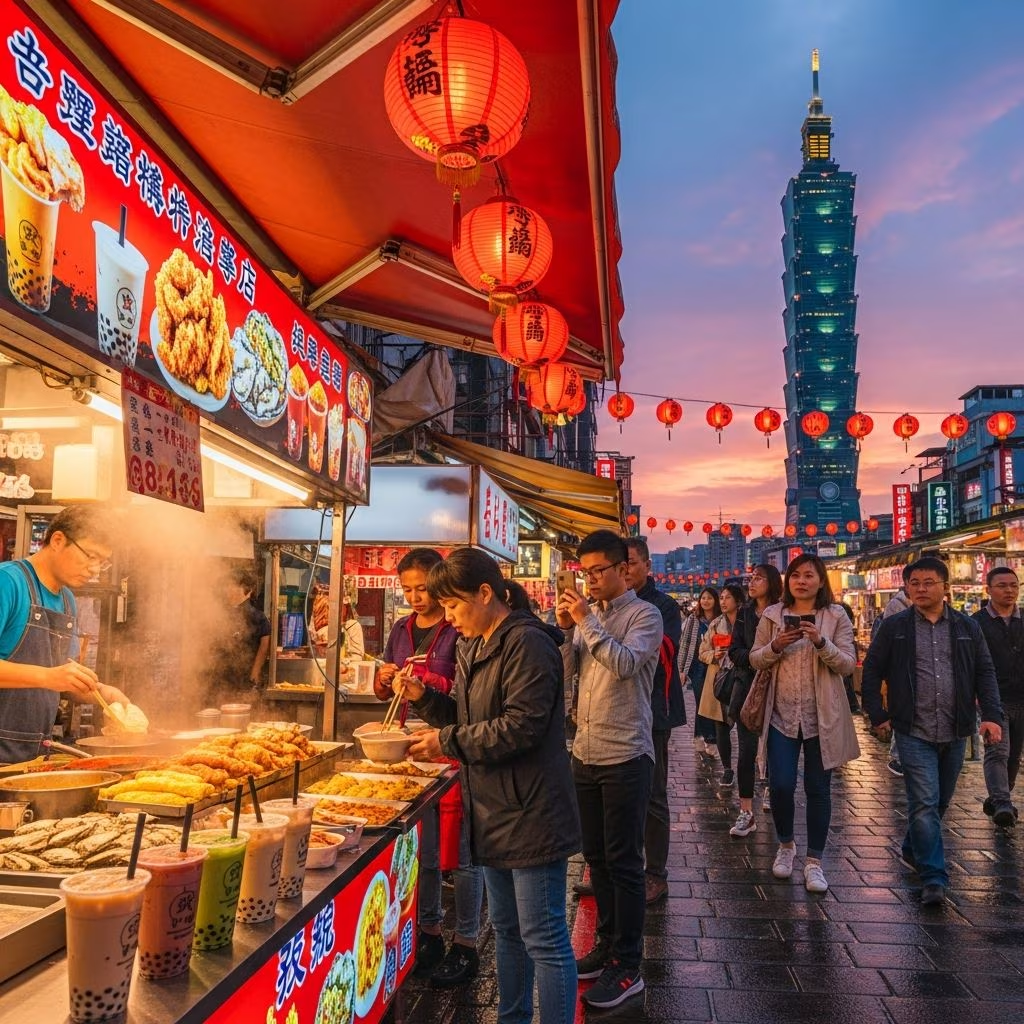
Taiwan’s food culture spans the entire spectrum from humble street stalls to internationally acclaimed restaurants. Night markets represent quintessential Taiwanese culinary experiences, offering countless food vendors serving traditional snacks, regional specialties, and innovative fusion creations. These vibrant evening markets provide affordable meals and authentic cultural immersion simultaneously.
Michelin-starred establishments showcase Taiwan’s fine dining capabilities, offering sophisticated interpretations of both traditional and contemporary cuisine. The contrast between ultra-casual dining and haute cuisine reflects Taiwan’s cultural duality—a modern, sophisticated society maintaining strong connections to traditional heritage.
Taiwan holds distinction as Asia’s first country to legalize same-sex marriage, positioning itself as a progressive destination for LGBTQ+ travelers. Taipei hosts the Chinese-speaking world’s most vibrant Pride celebration and maintains active LGBTQ+ nightlife venues, particularly in specific neighborhoods. Kaohsiung provides a secondary hub for LGBTQ+ community activities and gatherings. Resources like Utopia, the Taiwan Tongzhi (LGBTQ+) Hotline Association, and Taiwan LGBT Pride offer comprehensive information for community members seeking supportive services and social connections.
Obtaining a local SIM card at the airport upon arrival simplifies communication and navigation throughout your stay. Mobile data access enables real-time translation, map navigation, and communication with accommodations or restaurants. Taiwan’s telecommunications infrastructure supports multiple providers offering competitive rates for visitor plans.
Passport validity requirements specify that your passport must remain valid through your entire intended stay. Ensure your passport contains at least one blank page per entry or exit stamp, though Taiwan’s e-Gate system attempts to streamline immigration processing. However, occasional e-Gate malfunctions occur, and immigration officers don’t always provide troubleshooting assistance. Standard immigration procedures remain relatively straightforward outside peak arrival times.
Taiwan maintains low violent crime rates and excellent infrastructure safety standards. The primary concerns relate to natural disasters rather than criminal activity. Earthquakes and typhoons pose seasonal risks that require awareness and preparedness rather than causing serious danger to properly informed travelers.
While week-long visits allow exploration of major cities and notable attractions, Taiwan’s geographic and cultural diversity warrants two to three weeks for more comprehensive experiences. The island proves larger than first impressions suggest, and thorough exploration of mountainous regions, rural areas, and island destinations requires extended time.
Mandarin Chinese represents the official language, written using traditional Chinese characters. English proficiency varies by location, with better support in tourist areas and major cities. Learning basic Mandarin phrases demonstrates cultural respect and facilitates interactions with residents in smaller towns.
Autumn, winter, and spring offer ideal travel conditions with moderate temperatures and lower precipitation. Typhoon season (May-November) brings weather disruptions though not prohibitive to travel with proper preparation.
