

 Travel Essentials
 Travel Essentials

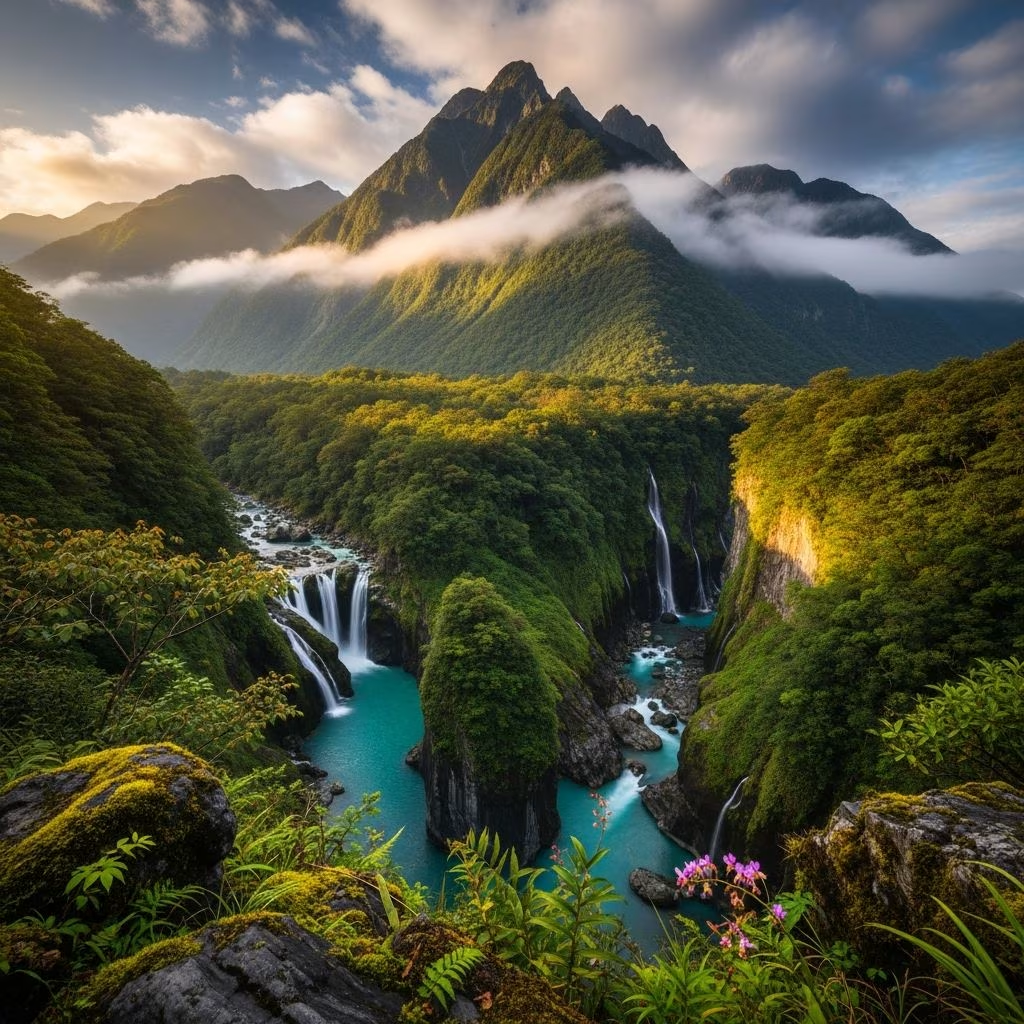
Explore Taiwan's diverse natural beauty: rugged mountains, volcanic hot springs, surreal rock formations, and tropical coastlines that make it a must-visit paradise.
 Travel Essentials
Taiwan, a compact subtropical island forged by volcanic forces, boasts an extraordinary array of natural features that captivate adventurers and nature enthusiasts alike. Over 70% of its terrain consists of rugged mountains rising dramatically from the sea, interspersed with geothermal hot springs, wind-sculpted rock formations, and vibrant coral reefs. This guide delves into the island’s most remarkable sites, offering insights into their geological origins, best visiting times, and practical tips for an unforgettable journey.
Taiwan’s central and eastern regions are dominated by towering peaks and deep ravines, products of tectonic activity and erosion over millions of years. These landscapes provide some of the most thrilling hiking and scenic drive opportunities in Asia.
At the heart of Taiwan’s natural splendor lies **Taroko National Park**, home to one of the world’s deepest marble canyons carved by the jade-green Liwu River. Spanning 22 kilometers of sheer cliffs and subtropical forests, the park features 27 peaks and free entry, making it accessible for all visitors. Key highlights include the Baiyang Waterfall Trail, where hikers can descend amid misty cascades, and the Eternal Spring Shrine, a tribute to road builders perched above a perennial stream.
Further south, **Alishan** elevates visitors to over 2,400 meters, where ancient cypress trees cloak misty trails leading to waterfalls and tea plantations. The pinnacle experience is the predawn ascent to Zhushan Observation Deck for the “sea of clouds” sunrise, where golden light pierces a vast white expanse below. Light hikes reveal sacred trees over 2,000 years old and the enchanting Sisters Lakes.
Taiwan’s eastern and northern shores showcase dramatic coastlines where mountains plunge into the Pacific, creating surreal rockscapes shaped by wind, waves, and salt erosion.
On the northern tip, **Yehliu Geopark** (also known as Hsiao Yeliu) features mushroom rocks, candlestick formations, and the iconic Queen’s Head—a slender necked sandstone pillar resembling royalty. These hoodoo-like structures, formed over thousands of years, evoke a dreamlike, Dali-esque quality. Elevated walkways allow safe exploration right to the edge.
| Formation | Description | Height |
|---|---|---|
| Queen’s Head | Sandstone pillar with delicate neck | 4 meters |
| Mushroom Rocks | Wider base, narrow top from erosion | Up to 3 meters |
| Candle Rocks | Tall, slender protrusions | 2-5 meters |
Along the Suao-Hualien Highway, **Qingshui Cliff** plummets over 3,280 feet directly into the ocean, offering vertigo-inducing views from roadside pullouts. This sheer marble face, part of Taroko’s extension, is best photographed at dusk when the rock glows.
Northeast of Taipei, **Long Dong** (Dragon Cave) boasts 70-meter sandstone crags battered by turquoise waves. Lengthy footpaths lead to secluded bases, ideal for photography and contemplation amid rugged isolation.
Taiwan’s southern peninsula transitions to balmy tropics, with national parks blending beaches, coral, and wildlife.
**Kenting National Park** in the south dazzles with diverse ecosystems: Eluanbi Lighthouse overlooks rocky shores via elevated trails, while the Forest Recreation Area buzzes with birds, butterflies, and flora. Baisha Bay, filming site for Life of Pi, features white sands; Maobitou mimics a crouching cat’s profile. Night markets and whale-watching add vibrancy.
Off the west coast, the **Penghu Archipelago** stuns with hexagonal basalt columns, purple cactus sorbets, coral courtyard homes, and heart-shaped fish weirs. Top beaches rival anywhere, with world-class snorkeling and summer fireworks festivals.
Nearby **Xiao Liuchiu** offers Vase Rock sunsets via wooden walkways and vibrant reefs teeming with sea turtles—prime snorkeling territory.
Taiwan’s volcanic past gifts abundant hot springs and lava formations.
North of Taipei, **Beitou** features alkaline springs in lush settings, while **Green Island** hosts the world’s only saltwater hot springs, bubbling ocean-side. Public baths and private resorts cater to soakers.
Active fumaroles, sulfur vents, and trails circle **Yangmingshan**, Taipei’s backyard volcano playground.
Central Taiwan’s **Sun Moon Lake**, ringed by peaks, reflects like a mirror. Cycle paths, Thao tribe performances at the Formosan Aboriginal Culture Village, and cable car rides enhance the visit.
Bounded by gorges, ocean, and rice paddies, this rift offers pastoral serenity with cycling routes.
Yes, well-marked trails and tourist infrastructure make it beginner-friendly, but check weather apps for rain/typhoons.
10-14 days covers highlights; fly between north/south for efficiency.
Many like Taroko are free; others charge nominal fees (NT$100-300).
Sun Moon Lake, Kenting beaches; avoid strenuous gorges.
Visa-free for 90 days for many nationalities; check official sites.
