

 Travel Essentials
 Travel Essentials

Explore the Taj Mahal's origins as a Mughal love monument, its stunning architecture, best visit times, practical tips, and cultural significance in Agra.
 Travel Essentials
The Taj Mahal stands as one of the world’s most iconic monuments, a breathtaking mausoleum in Agra, India, symbolizing eternal love and architectural brilliance under Mughal rule.
Commissioned by Emperor Shah Jahan, the Taj Mahal honors his beloved wife Mumtaz Mahal, who passed away in 1631 during childbirth. This Persian princess captured the emperor’s heart early in his reign, and her death devastated him profoundly. Construction began around 1632 as a tribute, transforming grief into a lasting legacy of devotion.
Shah Jahan’s passion drove the project, involving thousands across vast regions. Historical accounts describe his oversight, ensuring every detail reflected his vision for perfection. The site’s selection along the Yamuna River provided natural beauty and strategic positioning, enhancing the monument’s grandeur.
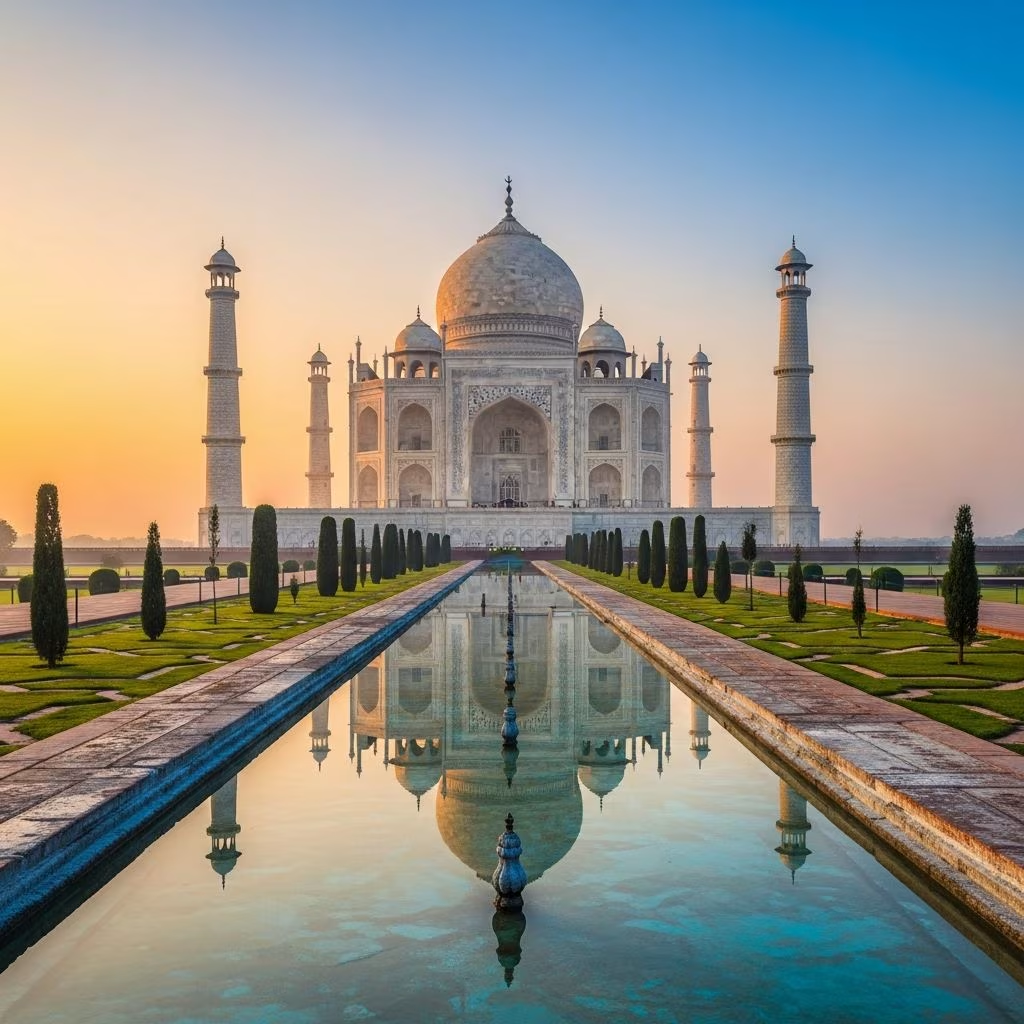
The complex exemplifies Indo-Islamic architecture, blending Persian, Turkish, and Indian influences with perfect symmetry and symbolic depth. The central mausoleum, clad in pristine white marble from Makrana quarries, rises majestically with a massive dome over 70 meters tall, flanked by four minarets.
Red sandstone structures, including the mosque and guest house, frame the white centerpiece, creating visual harmony. Intricate inlays of semi-precious stones—pietra dura—adorn surfaces with floral motifs and Quranic verses calligraphed by expert artisans. The gardens follow the Mughal charbagh layout, divided into quadrants representing paradise, with reflective pools amplifying the monument’s reflection.
Building the 42-acre complex spanned over two decades. The mausoleum core finished by 1638-1648, with surrounding elements like the gateway and mosque completed by 1653. Estimates place the workforce at 20,000, including masons, stone carvers, and specialists from India, Persia, the Ottoman Empire, and Europe.
Chief architect Ustad Ahmad Lahori led the team, with supervisors ensuring Shah Jahan’s directives were met. Materials traveled immense distances: marble from Rajasthan, sandstone locally, and jewels from afar. The cost, around 32 million rupees then (equivalent to billions today), underscored its extravagance.
| Phase | Timeline | Key Completion |
|---|---|---|
| Mausoleum | 1632-1638/1648 | Main structure |
| Adjunct Buildings | 1638-1643 | Mosque, guest house |
| Decoration & Gardens | 1643-1653 | Full complex |
Access the site via three entrances: South (main, for cars), East (walk-ins), and West. Tickets grant entry to the complex; an extra fee unlocks the mausoleum interior, revealing cenotaphs of Shah Jahan and Mumtaz Mahal—the only asymmetry, as his was added later.
Open daily except Fridays (mosque prayer day), from sunrise to sunset. Arrive early to beat crowds and witness the marble’s color shift in morning light. Photography is allowed outside; no tripods inside.
Security checks are strict: no large bags, food, or electronics beyond phones. Dress modestly—cover shoulders and knees. Guides enhance the experience; official ones wear badges.
October to March offers cool weather (10-25°C), ideal for exploration. Avoid summer’s intense heat (up to 45°C) and monsoon rains (July-September). Sunrise (via East gate) bathes the Taj in golden hues; full moon nights (select dates) permit after-dark visits, showcasing ethereal glows.
Fog in winter can obscure views, but clear days reveal the dome shimmering differently by hour: pink at dawn, milky white midday, golden at dusk.
UNESCO inscribed the Taj in 1983 for its universal value as Muslim art’s pinnacle. Threats include pollution yellowing the marble, addressed by Supreme Court mandates for cleaner transport and river restoration. Recent efforts include mud pack cleanings and bio-enzymatic treatments.
Visitor caps (40,000/day) and restrictions on nearby industries protect it. The site draws millions annually, balancing tourism with conservation.
Combine your visit with Agra Fort, Shah Jahan’s red sandstone residence overlooking the Taj, and Fatehpur Sikri, Akbar’s abandoned city 40km away. Mehtab Bagh gardens across the Yamuna offer unobstructed Taj views at sunset.
Stay in Agra for multi-day itineraries: luxury Taj hotels or budget guesthouses. Trains from Delhi (2-3 hours) or flights to Agra airport ease access.
Agra pulses with Mughal heritage—shop for marble inlays, petha sweets, and leather goods. Savor kebabs, biryanis, and Mughlai curries at spots like Pinch of Spice. Respect customs: remove shoes in prayer areas, silence phones.
Yes, on full moon nights (five days monthly, excluding Fridays/Ramadan), with tickets sold out quickly.
No, closed for prayers; Muslims can access the mosque.
2-3 hours suffices for the complex; add 30 minutes for interior.
Modest attire: long pants/skirts, covered shoulders; saris provided if needed.
No, strictly prohibited for security.
Diana Bench in the gardens for iconic framing.
Maintain silence, stay on paths to prevent lawn damage, and avoid touching marble. Opt for electric buses or rickshaws to reduce emissions. Support local artisans for authentic souvenirs.
This guide equips you to appreciate the Taj Mahal’s splendor responsibly, honoring its legacy as a testament to love and ingenuity.
