

 Travel Essentials
 Travel Essentials

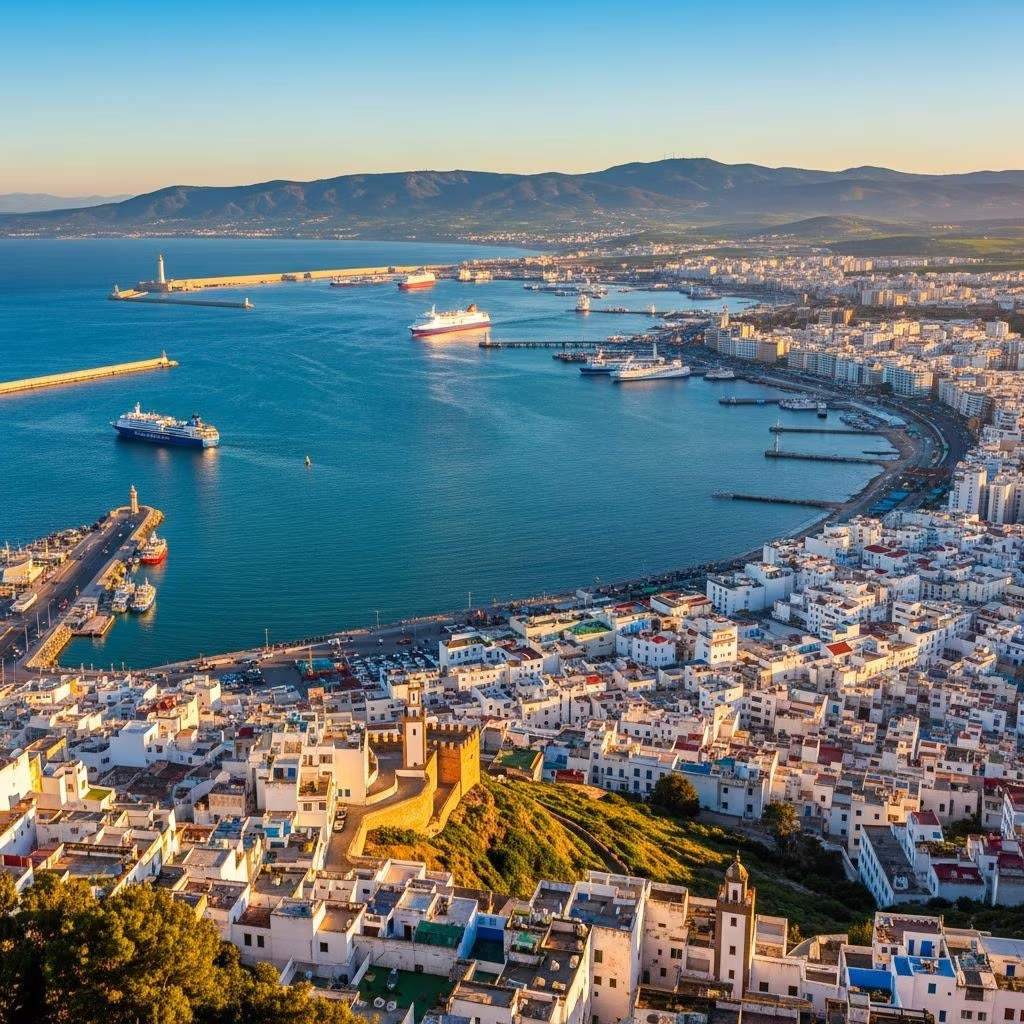
Tangier blends Moroccan heritage with Mediterranean allure, offering historic sites, beaches, and markets for an unforgettable adventure.
 Travel Essentials
Tangier sits at the crossroads of continents, where the Mediterranean Sea kisses the Atlantic Ocean and Europe feels tantalizingly close. This northern Moroccan port city captivates with its layered history, from ancient Phoenician settlements to its mid-20th-century status as an international zone that drew artists, spies, and celebrities. Modern Tangier pulses with energy, blending traditional souks, grand architecture, and coastal beauty into a destination that’s accessible yet exotic.
The city’s timeline weaves through millennia. Phoenicians established early outposts here around 1100 BCE, drawn by its strategic harbor. Romans later fortified it as Tingis, leaving archaeological traces amid today’s urban sprawl. Berber influences shaped its medina, while Portuguese, Spanish, and British occupations added layers of colonial architecture. Post-independence in 1956, Tangier evolved from a freewheeling enclave—frequented by figures like Paul Bowles and the Rolling Stones—into a bustling hub revitalized by recent infrastructure like the Tanger-Med port.
Today, this evolution manifests in a skyline dotted with whitewashed homes, minarets, and modern ferries shuttling visitors to Spain. Tangier’s mild climate supports year-round exploration, though summer brings beach crowds and winter offers quieter cultural dives.
At Tangier’s core lies the medina, a labyrinth of narrow alleys teeming with life. Enter via Grand Socco, a lively square marking the transition from modern ville nouvelle to ancient quarters. Here, vendors hawk sweets like mille-feuille, and locals gather under palm trees. Petit Socco nearby buzzes with café tables spilling onto pavements, ideal for people-watching over mint tea.
Winding deeper, the medina reveals riads with intricate tilework, spice souks fragrant with saffron and cumin, and leather workshops. It’s a sensory immersion: calls to prayer echo off walls, carpets dangle from stalls, and fresh tagine simmers in corner eateries. Bargaining is key—start at half the asking price for authentic deals on pottery or babouche slippers.
Perched atop the medina, the Kasbah fortress commands sweeping vistas of the Strait of Gibraltar. On clear days, Spain’s coast shimmers 14 kilometers away. Cobbled lanes lined with bougainvillea lead to ramparts where children play and sea breezes whisper through arches.
The Dar El Makhzen, once a sultan’s palace, now houses the Kasbah Museum. Exhibits showcase Berber jewelry, Roman mosaics, and ethnographic displays of regional crafts. Nearby, Bab Al Bahr gate frames postcard-perfect sea views. For dining, El Morocco Club offers inventive Moroccan fusion under a fig tree, pairing lamb mechoui with panoramic sunsets.
| Key Kasbah Highlights | Description | Best Time |
|---|---|---|
| Kasbah Museum | Historical artifacts and architecture | Morning |
| Bab Al Bahr | Free viewpoint over strait | Sunset |
| Cobbled Alleys | Flower boxes and local life | Anytime |
Venture 12 kilometers west to Cape Spartel, where Atlantic swells crash into Mediterranean calm. A signpost marks the oceanic divide, and the 1864 lighthouse—depicted on Morocco’s 200-dirham note—houses a small maritime exhibit. Climb for 360-degree views, or picnic amid pine groves.
Adjacent, Hercules Caves plunge into cliffs, their keyhole-shaped entrance evoking Hercules’ mythic labors. Stalactites gleam under lights, and legends claim the demigod rested here. Combine with a camel ride along beaches for family-friendly adventure. Rmilat Forest, or Perdicaris Park, nearby blends eucalyptus imports with native oaks, offering trails and sea-edge picnics.
Tangier’s microclimate nurtures lush gardens along the P4601 road. Mendoubia Gardens feature manicured lawns, fountains, and citrus orchards near the kasbah. Further out, Rmilat’s 70 hectares mix global flora—Australian eucalyptus towers over Moroccan palms—perfect for hikes with ocean backdrops.
These spots provide respite from urban hustle, with benches for reading and paths for birdwatching. Spring blooms transform them into floral spectacles.
Tangier’s cuisine fuses Andalusian, Berber, and seafood traditions. Rfissa—chicken stewed with lentils and fenugreek—warms winter evenings, while harira soup precedes iftar during Ramadan. Seafood shines: grilled sardines at beach shacks or paella nods to Spanish ties.
Café Hafa, opened in 1921, overlooks the strait where Beatles and Stones sipped tea. Try pastilla, flaky pigeon pie dusted with cinnamon, at medina spots. Street food includes msemen pancakes and bissara fava soup. For upscale, Villa Josephine serves Franco-Moroccan fare amid Atlantic views.
Ferries from Tarifa, Spain (35 minutes) or Algeciras make Tangier a day-trip hub, though overnight stays reveal more. Tangier Ibn Battouta Airport connects Europe; high-speed trains link to Casablanca. Taxis are petit (city) or grand (outlying); negotiate fares. Walk medina paths, hop buses for beaches.
Petty theft occurs in crowds—use money belts. Women may prefer modest dress in medinas. English and Spanish aid alongside Darija Arabic. ATMs abound; dirhams cash-preferred in souks.
Spring (March-May) and fall (September-November) balance mild weather (20-25°C) and fewer tourists. Summers sizzle for beaches; winters mild but rainy.
Budget: Medina hostels (€20-40/night). Mid-range: Riads like Dar Chams Tanja (€80-120). Luxury: El Minzah or beachfront villas (€200+). Kasbah boutique hotels offer rooftops with strait views.
Yes, with common-sense precautions like avoiding isolated alleys at night. Vibrant yet welcoming.
CTM buses (4 hours) or grand taxis; book ahead.
Modest clothing respected; shoulders/knees covered for women.
Often, especially Tarifa crossings.
Limited to hotels/restaurants for non-Muslims.
Kids love camel rides at Spartel, cave explorations, and Grand Socco playgrounds. Ferries thrill with dolphin spotting; beaches provide sandcastle fun.
Tangier defies single-label travel—it’s history-soaked, beach-blessed, and culturally electric. Whether chasing myths at Hercules Caves or bargaining in souks, it delivers authentic Morocco with a worldly twist.
