

 Travel Essentials
 Travel Essentials

Learn where to dance, what etiquette to follow, and how to immerse yourself in Buenos Aires' vibrant tango culture with venues, lessons, and insider tips.
 Travel Essentials
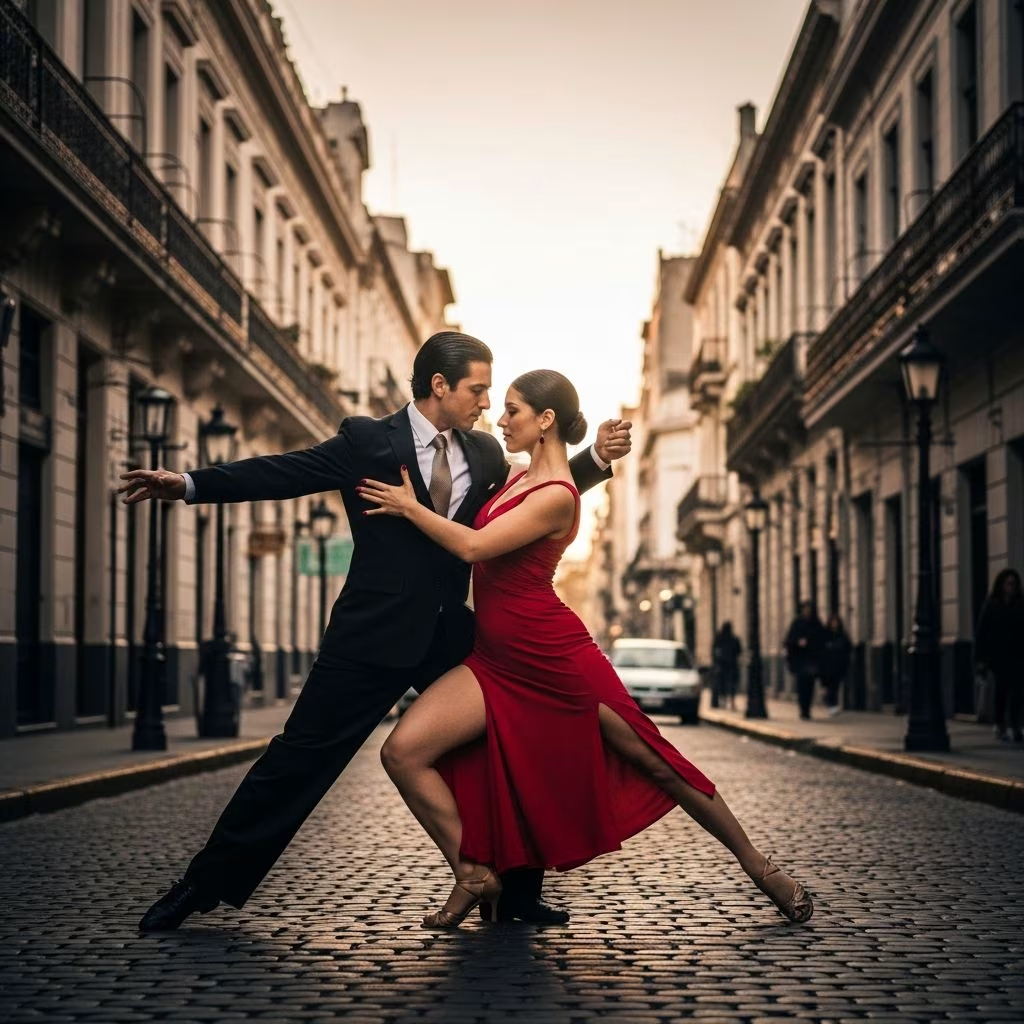
Buenos Aires pulses with the rhythm of tango, a dance that emerged from the working-class immigrant neighborhoods of the city in the mid-19th century. Today, this passionate art form remains embedded in the city’s cultural identity, offering visitors and locals alike countless opportunities to participate in or witness this extraordinary tradition. Whether you’re drawn to polished theatrical productions, intimate social dancing at traditional venues, or structured instruction in proper technique, Buenos Aires provides pathways suited to every interest level and experience.
Tango is far more than steps and music—it represents the soul of Buenos Aires. What began in modest dance halls has evolved into a globally recognized art form that continues to define the city’s identity. The dance embodies passion, storytelling, and intimate connection between partners, reflecting the city’s complex history and multicultural heritage. Visitors often find that engaging with tango provides deeper insight into Argentine culture and the values that have shaped Buenos Aires over generations.
For those seeking polished, high-energy entertainment, Buenos Aires offers spectacular tango shows featuring live orchestras, professional dancers, and meticulously choreographed routines. These performances typically showcase classical compositions by legendary composers such as Roberto Goyeneche, Aníbal Troilo, and Osvaldo Pugliese. Professional dancers execute athletic movements with remarkable precision while maintaining the emotional depth characteristic of tango.
Premier Venues for Theatrical Experiences:
The true heart of tango culture beats within milongas—traditional dance halls where locals gather to dance, socialize, and celebrate the music they love. Unlike theatrical productions, milongas represent the living tradition where tango remains a participatory experience rather than a spectator sport. These venues range from formal clubs to casual community spaces, each offering distinct atmospheres while maintaining core cultural practices.
Notable Milonga Venues:
Beyond formal milongas and theatrical shows, Buenos Aires offers unique informal settings where tango thrives organically. El Boliche de Roberto represents the city’s most authentic grassroots tango experience—a small, timeworn bar where local musicians perform nightly in exchange for applause and tips. The intimate setting encourages shared tables among strangers, creating spontaneous connections and genuine cultural exchange.
Milonga Parakultural provides another dynamic option, featuring live music performances, professional dance exhibitions, social dancing sessions, and beginner instruction in the traditional 2×4 beat. This multi-faceted venue accommodates various engagement levels, making it ideal for those uncertain about their comfort with full social dancing participation.
Buenos Aires hosts numerous tango schools and instruction programs designed for newcomers through advanced dancers. Reputable establishments like Tango Brujo and La Viruta offer carefully structured curricula addressing fundamental technique, proper posture, musicality development, and partner coordination. These institutions understand that tango represents a lifelong learning journey, encouraging students to approach instruction with humility and genuine interest rather than performance pressure.
Instructional Approach Highlights:
Participating meaningfully in milongas requires understanding unwritten social conventions that have developed over tango’s history. These protocols ensure respectful interaction and maintain the cultural integrity of traditional spaces.
The cabeceo represents the culturally appropriate method for initiating a dance. Rather than verbally approaching someone directly, dancers use subtle nonverbal communication—a slight nod or meaningful eye contact from across the room. This indirect approach allows potential partners to accept or decline gracefully without awkwardness. Verbal requests are considered disrespectful in traditional settings, so mastering this communication style demonstrates cultural awareness and sensitivity.
Dancers move counterclockwise around the floor in a circular flow pattern called the ronda. This organized circulation prevents collisions and allows couples to navigate the floor safely. Beginners typically remain toward the outer edges while experienced dancers occupy closer positions to the center. Maintaining your designated lane and avoiding erratic movements demonstrates respect for fellow dancers and preserves the ordered elegance characteristic of tango culture.
Milongas organize music into sets called tandas, typically comprising three to four songs with consistent rhythm, tempo, and often the same orchestra. A cortina—a non-tango song—signals the tanda’s conclusion, providing brief rest periods. Tradition dictates that partners dance the entire tanda together, creating continuity and demonstrating commitment to the connection. Upon completion, dancers thank their partners and escort them back to their seats before seeking new partners for the next tanda.
Buenos Aires contains several historic neighborhoods where tango’s roots run deepest. Walking these cobblestone streets provides context for the dance’s evolution and cultural significance. San Telmo, with its famous Caminito street in La Boca, offers authentic street performances where musicians and dancers share their craft with appreciative audiences. Dorrego Square in San Telmo frequently hosts spontaneous performances, particularly during daytime hours when street artists animate the historic plaza.
Boedo, Almagro, and Abasto neighborhoods similarly preserve tango’s heritage through architecture, murals, museums, and ongoing cultural activities. Visitors wandering these areas encounter daily reminders of the dance’s deep integration into Buenos Aires’ identity. These neighborhoods often host free or low-cost performances, with street performers accepting tips while sharing their passion.
Buenos Aires celebrates tango throughout the year with major festivals attracting international participants and enthusiasts. The World Tango Dance Championship and Festival in August represents the pinnacle event, featuring competitors from globally and showcasing diverse tango styles. The Almagro Tango Festival in November provides another significant opportunity to experience performances, competitions, and community celebrations. These festivals create unique windows into the current state of tango artistry and contemporary interpretations of traditional forms.
Optimal Timing Considerations:
Accommodation Selection Strategy:
Choosing lodging near primary tango neighborhoods (San Telmo, Almagro, Palermo) minimizes travel time and facilitates spontaneous participation. Proximity to venues enables flexible engagement with milongas and performances without lengthy commutes.
No. Buenos Aires welcomes absolute beginners, with dedicated instruction programs designed specifically for those without prior dance backgrounds. Instructors expect to guide newcomers through fundamentals with patience and encouragement. The cultural emphasis on humility and effort means beginners are respected for their genuine engagement rather than judged on proficiency.
Yes. While tango is a partner dance, single visitors frequently attend milongas where locals invite them to dance through the cabeceo. However, attendees can also participate as observers, enjoying music and social atmosphere without dancing. Some venues specifically accommodate solo participants through structured group classes preceding social dancing.
Comfortable, elegant clothing suits most venues. Specialized tango shoes with smooth soles enable proper pivoting and footwork, though quality dance shoes represent an investment. Many dancers recommend bringing one pair of comfortable tango shoes if available. Avoid overly casual athletic wear; instead, opt for neat, sophisticated clothing reflecting respect for the tradition.
Costs vary dramatically. Free options include outdoor milongas and street performances in plazas. Instruction ranges from modest private class fees to intensive program costs. Theatrical shows command premium prices. Casual milongas typically charge minimal entrance fees (often under $15 USD equivalent), while theatrical venues require substantially higher investment.
Maximizing your tango experience involves combining multiple approaches. Consider beginning with theatrical performances to observe professional technique and emotional expression. Follow this with structured classes building fundamental skills and confidence. Progress to casual milongas initially as an observer, then gradually participate as comfort increases. Simultaneously explore neighborhoods to understand cultural context. This progression creates comprehensive understanding while respecting your learning pace and comfort level.
Buenos Aires offers incomparable tango immersion opportunities. Whether seeking performance spectacle, social participation, structured instruction, or cultural exploration, the city provides authentic pathways suited to individual interests and experience levels. By approaching tango with genuine interest, cultural respect, and openness to learning, visitors discover why this passionate art form remains the beating heart of Buenos Aires’ identity.
