

 Travel Essentials
 Travel Essentials

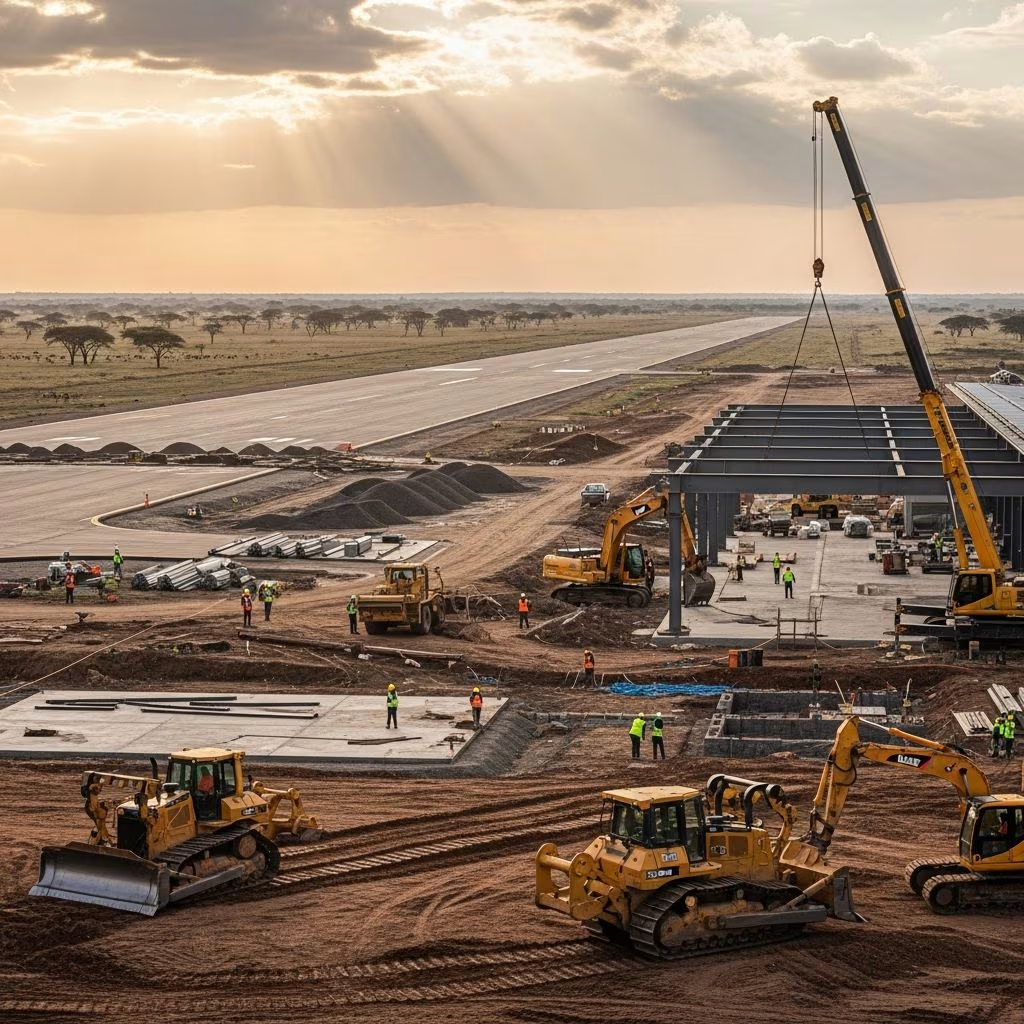
The Tanzanian government greenlights Serengeti International Airport, allocating funds for studies and initial works amid environmental concerns.
 Travel Essentials
The Tanzanian government has officially approved funding for the development of a new international airport within the iconic Serengeti National Park region, marking a significant step toward enhancing accessibility to one of Africa’s premier wildlife destinations. This project, often referred to as the Green International Airport, prioritizes sustainability to minimize impacts on the park’s biodiversity.
The initiative to build Serengeti International Airport has roots dating back over a decade, with renewed momentum in recent years. Located in the Mugumu area of Mara Region, the airport aims to serve as a direct gateway to the Serengeti, reducing travel times for visitors currently reliant on distant hubs like Julius Nyerere International Airport in Dar es Salaam or Kilimanjaro International Airport.
In the 2025/26 national budget, Transport Minister Professor Makame Mbarawa announced an allocation of 3 billion Tanzanian shillings (approximately USD 1.1 million) for a comprehensive feasibility study and preliminary construction activities. This domestic funding underscores Tanzania’s commitment to bolstering its aviation infrastructure independently.
Given the Serengeti’s status as a UNESCO World Heritage site and home to the Great Migration, environmental safeguards are paramount. The government emphasizes ‘green’ principles, including renewable energy sources, noise-reduction technologies, and preserved wildlife corridors to ensure animals like wildebeest and zebras can move freely.
Professor Mbarawa highlighted that thorough environmental impact assessments (EIAs) will guide every phase, from site selection to operations. The design incorporates sustainable materials and low-emission operations to align with global eco-tourism standards.
| Feature | Description | Benefit |
|---|---|---|
| Renewable Energy | Solar panels and wind power integration | Reduces carbon footprint |
| Noise-Cancelling Tech | Specialized runway surfacing and flight paths | Minimizes disturbance to wildlife |
| Wildlife Corridors | Undisturbed pathways across the site | Maintains migration routes |
| Green Building Materials | Recycled and local sourcing | Lowers environmental impact |
The airport is poised to transform Serengeti tourism by shortening journeys, potentially increasing visitor numbers and extending stays. Currently, travelers face long road transfers from regional airstrips, deterring some. A direct international facility could connect seamlessly with major African and global routes, positioning Serengeti as a competitive destination.
Tanzania National Parks supports the project, noting reduced travel fatigue for tourists and enhanced revenue for conservation. Ecotourism proceeds fund anti-poaching and habitat restoration, creating a virtuous cycle.
Regionally, the airport will stimulate jobs in construction, operations, and hospitality, while boosting nearby economies in Mara Region. Projections indicate substantial growth in foreign exchange from wildlife safaris and related activities.
Plans for Serengeti International Airport first emerged around 2010, facing backlash from environmentalists concerned about habitat fragmentation in this biodiversity hotspot. Former leaders like Prime Minister Edward Lowassa pushed ahead despite opposition, but progress stalled for 15 years due to funding and ecological debates.
Recent political endorsements, including from presidential candidate Samia Suluhu Hassan, have revived the project with a stronger sustainability focus, addressing prior criticisms.
The new airport will complement upgrades at nearby facilities, such as Mwanza Airport, which is expanding with new terminals and runways to handle increased traffic from Serengeti visitors. This networked approach strengthens Tanzania’s role as an East African aviation hub.
Despite promises, challenges persist. Critics worry about construction disruptions to migration patterns and long-term pollution. The government counters with binding EIAs, community consultations, and monitoring by independent bodies.
Site specifics remain under review to avoid sensitive zones, with the Uwanja wa Ndege ward in Mugumu as a potential location (coordinates: 1°51′49″S 34°39′13″E).
If successful, Serengeti Airport could exemplify how infrastructure and conservation coexist in protected areas. Similar projects worldwide, like eco-airports in Costa Rica’s rainforests, offer blueprints. Tanzania’s approach may inspire African nations balancing development and nature.
Funding for feasibility studies and initial works is approved in the 2025/26 budget; tenders are out as of March 2026.
Designs include wildlife corridors, noise reduction, and EIAs to protect ecosystems.
Direct international access could double visitors, boosting revenue for conservation.
USD 350 million total; construction phases to follow studies, no firm completion date yet.
Tanzania Airports Authority (TAA), with ministerial oversight.
The Serengeti Airport project represents a bold fusion of tourism growth and environmental stewardship, with potential to elevate Tanzania’s global standing if executed flawlessly. Travelers and conservationists alike await developments that could redefine access to this natural wonder.
