

 Travel Essentials
 Travel Essentials

Tanzania's plan to lease Maasai ancestral lands to Dubai royals for luxury hunting ignites protests, displacing thousands and endangering pastoral traditions near Serengeti.
 Travel Essentials
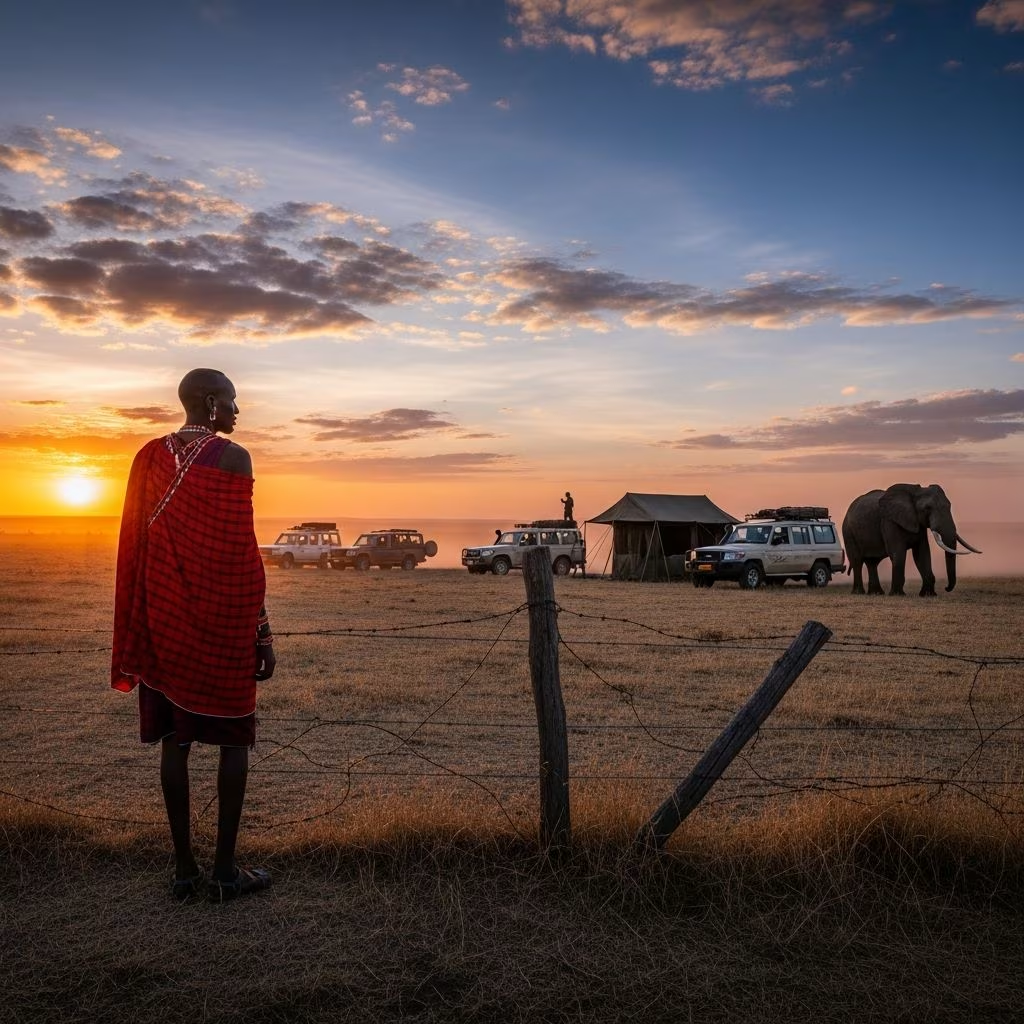
The vast plains of northern Tanzania, home to the iconic Maasai people for centuries, are at the center of a heated international dispute. Reports indicate that the Tanzanian government has leased approximately 1,500 square kilometers of Maasai ancestral land to Ortello Business Corporation (OBC), a Dubai-based firm linked to UAE royalty, for an exclusive big-game hunting reserve bordering the Serengeti National Park.This move endangers the livelihoods of up to 40,000 Maasai pastoralists, forcing potential evictions and reshaping one of Africa’s most culturally significant landscapes.
Maasai communities have roamed these grasslands for generations, relying on transhumance—a seasonal migration of livestock—to sustain their herds of cattle, sheep, and goats. This practice is not merely economic; it is deeply woven into their spiritual and social fabric, where cattle symbolize wealth, status, and connection to the divine. The proposed wildlife corridor, stretching across prime grazing lands near the Serengeti, would sever these vital migration routes, confining Maasai herders to inadequate alternative areas.
Government promises of compensation—reportedly around 1 billion Tanzanian shillings (approximately $578,000)—have been dismissed by locals as insultingly low, failing to account for the irreplaceable value of ancestral territories. Protests erupted as early as April 2013, with Maasai warriors voicing fears of cultural erasure. “Our land is our lifeblood,” one elder reportedly stated, highlighting the existential threat posed by this development.
The agreement traces back to negotiations involving high-level Tanzanian officials and OBC, a company specializing in luxury safaris tailored for affluent Middle Eastern clients, including members of Dubai’s ruling families. Positioned adjacent to the Serengeti, the reserve promises unparalleled access to trophy animals like lions, leopards, and elephants—species already under pressure from poaching and habitat loss.
While Tanzanian Minister of Natural Resources and Tourism Lazaro Nyalandu publicly denied eviction plans in late 2014, stating “the government has no such plans,” on-the-ground actions contradicted these assurances. Notices of displacement were issued, prompting international scrutiny. Critics argue this deal prioritizes short-term revenue from elite hunters over sustainable ecotourism and indigenous rights.
Organizations like Avaaz launched a massive online petition in 2013, amassing over 2 million signatures urging Tanzanian President Jakaya Kikwete to halt the evictions. The campaign framed the issue as a stark choice between preserving indigenous heritage and catering to wealthy foreign hunters, drawing endorsements from celebrities and conservationists worldwide.
Media outlets amplified Maasai voices, with reports from UPI and Daily Sabah detailing police crackdowns on protesters, including arrests and alleged brutality. This backlash pressured the government to pause—temporarily—though underlying tensions persist, underscoring broader patterns of land grabs across East Africa.
Proponents claim the reserve could bolster anti-poaching efforts by funding patrols and wildlife management. However, skeptics warn that commercial hunting exacerbates population declines of endangered species. The Serengeti ecosystem, a UNESCO World Heritage site, relies on migratory patterns that Maasai grazing complements, maintaining grassland health through controlled herbivory.
| Aspect | Positive Claims | Criticisms |
|---|---|---|
| Wildlife Protection | Revenue for patrols | Increased trophy hunting pressure |
| Grazing Balance | Reduced overgrazing | Disrupted Maasai migration, leading to desertification |
| Biodiversity | Exclusive corridor | Habitat fragmentation for species |
Displacing Maasai could lead to overgrazing in resettlement zones, ironically harming the very wildlife the reserve aims to protect.
This crisis echoes colonial-era land alienations, when British rulers carved out protected areas, evicting natives without consent. Post-independence, Tanzania’s conservation policies have often clashed with pastoralists, as seen in the Ngorongoro Conservation Area, where Maasai coexist under strict regulations.
Today, foreign investment in tourism generates 17% of GDP, but benefits rarely trickle down to locals. The OBC deal exemplifies ‘fortress conservation,’ prioritizing wildlife over human rights—a model increasingly challenged by international law, including the UN Declaration on the Rights of Indigenous Peoples.
Women, who manage dairy production, face disproportionate hardship, amplifying gender inequities in Maasai society.
Tanzania’s Village Land Act of 1999 theoretically protects customary rights, but weak enforcement allows elite deals to override them. Activists push for free, prior, and informed consent (FPIC), a global standard unmet here. International pressure has led to court challenges, though outcomes remain uncertain.
Community-based conservation models, like those in Namibia, empower locals as stakeholders, blending tourism revenue with grazing rights. Eco-cultural tourism—showcasing Maasai life—could outpace hunting profits while preserving heritage. Partnerships with NGOs offer training in beekeeping, agroforestry, and guiding, fostering self-reliance.
| Model | Benefits | Drawbacks | Suitability for Maasai |
|---|---|---|---|
| Elite Hunting Reserve | Quick revenue | Cultural displacement | Low |
| Community Tourism | Local control | Slower startup | High |
| Protected Area w/ Rights | Balanced ecology | Regulatory burden | Medium |
This saga highlights tensions in ‘green grabbing,’ where conservation masks dispossession. As climate change intensifies droughts, pastoral mobility becomes crucial, yet land deals fragment ranges. Lessons from Tanzania could inform policies in Kenya, Ethiopia, and beyond, advocating for inclusive models that honor indigenous knowledge.
By 2026, while evictions were reportedly suspended post-2014 outcry, simmering disputes persist. Maasai leaders continue advocacy through alliances like the Pastoralists Indigenous Non-Governmental Organizations Forum (PINGO). Tourists are urged to support ethical operators, boycotting hunts that fuel injustice.
Evictions were paused amid protests, but land use pressures continue near Serengeti.
A Dubai firm catering to UAE elites, including royals, for luxury safaris.
Directly 40,000; indirectly up to 80,000.
Yes, but regulated; critics call for bans on endangered species.
Sign petitions, choose ethical tourism, support indigenous rights NGOs.
This unfolding drama pits tradition against modernity, urging a reevaluation of how we value land, wildlife, and human dignity in Africa’s heart.
