

 Travel Essentials
 Travel Essentials

Discover key insights for traveling to Tanzania: plan safaris, understand seasons, respect customs, and explore hidden gems beyond the usual spots.
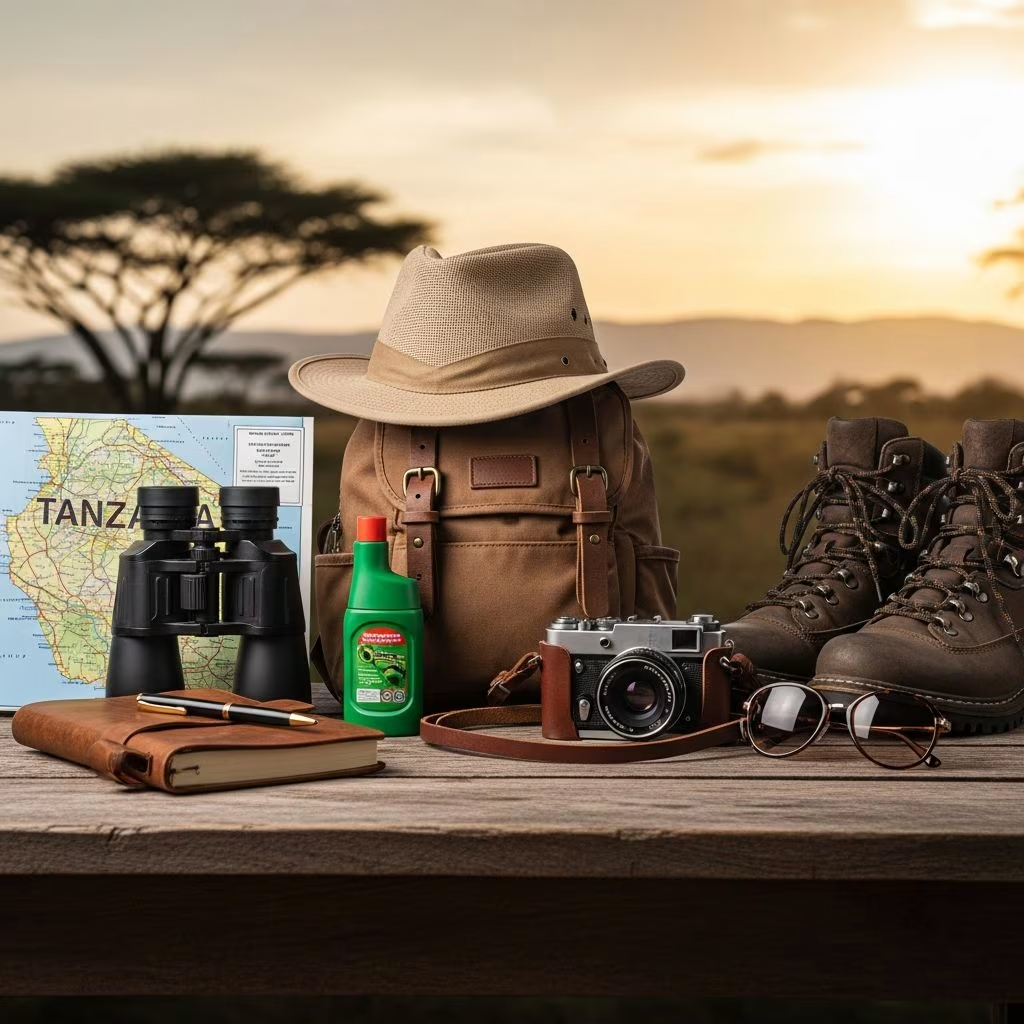 Travel Essentials
Tanzania offers unparalleled opportunities for wildlife encounters, mountain treks, and coastal relaxation. This guide provides practical advice drawn from reliable travel insights to ensure a seamless journey through its diverse landscapes and vibrant cultures.
Tanzania spans East Africa’s vast terrain, bordered by eight nations and the Indian Ocean. It features Africa’s highest peak, Mount Kilimanjaro, and Lake Tanganyika, the world’s second-deepest lake. The country encircles three major African lakes: Victoria, Tanganyika, and Malawi, with the Nile River originating from Lake Victoria.
Climate varies by region. Coastal areas and Zanzibar enjoy warm temperatures year-round, while highlands like Kilimanjaro experience cooler conditions. Tanzania has two rainy seasons: the long rains from March to May and short rains from November to December. Dry seasons, June to October and January to February, are ideal for safaris due to better wildlife visibility.
| Region | Dry Season | Wet Season | Best Activities |
|---|---|---|---|
| Northern Parks (Serengeti, Ngorongoro) | Jun-Oct, Jan-Feb | Mar-May, Nov-Dec | Safaris, Migration viewing |
| Southern Parks (Ruaha, Nyerere) | May-Oct | Nov-Apr | Uncrowsded game drives |
| Zanzibar & Coast | Jun-Oct | Mar-May | Beach relaxation, diving |
| Mount Kilimanjaro | Jan-Feb, Jul-Sep | Mar-May, Oct-Dec | Trekking |
Most visitors require a visa, obtainable online via Tanzania’s e-Visa portal or on arrival at major airports like Dar es Salaam and Kilimanjaro International. U.S. citizens need a passport valid for six months beyond stay, with two blank pages. Carry copies of your passport and visa at all times, storing originals safely.
Consult a travel clinic 4-6 weeks before departure. Recommended vaccinations include hepatitis A/B, typhoid, rabies (for adventurers), and routine shots like MMR. Malaria prophylaxis is essential, especially in lowlands; use DEET repellent, permethrin-treated clothing, and bed nets.
Drink only bottled or purified water. Avoid raw foods in rural areas. Zika and other mosquito-borne illnesses persist, so cover up at dawn and dusk. Medical facilities are limited outside cities; carry comprehensive insurance covering evacuations.
Fly into Dar es Salaam, Zanzibar, or Kilimanjaro airports. Domestic flights connect safari hubs like Arusha to parks. For budget travel, buses like those from Dar to Arusha are affordable but crowded; opt for ‘luxury’ coaches for comfort.
Within parks, 4×4 vehicles with guides are mandatory. Taxis (dala-dala minibuses) serve towns but negotiate fares. Renting a car requires an international permit; roads can be rough, especially in rains.
Tanzania hosts over 4 million wild animals, boasting the highest density per square kilometer globally.
The Northern Circuit draws crowds for the Great Migration in Serengeti National Park, where 1.5 million wildebeest cross rivers from July to October. Ngorongoro Crater, a UNESCO site, concentrates the Big Five (lion, leopard, elephant, buffalo, rhino) in a volcanic caldera. Lake Manyara features tree-climbing lions.
Less visited, Ruaha National Park shelters Tanzania’s largest elephant herds amid baobab-dotted plains. Nyerere (formerly Selous) Game Reserve, Africa’s largest, spans diverse habitats larger than several European nations. Mikumi offers accessible lion prides.
Mahale Mountains and Gombe Stream National Parks on Lake Tanganyika provide chimpanzee trekking. Zanzibar’s Stone Town, a UNESCO gem, blends Arab, Indian, and African influences with pristine beaches for snorkeling.
Tanzania’s 120+ ethnic groups speak Swahili as the lingua franca; learn basics like jambo (hello) and asante (thank you). Dress conservatively: cover shoulders and knees outside beaches, especially in Zanzibar’s Stone Town.
Drugs and same-sex relations are illegal; discretion is advised. Always seek permission before photographing people, particularly Maasai. Tipping 10-15% in restaurants, porters (USD 10-20/day), and guides enhances goodwill.
Religion influences daily life; respect prayer times in mosques. Bargain politely in markets but avoid aggressive haggling.
Currency is Tanzanian Shilling (TZS; ~2600 TZS = USD 1). Carry USD cash for parks (credit cards accepted at lodges). ATMs are in cities but unreliable; exchange at banks.
| Expense | Budget (USD/day) | Mid-range (USD/day) | Luxury (USD/day) |
|---|---|---|---|
| Accommodation | 20-50 | 100-200 | 500+ |
| Meals | 10-20 | 30-50 | 100+ |
| Safari (3-day) | 300 | 800 | 2000+ |
| Transport | 20 | 100 | 300+ |
Allot extra for park fees (Serengeti ~USD 70/day) and tips.
Africa’s roof at 5,895m demands 5-9 day climbs via routes like Marangu or Machame. Success rates improve with acclimatization; hire certified guides. Dry months (January-February, July-September) minimize rain. Train with cardio and altitude simulations; altitude sickness is common.
Options range from tented camps in parks to boutique Zanzibar hotels. Book safaris 6-12 months ahead for peak season. Community tourism lodges support locals.
Tanzania is generally safe for tourists, but petty theft occurs in cities. Stay vigilant at night; use registered taxis. Coastal currents can be strong—swim at lifeguarded beaches. Wildlife encounters require guides; never approach animals.
Avoid political rallies; monitor advisories for terrorism risks near borders.
June-October for dry weather and migrations; January-February for calving.
Yes, consult a doctor for at-risk areas.
Yes, but modest dress and common sense apply.
USD 15-25/day per person for guides, 10-15 for porters.
No; stick to bottled or treated.
Choose eco-lodges, avoid single-use plastics, and support community projects. Follow ‘leave no trace’ in parks to preserve habitats.
