

 Travel Essentials
 Travel Essentials

Explore Mongolia's iconic Ten Thousand Camel Festival: camel races, parades, traditional games, and the vital role of Bactrian camels in Gobi nomad life. A must-see winter event.
 Travel Essentials
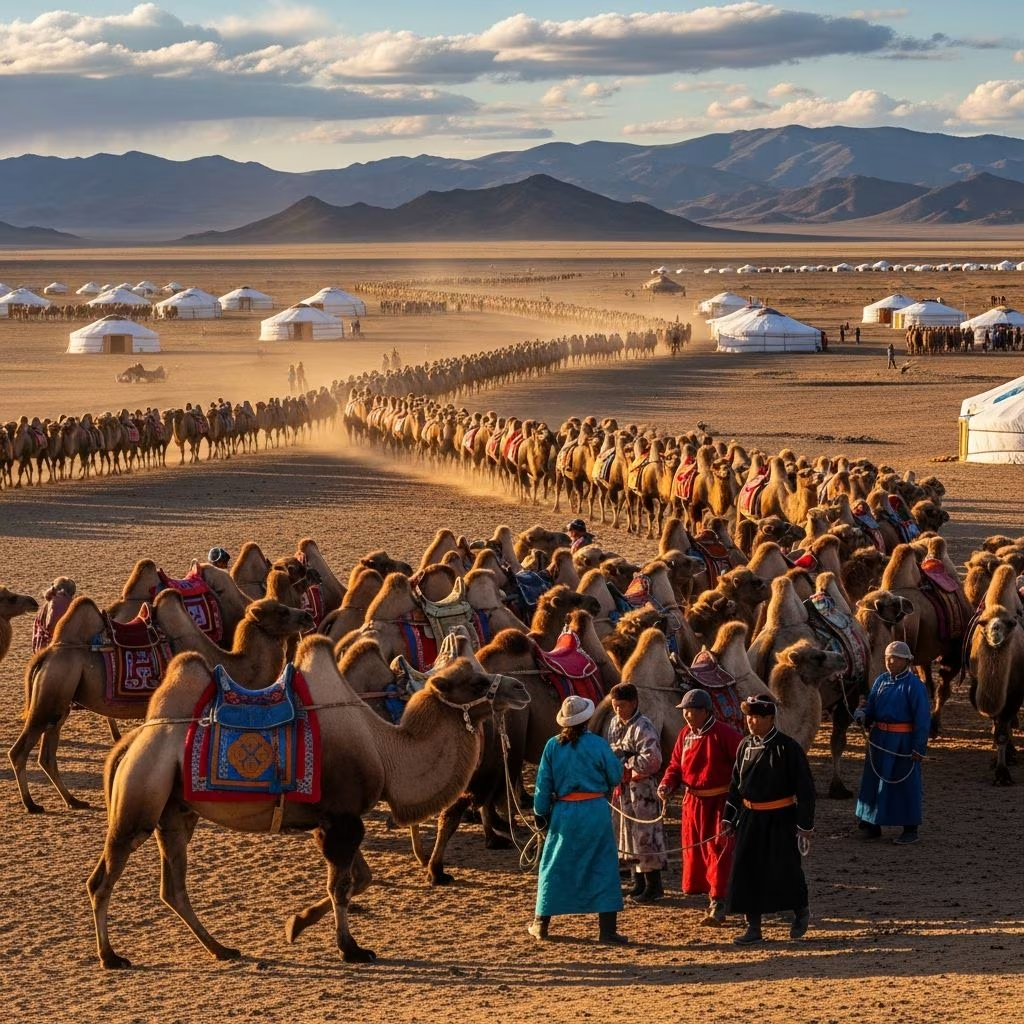
The Ten Thousand Camel Festival stands as one of Mongolia’s most captivating winter events, drawing adventurers and culture enthusiasts to the vast expanses of the Gobi Desert. Held annually in Umnugovi Province, this celebration honors the resilient **Bactrian camel**, a cornerstone of nomadic life, while showcasing traditional skills, music, and community spirit.
Initiated in 1997 by local herders in South Gobi’s Umnugovi Province, the festival emerged as a grassroots effort to safeguard the two-humped Bactrian camel population, which faces endangerment. Its founders aimed to preserve camel-herding traditions, foster economic opportunities through camel products like wool and milk, and boost winter tourism in this remote region. Over the years, it has evolved into a globally recognized event, highlighted by a 2016 Guinness World Record for the largest camel race with 1,108 participants.
The festival’s core mission extends beyond festivity: it promotes sustainable livelihoods for nomads by integrating camel-derived goods into markets, encouraging environmental stewardship, and passing cultural knowledge to younger generations. Organized by the ‘Amazing Gobi’ tourism association and provincial authorities, it promises annual enhancements to attract more visitors.
The **Bactrian camel** (Camelus bactrianus) is uniquely adapted to the Gobi’s extremes, enduring temperatures from -40°C in winter to +40°C in summer. Domesticated millennia ago, these camels haul up to 200 kg over long distances, surviving weeks without food or water when prepared. In Mongolia, Umnugovi boasts the highest camel numbers, around 16,000 as of recent censuses.
Nomads rely on them for transport, milk (rich in nutrients), wool for felt and textiles, and even racing. The festival underscores their cultural and economic value, countering declines in herds due to modernization.
The event typically spans two days in late January or early February, aligning with the lunar calendar. For 2026, it is scheduled for February 7-8 in Dalanzadgad, the provincial capital. Future dates include January 30-31, 2027; February 19-20, 2028; and beyond.
| Year | Dates | Location |
|---|---|---|
| 2026 | February 7-8 | Dalanzadgad, Umnugovi |
| 2027 | January 30-31 | Dalanzadgad, Umnugovi |
| 2028 | February 19-20 | Dalanzadgad, Umnugovi |
| 2029 | February 3-4 | Dalanzadgad, Umnugovi |
| 2030 | January 26-27 | Dalanzadgad, Umnugovi |
Visitors should prepare for sub-zero temperatures: layer with heavy jackets, gloves, hats, and insulated boots. Many tours offer ger stays or hotels in Dalanzadgad, with meals included. Expect 3-4 day itineraries covering 1,000+ km from Ulaanbaatar.
The festival unfolds over two immersive days, blending competition, artistry, and tradition.
Attendees can ride in the camel parade, try ankle-bone shooting, or purchase deels and boots from vendors. Tours often include side trips to Flaming Cliffs (Bayanzag) or Khongoryn Els sand dunes, enriching the adventure. The frozen Gobi landscape, glittering under winter sun, amplifies the spectacle.
Nomads arrive from distant aimags, their camels festooned in colorful saddles, fostering a sense of unity. This event not only entertains but educates on sustainable nomadism amid climate challenges.
Beyond visuals, the festival bolsters local economies via tourism, creating jobs and markets for camel products. It counters youth migration to cities by valorizing herding, while global visitors gain insights into a vanishing lifestyle. In 2025’s 26th edition, attendance surged, signaling growing appeal.
For adventure seekers, it’s a rare chance to witness raw athleticism—camels thundering across snow—and heartfelt traditions in one of Earth’s harshest environments.
A winter event in Mongolia’s Gobi Desert celebrating Bactrian camels through races, parades, and cultural activities.
February 7-8 in Dalanzadgad, Umnugovi Province.
Yes, with guided tours; dress warmly and follow local advice.
Absolutely—join parades, games, and races on provided camels.
Fly to Ulaanbaatar, then overland or domestic flight; multi-day tours common.
The Ten Thousand Camel Festival bridges Mongolia’s nomadic past and tourist-driven future, ensuring Bactrian camels—and the culture they sustain—thrive. As herds stabilize and visitors flock, it exemplifies resilient heritage in a changing world. Plan ahead for 2026 to witness this unparalleled gathering.
