

 Travel Essentials
 Travel Essentials

A comprehensive guide to Tenerife's secluded beaches, remote hiking trails, and untouched natural areas perfect for adventurers seeking authentic island experiences away from crowded resorts.
 Travel Essentials
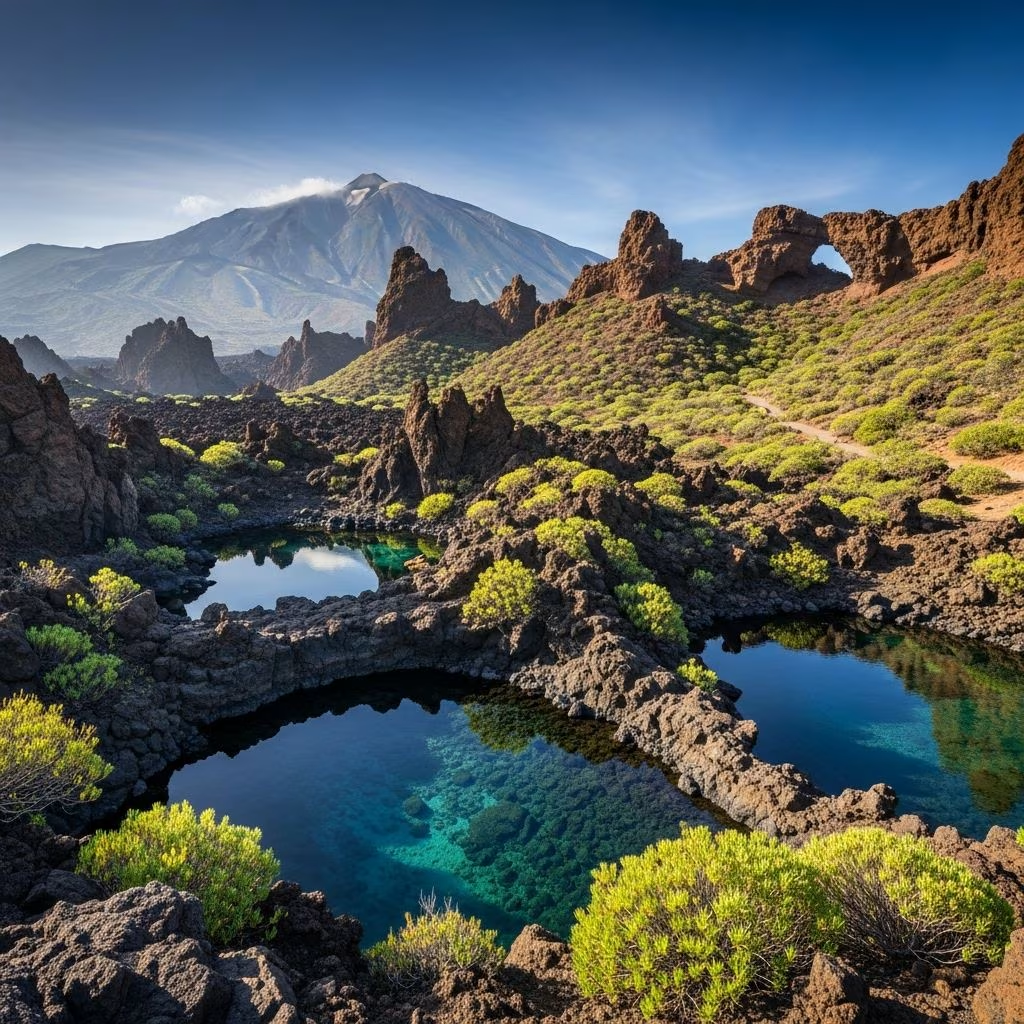
While Tenerife attracts millions of visitors annually to its famous beach resorts and theme parks, the island harbors remarkable natural treasures that remain relatively undiscovered by mainstream tourism. Beyond the developed coastlines and crowded attractions lies a landscape of dramatic volcanic formations, pristine beaches framed by towering cliffs, dense subtropical forests, and challenging alpine terrain. For travelers seeking authentic experiences and genuine natural beauty, these hidden destinations offer unparalleled opportunities to connect with the island’s raw character and environmental diversity.
Tenerife’s reputation for bustling beach resorts obscures the existence of numerous hidden coastal gems scattered around the island’s perimeter. These secret beaches offer visitors the chance to experience Mediterranean serenity without contending with throngs of sunbathers. The quieter shores provide genuine tranquility and access to crystalline waters ideal for swimming and aquatic exploration.
Some of the most spectacular beaches demand commitment from visitors willing to undertake multi-hour hikes or arrange boat transport. Playa de Antequera, located in the island’s northeastern region, exemplifies this category of exclusive natural spaces. Accessible only through a demanding two to three-hour hiking expedition departing from Igueste de San Andrés, or alternatively via private boat rental, this beach rewards adventurous travelers with pristine golden sands bordered by dramatic cave-riddled cliff faces and striking rock formations. The geological features surrounding the beach create an amphitheater-like setting that amplifies the sense of isolation and natural grandeur.
For those seeking slightly more accessible alternatives with comparable beauty, Playa de Benijo nestled in the Anaga Mountains’ lower slopes provides a shorter driving approach and manageable footpath access. This dark-sand beach, framed by imposing cliffs, offers panoramic views of distinctive volcanic rock outcroppings rising from the ocean. Similarly, Playa de las Gaviotas presents a picturesque cove of dark volcanic sand positioned beneath rugged cliff faces, with the added distinction of permitting clothing-optional recreation.
Playa de Castro distinguishes itself among Tenerife’s lesser-known beaches through a unique geographic feature: a permanent waterfall cascading directly from surrounding cliffs onto the beach itself. This phenomenon occurs when tidal conditions drop sufficiently to expose a hidden fresh water source streaming down the cliff face into the ocean. The beach’s dramatic positioning between towering rock formations creates a theatrical natural setting enhanced by the constant backdrop of falling water during appropriate tidal conditions.
Beyond these primary destinations, numerous smaller coves and pocket beaches dot the coastline, many accessible only through informal trails or requiring local knowledge to locate. These scattered refuges attract travelers seeking complete solitude and minimal development impact.
Tenerife’s interior landscape presents challenging hiking opportunities across volcanic formations and high-altitude environments. These mountain experiences showcase the island’s geological drama and provide physical challenges matched by extraordinary vistas.
Mount Teide, at 3,715 meters elevation, represents Spain’s highest mountain and ranks as the third-highest volcano globally. While most visitors ascend via cable car, this infrastructure represents only one approach to experiencing the peak. The alternative foot ascent requires traversing the surrounding lava-sculptured moonscape before climbing the final slopes to the summit. This hiking approach eliminates crowded cable car queues and delivers a more authentic mountaineering experience. The trek through the barren volcanic landscape provides unobstructed views across the national park and, on clear days, permits sightings of neighboring Canary Islands.
Barranco de Masca represents one of the island’s most demanding and rewarding hiking experiences. This narrow valley, carved through volcanic mountainous terrain, extends approximately eight kilometers through some of the most dramatic landscapes on Tenerife. The challenging six-hour round-trip journey traverses streams, passes through fruit orchards, and climbs across sheer rock walls that rise hundreds of meters vertically, creating puzzle-like formations that defy expectation. The descending path winds through palm-tree-bordered terrain, crosses small rivers, and runs along cliff edges before terminating at a turquoise-water beach where rocky formations create an enclosed valley opening to the sea. Adventurers reaching the coastal terminus can either reverse their route or arrange boat transport from the beach to Los Gigantes, an arrangement that shortens the return journey considerably.
The northern reaches of Tenerife contain some of Europe’s most ecologically significant and unusual natural environments. These protected areas preserve ancient forests and provide habitat for species found nowhere else on Earth.
Parque Rural de Anaga encompasses much of Tenerife’s northeastern territory and represents one of the Atlantic’s most remarkable natural laboratories. This mountainous region emerged from the ocean floor approximately nine million years ago and has subsequently evolved into a unique ecosystem of sufficient scientific importance to receive UNESCO Biosphere Reserve designation in 2016. The park supports approximately 1,900 documented species encompassing reptiles, avian species, fish, and numerous invertebrate classifications. The distinctive laurisilva or laurel forest dominates the landscape, featuring ancient twisted trunks swathed in lichens that create an otherworldly atmospheric quality.
Within this protected environment, visitors encounter multiple trekking options accommodating varying fitness levels and time commitments. The frequently chosen route begins at the visitor information center positioned at Cruz del Carmen on the TF-12 road, following marked trails that descend toward the remote coastal hamlet of Taganana, where ocean swimming provides a refreshing conclusion to the hike. Intermediate difficulty routes traverse various elevations and landscape types, while the more accessible Sendero de Los Sentidos network comprises three gentle nature walks originating from the visitor facility, offering sensory-focused experiences through the forest without demanding strenuous physical effort.
The Anaga Rural Park preserves specimens of the dense laurel forest that historically blanketed the entire island before human settlement reduced coverage to fragmented reserves. This subtropical evergreen forest represents a living connection to Tenerife’s pre-development ecological state. The mountainous terrain within the park permits hiking itineraries ranging from ocean-shore traversals to ascents reaching altitudes approaching 1,000 meters. One popular trekking option descends through the ancient forest to reach Taganana, a historical hamlet featuring whitewashed buildings that evoke earlier eras, with subsequent path extensions leading to Roque de las Bodegas Beach. The Mirador Bailadero viewpoint, positioned midway along certain routes, offers extraordinary panoramic perspectives over Taganana and surrounding coastal features during clear weather conditions.
Beyond coastal attractions, Tenerife’s inland regions preserve traditional Canarian settlement patterns and architectural heritage largely unchanged from centuries past.
Masca, situated within the Teno Mountains, exemplifies traditional Canarian settlement design through its collection of structures featuring classic architectural elements. While the village’s central commercial district comprises cafes and souvenir establishments that cater to passing tourists, the authentic village character emerges through exploration of residential quarters and surrounding agricultural terraces. The genuine appeal derives from understanding how inhabitants traditionally organized settlements within mountainous terrain, utilizing architectural principles suited to specific climate and geographic conditions.
The northwestern territory encompassing the Teno Mountains preserves dramatic clifftop landscapes and provides trekking through terrain linking coastal settlements with mountain elevations. This region’s geography isolates communities from rapid development, creating pockets of traditional lifeways and authentic settlement character. The Punta de Teno peninsula represents the mountainous region’s extreme point, offering coastal perspectives and recreational activities suited to varying ability levels.
Tenerife’s subtropical location ensures year-round visitation possibilities, though specific seasons optimize experiences at different natural destinations. The winter months (November through March) provide cooler temperatures reducing physical exertion impacts during demanding hikes, though mountain elevations may occasionally experience weather complications. Spring and autumn months offer moderate temperature ranges and typically feature stable weather patterns supporting extended outdoor activities.
Adequate physical preparation enables fuller appreciation of challenging routes. Mountain trekking requires sturdy hiking footwear providing ankle support and appropriate grip characteristics for volcanic rock terrain. Water consumption during extended exertion in sunny environments demands carrying capacity significantly exceeding casual day-trip requirements. Sunscreen application protects against intense ultraviolet exposure common at higher elevations and in unshaded coastal environments.
Tenerife’s isolation within the Atlantic Ocean permitted evolution of distinctive species assemblages found nowhere else globally. The Anaga region particularly concentrates rare animal populations within protected reserves. Reptilian species adapted to specific microhabitats, endemic bird varieties, and unusual invertebrate communities demonstrate evolutionary adaptations reflecting millions of years of geographic separation from continental populations. Respectful observation without disturbance preserves these unique organisms for future generations while enabling contemporary visitors to witness evolution’s creative powers.
Discovering hidden natural destinations carries responsibility to minimize human impact and preserve environmental integrity. Established trails within protected areas channel visitor traffic, reducing damage to vegetation and soil structures beyond designated footpaths. Carrying waste materials away from natural areas prevents accumulation and maintains aesthetic quality. Respecting posted restrictions regarding access limitations protects breeding areas, nesting sites, and sensitive ecological zones during critical biological periods.
Winter months (November through March) provide comfortable hiking temperatures and generally stable weather patterns. Spring (April-May) and autumn (September-October) offer moderate conditions with reduced crowds compared to summer tourist peak seasons.
No specialized climbing equipment is required for standard marked trails, though sturdy hiking boots with ankle support and good grip are essential for rocky volcanic terrain. The marked routes through Barranco de Masca are hiking trails rather than technical climbing routes.
Anaga offers variable difficulty options. The Sendero de Los Sentidos provides gentle nature walks suitable for most fitness levels, while the descent to Taganana presents moderate difficulty requiring reasonable fitness. The park’s crisscrossing trails accommodate both casual walkers and experienced hikers.
The waterfall feature depends on specific tidal conditions, manifesting most reliably during low tide periods. Water flow intensity varies seasonally based on precipitation patterns and underground water availability.
Endemic reptile species, distinctive avian populations, and unusual invertebrate communities inhabit the forest. Respectful observation from maintained distance preserves these rare organisms and ensures visitor safety.
Beyond the resort developments and theme park attractions that dominate mainstream Tenerife tourism, the island preserves remarkable natural environments rewarding visitors willing to venture beyond established commercial zones. The combination of dramatic coastal features, challenging alpine terrain, ancient subtropical forests, and isolated mountain communities provides diverse experiences suitable for various interests and physical capabilities. Whether seeking solitude on pristine beaches, mountaineering challenges, nature observation, or cultural heritage exploration, Tenerife’s hidden dimensions offer authentic alternatives to mass tourism patterns.
