

 Travel Essentials
 Travel Essentials

Journey through Mexico City's Aztec heritage at key sites like Templo Mayor, Tlatelolco, and Teotihuacan, uncovering the story of Tenochtitlan from foundation to conquest.
 Travel Essentials
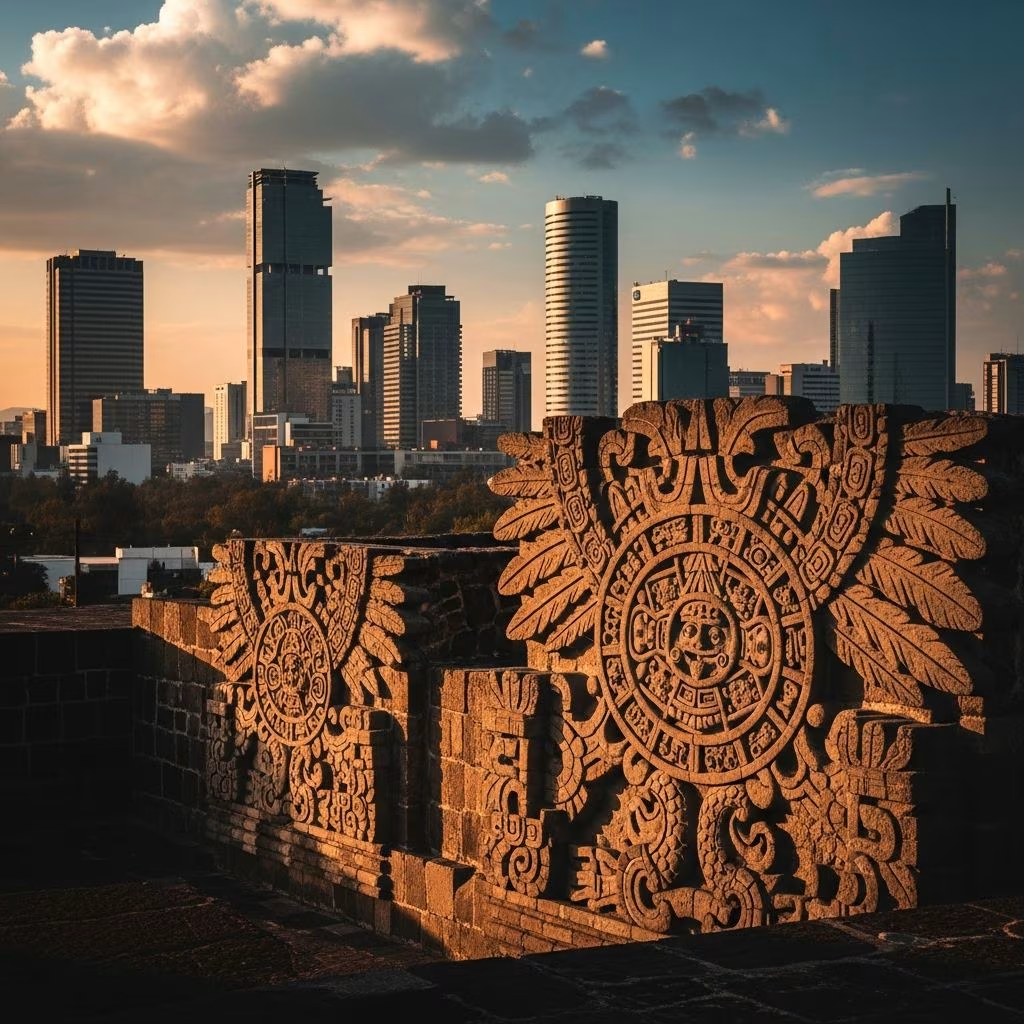
Mexico City stands as a modern metropolis built directly upon the ruins of Tenochtitlan, the thriving capital of the Aztec empire founded around 1325 CE. This island city in Lake Texcoco once housed up to 200,000 inhabitants, featuring advanced engineering like chinampas—floating gardens—and monumental pyramids dedicated to gods such as Huitzilopochtli and Tlaloc. The Spanish conquest in 1521 razed much of it, but echoes of this Mesoamerican powerhouse persist in archaeological sites, museums, and urban plazas, offering visitors a tangible connection to pre-Hispanic glory.
The Aztecs, or Mexica, migrated from their legendary homeland Aztlán in the 12th century, guided by prophecies. According to tradition, their god Huitzilopochtli instructed them to seek an eagle perched on a cactus devouring a serpent—a sign fulfilled on a marshy island in Lake Texcoco. There, in 1325, they established Tenochtitlan, transforming swamps into a bustling hub via causeways, canals, and aqueducts that supported agriculture and defense.
Three main causeways linked the island to the mainland: one to the south toward Coyoacan, another northeast to Tepeyacac, and a third west to Tlacopan. These were breached by drawbridges for security, converging at the sacred precinct around the Templo Mayor, which rose 60 meters high with dual shrines. The city’s grid layout influenced colonial planners, who retained north-south and east-west axes when rebuilding.
Tenochtitlan’s ingenuity rivaled any contemporary European city. Chinampas, artificial islands fertilized with lake mud, yielded multiple harvests yearly, sustaining the population. The urban core included palaces, a zoo, schools (calmecac for nobles, telpochcalli for commoners), and a massive market at Tlatelolco selling everything from cacao to captives.
Daily life blended reverence for nature with militarism; rituals, including human sacrifice, aimed to ensure cosmic balance. This sophistication astonished Hernán Cortés in 1519, who described it as rivaling Venice.
Modern Mexico City safeguards several sites where Aztec layers overlay earlier cultures, providing a palimpsest of history.
In 1978, excavations near the Zócalo uncovered the Templo Mayor, the main pyramid razed by Spaniards and buried under colonial structures. Multiple construction phases span 1325–1521, with artifacts like the Coyolxauhqui monolith—a dismembered moon goddess—highlighting warrior cults. The adjacent museum displays 7,000+ items: jade masks, obsidian blades, and child sacrifices to Tlaloc. Its location opposite the Metropolitan Cathedral symbolizes layered conquests.
North of the center, Plaza de las Tres Culturas juxtaposes an Aztec temple platform, a 16th-century church built from its stones, and a 1960s tower. Tlatelolco, Tenochtitlan’s twin city, hosted the realm’s largest market and fell in the final 1521 siege, where Cuauhtémoc surrendered. The site museum chronicles this through murals and relics.
In southern Tlalpan, Cuicuilco’s colossal circular pyramid (20m high, 1400 BCE origins) predates Aztecs, who occupied it from the 14th century. Volcanic ash preserved offerings; the site’s Nahuatl name “place of songs” evokes rituals. A small museum contextualizes it amid Valley of Mexico cultures.
45km northeast, Teotihuacan (1st–7th centuries CE) predates Aztecs but was resettled by them in the 13th century as a pilgrimage site. The Pyramid of the Sun (65m) and Moon, plus the Avenue of the Dead, inspired Aztec cosmology. Murals depict gods; Aztecs named it birthplace of humanity.
Social hierarchy placed nobles (pipiltin) and priests above commoners (macehualtin), with slaves from wars. Education emphasized history, astronomy, and warfare; pochteca merchants formed guilds. Women managed homes, wove, and sometimes ruled as cihuacoatl regents.
| Aspect | Details |
|---|---|
| Religion | Polytheistic; sacrifices to sustain sun’s movement. |
| Economy | Tribute from 400+ city-states; cacao currency. |
| Arts | Featherwork, turquoise mosaics, codices. |
| Military | Flower Wars for captives; eagle/jaguar knights. |
Aztecs excelled in astronomy, calendar (xiuhpohualli/tonalpohualli), and medicine using herbs like maguey.
Cortés allied with Tlaxcalans, besieging Tenochtitlan in 1521 after smallpox decimated defenders. The city burned; Cortés rebuilt atop ruins, draining the lake by 1629 (completed 1900). Indigenous elements endured in barrios and chinampa remnants. Zócalo retains the sacred grid; cathedral stones came from Templo Mayor.
Today, Nahuatl speakers number 1.7 million; Day of the Dead fuses Aztec xocotl huetzi. Museums like Anthropology (Chapultepec) house Templo Mayor stones. Urban art and cuisine (tamales, pulque) preserve heritage.
Best Time: Dry season (Oct–Apr); avoid rainy summers.
Combine with National Museum of Anthropology for codices, monoliths.
Yes, with 200,000 residents vs. Paris’s 200,000 but superior infrastructure.
Believed essential to feed gods, preventing world-ending catastrophes.
Remnants in Xochimilco; chinampas still farmed.
Pre-Aztec, but they mythologized and inhabited it late.
Templo Mayor uneven; Teotihuacan ramps available; check INAH updates.
