

 Travel Essentials
 Travel Essentials

Explore Teotihuacan's history, iconic pyramids, practical visiting tips, and hidden gems in this comprehensive guide to one of Mesoamerica's greatest archaeological sites.
 Travel Essentials
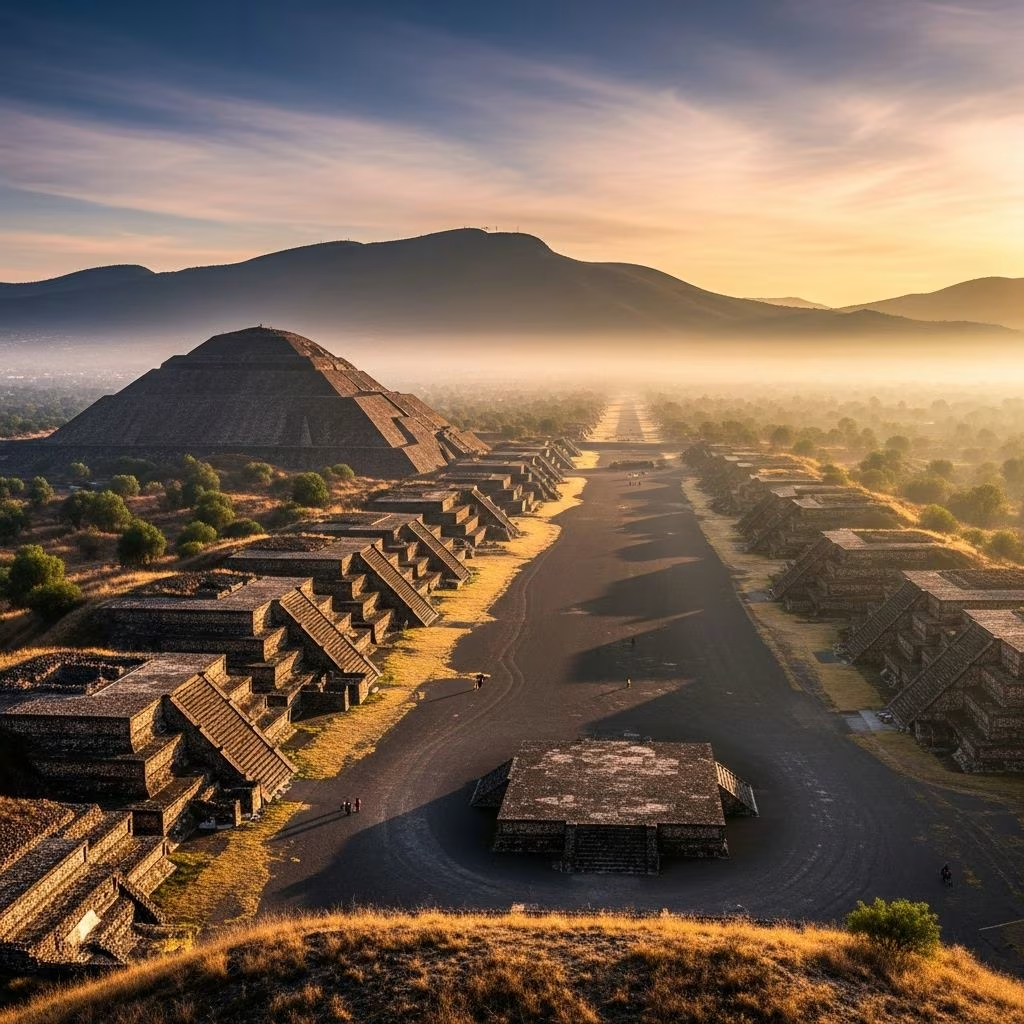
Teotihuacan, often called the ‘place where the gods were created,’ stands as a testament to Mesoamerica’s ancient ingenuity. Located about 50 km northeast of Mexico City, this sprawling urban complex flourished between the 1st and 7th centuries AD, boasting monumental pyramids aligned on geometric and symbolic principles. At its peak, it housed up to 100,000 residents, making it one of the Western Hemisphere’s largest cities. Today, it draws millions to wander its sacred avenues and climb its towering structures.
Human presence in the Teotihuacan Valley dates back to 600 BCE, starting with small villages totaling around 6,000 people. By 100 BCE, the site transformed into a major religious center on the Mexican Plateau, evolving through distinct phases of growth. Period I (200 BCE–1 CE) saw urban development as farmers gathered near abundant springs. Explosive expansion marked Period II (1–350 CE), fueled by migrations after volcanic disruptions elsewhere, leading to innovative multi-floor apartment compounds.
Teotihuacan’s classical era, Period III (350–650 CE), represented its zenith. Spanning 18 square kilometers with 2,000 buildings, it influenced art, culture, and trade across Mesoamerica, exporting obsidian tools widely. Agricultural innovations like chinampas—raised swamp beds—supported this population boom, enabling efficient food transport via canals. The city’s founders remain mysterious; early myths attributed it to Toltecs, but archaeology confirms it predates them by centuries.
Around 550 CE, fires ravaged elite compounds along the Avenue of the Dead, signaling internal strife, power struggles, and disrupted trade. By 650–750 CE (Period IV), Teotihuacan waned as a power, though habitation persisted at reduced levels. Extreme weather events around 535–536 CE may have contributed to its fall. Abandoned ruins later inspired Aztec legends; Moctezuma’s sacrifices there every 20 days underscored its sacred status. Designated a UNESCO World Heritage Site in 1987, it preserves pre-urban Mexican structures uniquely.
Teotihuacan’s layout follows a precise north-south axis, with the 2.5-km Avenue of the Dead as its spine. Major structures include:
These monuments exemplify Teotihuacan’s symbolic urban planning, blending engineering with cosmology.
Reaching Teotihuacan is straightforward from Mexico City. Buses depart from Terminal Norte every 20–30 minutes (about 1 hour, affordable fares). Taxis or rideshares like Uber cost more but offer flexibility. Entry fees are modest, with combo tickets for museums. Open daily 9 AM–5 PM; arrive early to beat crowds and heat.
| Transport Option | Duration | Cost (approx. MXN) | Pros | Cons |
|---|---|---|---|---|
| Bus from Terminal Norte | 1 hour | 60–100 round-trip | Cheap, frequent | Crowded, fixed schedule |
| Taxi/Uber | 45–60 min | 500–800 round-trip | Door-to-door, AC | Expensive |
| Tour Bus | Full day | 400–800 | Guided, includes entry | Group pace |
November–April offers mild weather (15–25°C); avoid rainy May–October. Weekdays are quieter than weekends. Sunrise tours or equinox events (March/September) showcase alignments, drawing solar phenomena on the pyramids.
Start at the main entrance near the Pyramid of Quetzalcoatl. Climb its steps for intricate carvings, then proceed north along the Avenue of the Dead. Ascend the Pyramid of the Sun (248 steps—rewarding views!). Visit the Pyramid of the Moon plaza, explore residential compounds like La Ciudadela, and end at museums displaying murals and artifacts.
Delve into residential zones revealing daily life: apartment compounds for diverse ethnic groups, talud-tablero architecture (sloped bases with vertical panels). Murals in Tepantitla depict agricultural gods and flowing water themes. The Obsidian Workshop highlights trade economy. Recent digs uncover tunnels beneath the Sun Pyramid, hinting at rituals.
Teotihuacan influenced Maya, Zapotec, and later Aztec societies through art and urbanism. Its multi-ethnic populace fostered tolerance, evident in foreign motifs. Today, it’s a pilgrimage site; respect rules—no climbing certain areas, no drones.
Stay in San Juan Teotihuacan village for authentic vibes—boutique hotels, guesthouses with pyramid views. Day trips pair well with Mexico City’s Centro Historico. Evening sound-and-light shows (seasonal) illuminate the ruins dramatically.
Yes—allow 4–6 hours to explore fully without rushing.
Sun and Moon yes (steps steep); Quetzalcoatl viewing only.
Sun Pyramid summit, Moon Plaza overlook, Quetzalcoatl close-ups at dawn.
Yes for ages 8+; younger kids may tire; carts help.
Summer 30°C+; winter pleasant. Hydrate!
Ongoing restorations combat erosion; visitor limits protect structures. Support via ethical tourism—avoid unauthorized souvenirs.
