

 Travel Essentials
 Travel Essentials

Complete guide to visiting the Terracotta Warriors in Xi'an, including logistics, best times, ticket information, and what to expect at this UNESCO World Heritage Site.
 Travel Essentials
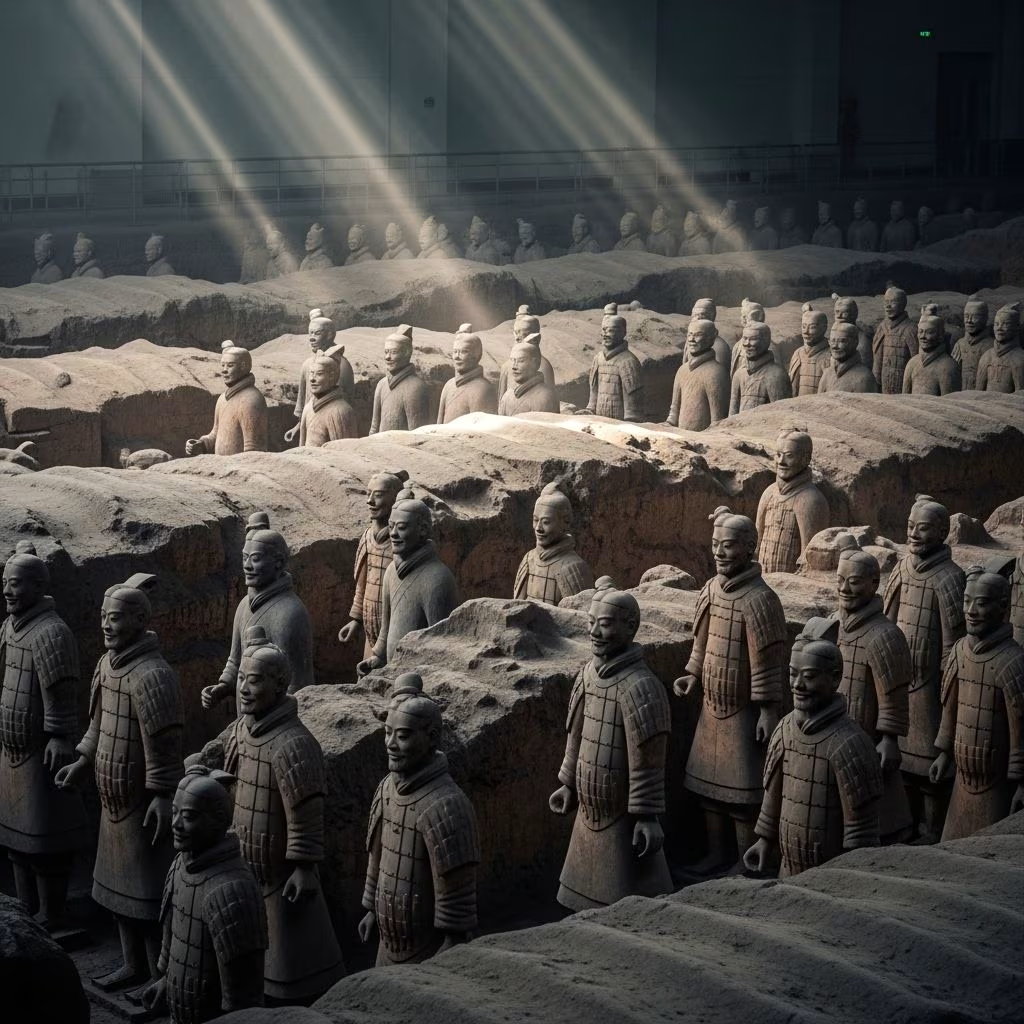
Beneath the soil near Xi’an, one of China’s most historic cities, lies an extraordinary testament to ancient craftsmanship and imperial ambition. The Terracotta Army represents one of the most significant archaeological discoveries of the modern era, revealing thousands of life-sized warrior figures crafted over two millennia ago. This underground legion was created to accompany China’s first emperor, Qin Shi Huang, into the afterlife, and today it stands as a window into the sophisticated military organization and artistic capabilities of the Qin Dynasty.
In 1974, farmers digging a well near Xi’an made an accidental discovery that would captivate the world. What they initially mistook for broken pottery was actually the first fragment of an elaborate underground army constructed over 2,200 years ago. This monumental project reflected the Qin Dynasty’s beliefs about the afterlife and the emperor’s need for protection and service beyond death. Archaeological teams subsequently uncovered that the full complex contains an estimated 8,000 warriors and horses, though to date, only a fraction have been fully excavated.
The Terracotta Warriors represent far more than mere decorative objects. Each figure was individually crafted with distinctive facial features, expressions, and armor, demonstrating the remarkable skill of ancient artisans. The collection accurately recreates a complete Qin military force, with various military branches represented including infantry, cavalry, archers, and chariot operators. This diversity reveals the sophisticated organizational structure of Qin military campaigns.
The primary excavation site consists of three main underground chambers, each containing different sections of the imperial army. Understanding what each pit displays can help visitors plan their exploration strategically:
The Terracotta Warriors complex is situated approximately 40 kilometers from central Xi’an, requiring about one hour of travel time. This distance makes timing an important consideration when planning your daily itinerary. Several transportation options are available for reaching the site:
| Transportation Method | Advantages | Considerations |
|---|---|---|
| Air-Conditioned Buses (914 or 915) | Direct service from Xi’an train station; affordable option | May require navigating at train station; less flexible timing |
| Organized Tour Package | Includes guide, transportation, entrance fees; language support provided | Less flexibility; higher cost (approximately 380 yuan) |
| Taxi Service | Convenient from your hotel; flexible schedule | Negotiate fare beforehand; potential language barriers |
| Personal Tour Arrangements | Maximum autonomy; can adjust pace and duration | Requires advance planning; may be less economical |
Once at the complex, a free shuttle bus transports ticket holders between the Terracotta Warriors site and the Mausoleum of Qin Shi Huang. Additionally, an electric cart service costs approximately 15 yuan and transports visitors from the parking area to the pits and museum, preserving energy for exploring the expansive grounds.
Planning your visit requires understanding current ticket pricing and available options. Adult admission costs 120 yuan, which grants access to the Terracotta Warriors site, the Mausoleum of Qin Shi Huang, and the Bronze Chariots Museum. Discounted rates are available for students, children, and senior citizens, though these concessions typically require appropriate documentation and are primarily intended for Chinese nationals.
For ticket purchases, multiple avenues exist:
Additional services carry extra fees: guides typically charge beyond the base admission, as do audio guide rentals. Hiring a trained guide proves worthwhile, as the site is expansive and can be confusing to navigate independently. Guides provide valuable context about the warriors, translation services, and assistance navigating the complex terrain.
The recommended visiting strategy involves reversing the numerical order of the pits. Rather than starting with Pit 1, begin with Pit 3 and progress through Pit 2 before concluding with Pit 1. This approach reserves the most impressive excavation for final viewing, creating a memorable crescendo to your experience. A typical complete visit, including the museum and mausoleum, requires three to four hours.
For those seeking the full experience, a suggested itinerary might include:
Beyond the burial pits themselves, the Exhibition Hall provides deeper context and displays remarkable artifacts from across the excavation site. This space contains selected treasures from the approximately 50,000 cultural relics recovered from the complex. The hall features eight thematic sections organizing discoveries around different aspects of the Qin Dynasty.
Visitors can observe:
The Educational cinema within the Exhibition Hall provides informative context about the warriors and the broader mausoleum site, though availability may vary.
Timing your visit strategically can significantly enhance your experience. The optimal periods for visiting Xi’an are spring (April through May) and autumn (September through October), when weather conditions are temperate and comfortable for extended outdoor exploration. These seasons avoid both the intense summer heat and winter cold that characterize the region’s climate.
Arriving early in the day provides multiple advantages: reduced crowd density allows for closer observation of individual warrior expressions and postures, photography opportunities improve with better natural lighting and fewer obstructed views, and you avoid the fatigue associated with navigating congested spaces during peak hours. The site experiences particularly heavy tourist traffic during midday and afternoon periods, especially during holiday seasons and weekends.
Within the broader mausoleum complex lies the Bronze Chariots Museum, a separate but connected attraction. Two intricately constructed bronze carriages represent the pinnacle of Qin Dynasty metallurgical expertise and have survived in remarkably well-preserved condition. These vehicles provide insights into imperial transportation and the sophisticated craftsmanship employed for high-status objects. The museum’s sprawling layout benefits from the electric cart service mentioned previously.
Several enhancements can deepen your engagement with this archaeological site. The site offers photo opportunities with life-size terracotta warrior reproductions, available at stands near Pit 2 for approximately 100 yuan per photo. The gift shop provides souvenirs ranging from small warrior figurines to scale replicas of complete soldiers, offering tangible mementos of your visit.
The surrounding area contains numerous cafes and markets where visitors can taste authentic Chinese sweets and regional specialties, providing cultural immersion beyond the archaeological focus. These establishments offer respite opportunities during your exploration and enable cultural exchange with local vendors.
The Terracotta Warriors should typically occupy one full day of your Xi’an visit, particularly if you plan to include the mausoleum and museum components. Travelers arriving directly from the train station can leave luggage at the site itself, allowing seamless exploration without returning to accommodations. Following your Terracotta Warriors visit, you might explore other Xi’an attractions such as the ancient city wall, the Giant Wild Goose Pagoda, or local food districts featuring authentic regional cuisine.
Whether you approach this site as an independent traveler or through an organized tour, the Terracotta Army remains an unparalleled opportunity to witness ancient human achievement and understand the sophisticated civilization that created it. The warriors stand as silent testaments to Qin Shi Huang’s vision and the remarkable capabilities of Qin Dynasty artisans and laborers, offering visitors a tangible connection to China’s imperial past.
