

 Travel Essentials
 Travel Essentials

Explore the Texas Water Safari, a non-stop 260-mile canoe race through rivers, bays, and swamps, known as the world's toughest. Learn history, challenges, and tips for competitors.
 Travel Essentials
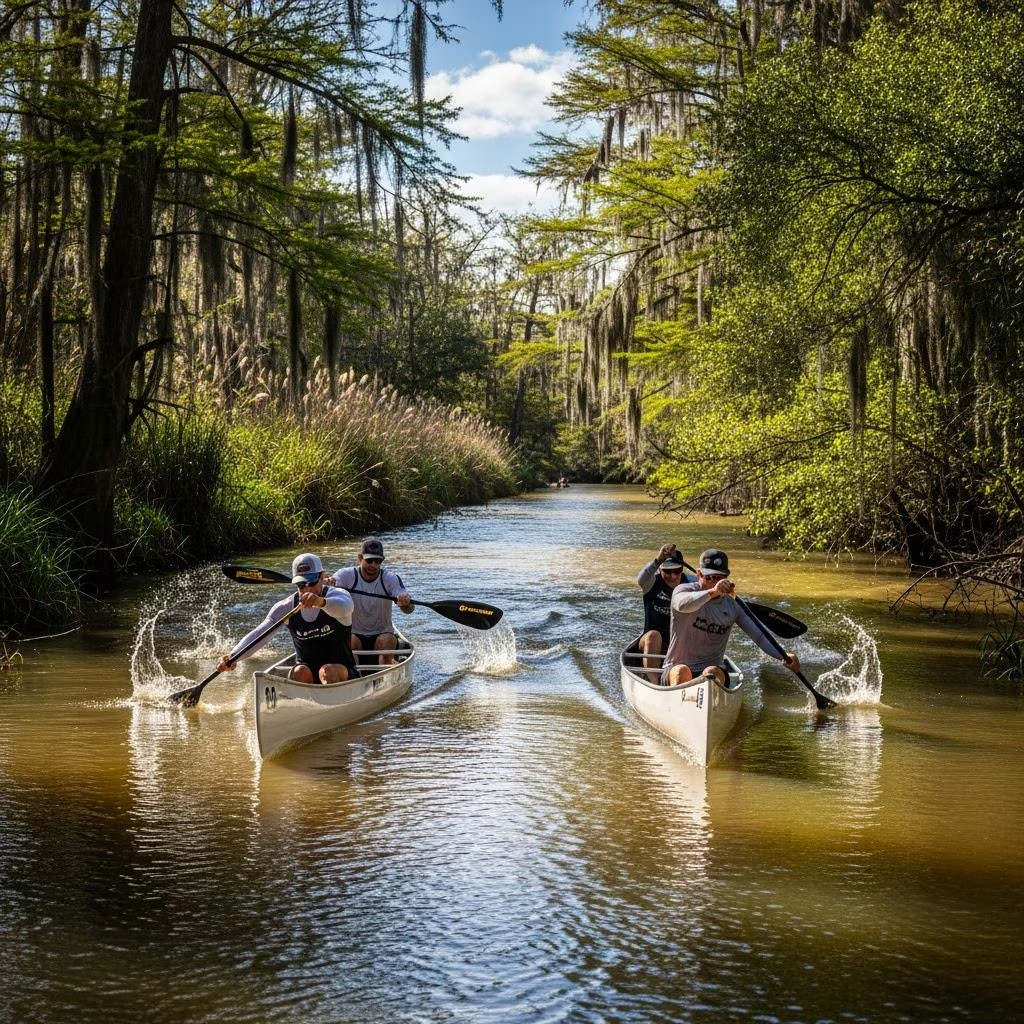
The Texas Water Safari stands as a monumental challenge in the world of adventure sports, drawing paddlers from across the globe to tackle its unforgiving 260-mile course. Launching from the pristine headwaters of the San Marcos River and culminating in the coastal town of Seadrift, this race pushes competitors to their physical and mental limits through a gauntlet of rivers, swamps, and open bays.
What began as a casual bet among friends in 1963 has evolved into one of the most revered endurance events in paddling history. Intrigued by tales of untamed Texas waterways, a group of enthusiasts decided to prove their mettle by navigating from central Texas to the Gulf Coast. This informal wager sparked the creation of the Texas Water Safari, now officially dubbed the “World’s Toughest Canoe Race”.
Over the decades, the event has grown in stature, attracting seasoned athletes and novices alike. While early editions were more exploratory, today’s Safari enforces strict rules emphasizing self-reliance—no external aid beyond water and ice from designated team captains. Participants must carry all gear, food, and repairs from the start, fostering a pure test of preparation and grit.
The race calendar aligns with early summer, typically in June, allowing paddlers to contend with peak Texas heat while the rivers run swift from spring rains. Registration deadlines and seminars precede the main event, building anticipation among the hundreds of entrants.
The journey commences at Spring Lake in San Marcos, GPS coordinates 29.893485, -97.930922, where over 100 boats jostle for position in a chaotic mass start. From there, paddlers navigate the San Marcos River, Guadalupe River, and San Antonio River, before entering the bays and finishing at Seadrift (28.4766078, -96.8614860).
The course divides into distinct phases, each presenting unique hazards:
Teams paddle nonstop, day and night, aiming to beat the 100-hour cutoff. Even top finishers rarely exceed four days, with records hovering around 38-40 hours for elite tandems.
Central to the Safari’s allure is its uncompromising ethos. Boats must be stock canoes—no modifications beyond basic safety gear. Provisions are packed at launch; only verbal encouragement, water, ice, or minor medical aid from shore-based captains is permitted.
Checkpoints enforce progress, with mandatory stops at places like Staples Bridge (mile 16). Violations, such as receiving unauthorized help, result in disqualification. This setup ensures every finisher earns their patch through sheer determination.
| Event Type | Distance | Key Features |
|---|---|---|
| Texas Junior Water Safari | 16 miles | Preliminary race to Staples Bridge; ideal for beginners. |
| Championship of the Lakes | 35 miles | Fastest section from River Haven RV to Pump House. |
| Full Texas Water Safari | 260 miles | Non-stop marathon to Seadrift; ultimate challenge. |
Texas summer amplifies the ordeal, with temperatures soaring past 100°F, relentless humidity, and swarms of mosquitoes testing resolve. Competitors battle sleep deprivation, chafing, and dehydration around the clock.
Wildlife adds unpredictability: alligators lurk in murky waters, massive alligator gar patrol shallows, snakes coil on branches, and insect hordes descend at dusk. Portages over fallen trees and through poison ivy swamps demand brute strength, often dragging 60-pound canoes hundreds of yards.
Pro paddler Debbie Richardson, an 11-time finisher, advises essentials like diaper rash ointment for skin protection and strategic ice packs for cooling. The bay finale can turn vicious with choppy seas, forcing paddlers to swim and tow boats.
Pam LeBlanc’s 2019 account captures the frenzy: Team “That’s What She Said” blazed through in 53 hours, dodging chaos at the start where boats collide amid the Spring Lake scrum.
In 2023, a women’s trio—facing rapids, gators, and 100° heat—pushed through unknowns over four days, highlighting camaraderie amid exhaustion. Novices like a 2008 brother duo clinched their division in 72 hours with minimal sleep, proving accessibility for prepared rookies.
YouTube footage from Texas State University showcases the electric start and diverse entrants, from locals to academics pursuing advanced degrees. Finishers cherish not prizes, but the patch symbolizing survival.
Success hinges on meticulous planning. Entry fees rose to $350 per paddler by 2026, covering insurance and logistics. Training mimics race demands: long paddles, night navigation, and portage drills.
Gear checklist includes:
Team dynamics matter—synced strokes and mental support sustain through delirium. Veteran tips: Start conservative to avoid burnout, monitor weather for bay safety.
For acclimation, feeder events abound. The Junior Safari (16 miles) introduces portages; the 35-mile Championship tests speed on premium water. These build skills sans full commitment.
Beyond physicality, the Safari forges unbreakable bonds and self-discovery. No cash prizes—just bragging rights and a finisher’s patch unite an elite fraternity. Spectators line banks, cheering through sweltering nights.
In 2026, expect heightened buzz with the May 2 seminar and June main event. Whether chasing records or mere completion, the Safari redefines endurance.
Competitors have 100 hours (4 days, 4 hours) to finish the 260 miles.
Most boats are tandems or teams of 3-4, but solos are allowed with approval.
No, but completing a shorter race like the Junior Safari is recommended for novices.
Race directors may alter the course or enforce safety stops.
Check texaswatersafari.org for dates, fees ($350/paddler), and seminars starting May 2.
