


 Food & Culture
Food & Culture
Tha Kha Floating Market: Thailand’s Authentic Hidden Gem
Explore Tha Kha Floating Market, a centuries-old waterway marketplace in Samut Songkhram where local vendors sell fresh produce and traditional foods from wooden boats.
 Food & Culture
The Hidden Gem of Samut Songkhram Province
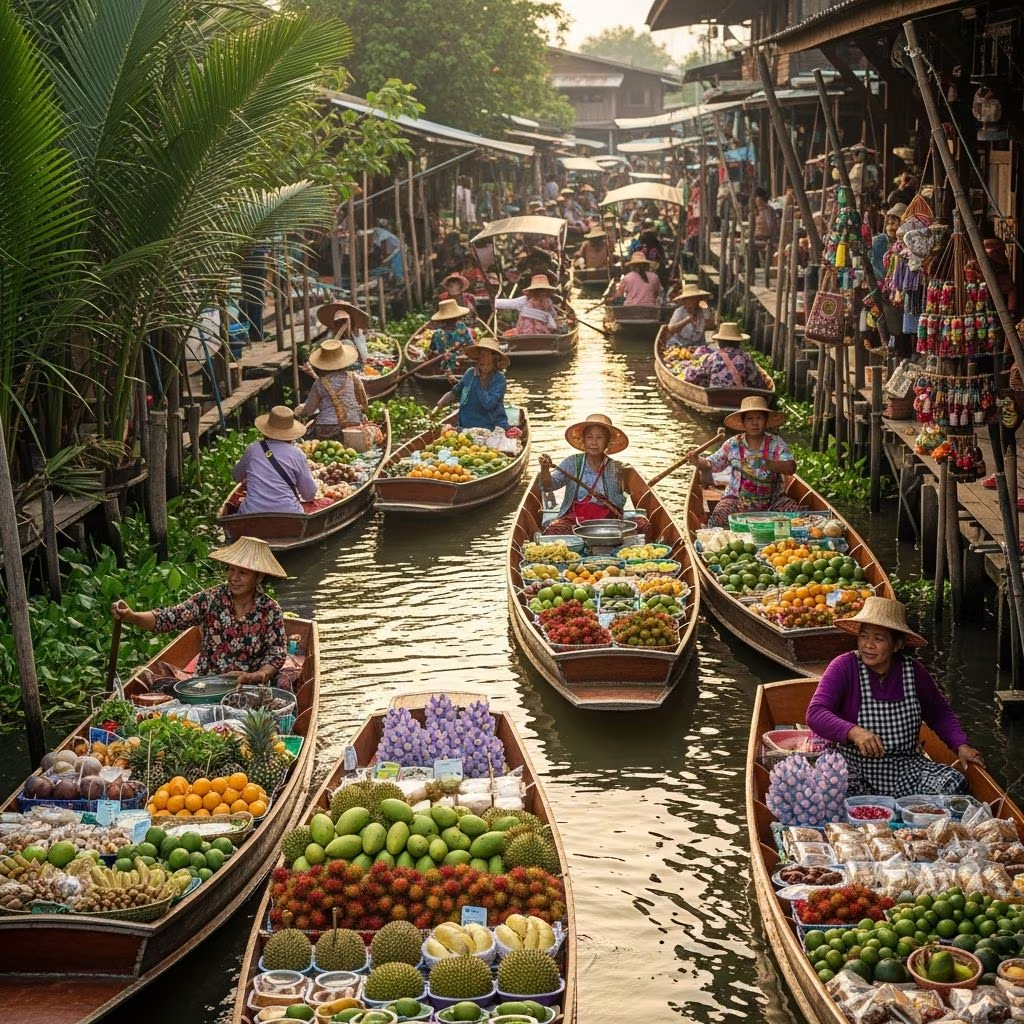
Nestled in the rural landscape of Samut Songkhram Province, approximately one hour southwest of Bangkok, Tha Kha Floating Market stands as one of Thailand’s most genuine and accessible waterway trading hubs. The name itself carries historical significance—tha translates to pier while kha means stuck, reflecting the market’s fundamental purpose as a fixed mooring point for boat traders spanning over a century. Unlike the heavily commercialized floating markets that dominate tourist itineraries, Tha Kha maintains its character as a functional community marketplace where locals prioritize commerce over spectacle.
The market’s enduring appeal lies in its preservation of traditional river commerce. Surrounded by verdant coconut palm plantations and pomelo fruit farms that characterize the region’s agricultural landscape, the market continues to serve as the lifeblood of local commerce. This geographical positioning, combined with deliberate efforts to maintain authenticity, has transformed Tha Kha into a destination for travelers seeking genuine cultural immersion rather than curated tourist experiences.
Historical Evolution and Market Operations
The origins of Tha Kha Floating Market trace back more than 100 years, when it operated according to ancient maritime principles. Historically, floating markets functioned within the constraints of natural tidal rhythms. Vendors recognized a traditional tidal calendar system known as nat kham, which determined trading hours based on incoming and outgoing currents. These natural cycles made paddling significantly easier during designated market hours, after which the reversed currents would discourage further navigation and trading activity.
Contemporary operations have modernized while preserving traditional elements. Originally constrained by lunar phases, the market operated only 4-5 days monthly when conditions aligned with moon cycles. Recognition of its cultural value prompted intervention by preservation-minded local leaders. A former village head collaborated with the Tourism Authority of Thailand to establish consistent weekend operations, implementing infrastructure improvements including enhanced walkways and improved canal conditions to facilitate boat-based trading. This measured approach to development transformed the market into an accessible tourist destination while maintaining its fundamental local character.
Current operating hours reflect this balance between tradition and accessibility. The market opens Friday through Sunday from 6 AM to 2 PM, with some sources indicating extended hours until 3 PM on weekends. Notably, traders report that days aligned with the traditional lunar calendar remain significantly busier than standardized weekend operations.
The Morning Marketplace Rhythm
Visiting Tha Kha requires understanding its distinct temporal characteristics. As a morning market, vendor presence peaks during early hours, gradually diminishing as midday approaches. The commitment required from traders underscores the market’s authenticity—some vendors depart their homes at 4 AM, rowing nearly two hours from distant locations like Don Manora to participate in daily commerce. This dedication reflects the market’s importance to regional agricultural trade rather than tourist convenience.
The predominance of elderly Thai vendors operating from traditional wooden rowboats creates an atmospheric environment that photography enthusiasts and cultural tourists particularly value. These seasoned traders navigate narrow canals with practiced efficiency, their boats laden with produce and prepared foods accumulated through early morning procurement or personal cultivation.
Merchandise and Culinary Offerings
The marketplace functions primarily as a food and agricultural hub, with vendors displaying merchandise categories that reflect regional production patterns and daily dietary staples:
- Fresh Produce: Seasonal fruits and vegetables cultivated throughout Samut Songkhram, including locally-grown produce from vendors’ personal farms
- Prepared Foods: Ready-to-eat dishes and traditional Thai cuisine prepared by boat vendors for immediate consumption
- Regional Specialties: Pomelo fruits and products derived from the province’s pomelo farms, alongside coconut-based items reflecting plantation agriculture
- Household Goods: Basic domestic items and wares produced within the local community
- Traditional Confections: Homemade sweets and desserts representing regional culinary traditions
The abundance of fresh produce reflects the market’s primary function as a community provisioning hub. Boat vendors arrange their merchandise to facilitate browsing from the canal’s edge, allowing visitors to walk comfortably along both sides of the waterway while examining offerings. This arrangement distinguishes Tha Kha from markets where navigation occurs primarily from boats.
Distinguishing Tha Kha from Competing Markets
Thailand’s floating market landscape includes several prominent destinations, yet Tha Kha occupies a distinctive position. The nearby Damnoen Saduak Floating Market, arguably Thailand’s most famous, attracts substantial tourist volumes that often obscure local commerce beneath commercial operations. Amphawa Floating Market, while smaller than Damnoen Saduak, similarly experiences notable tourist traffic that influences vendor behavior and market atmosphere.
Tha Kha distinguishes itself through several characteristics:
| Characteristic | Tha Kha | Damnoen Saduak | Amphawa |
|---|---|---|---|
| Tourist Volume | Minimal; primarily local visitors | Substantial; heavily commercialized | Moderate; seasonal variation |
| Market Size | Compact; manageable scale | Expansive; sprawling layout | Medium; moderate coverage |
| Primary Customers | Local residents; community-focused | Tourist-oriented with local presence | Mixed tourist and local presence |
| Atmosphere | Authentic; unchanged by tourism | Developed; infrastructure-enhanced | Semi-authentic; partly commercialized |
| Vendor Demographics | Predominantly elderly; multi-generational | Mixed ages; tourism-adapted | Mixed; tourist-conscious |
The market’s protected status within a green, rural environment—largely given over to agricultural pursuits rather than commercial development—preserves its modest scale and local atmosphere. This natural insularity from overdevelopment appears sustainable, ensuring the market’s authentic character persists regardless of increased tourist awareness.
Accessibility and Visitor Information
Reaching Tha Kha from Bangkok requires approximately one hour of travel time, positioning it within reasonable day-trip distance for urban visitors. The Amphawa District location in Samut Songkhram Province provides precise geographical coordinates for navigation planning.
Entry to the market itself remains entirely free. Visitors interested in boat-based tours experience variable pricing depending on group size and tour operator, with guided tours ranging up to approximately US$55, though many Bangkok-based tour operators incorporate boat transportation within comprehensive package pricing.
The Economics of Authentic Trading
Unlike commercialized floating markets where tourism generates primary revenue, Tha Kha’s economy remains grounded in agricultural distribution and local consumption patterns. Boat vendors participate primarily to supply community dietary needs rather than to capture tourist expenditures. This orientation creates favorable pricing for visitors—observers note that vendors remain accommodating despite language barriers, and prices reflect genuine local market rates rather than tourism-inflated valuations.
The market’s economic sustainability depends on maintaining this local focus. The Tourism Authority of Thailand’s measured approach to infrastructure development—improving walkways and canal conditions rather than constructing tourist facilities—reflects recognition that excessive commercialization would undermine the market’s fundamental appeal. For travelers seeking authentic experiences, this economic model guarantees genuine interactions with vendors prioritizing community service over commercial transactions.
Practical Considerations for Visitors
Successful visits require temporal awareness. The market’s morning focus means that early arrival—ideally before 8 AM—ensures maximum vendor presence and optimal product selection. Later arrivals encounter diminished activity as traders conclude transactions and depart by midday.
Seasonal variation affects the lunar calendar operation days, which reportedly experience heightened activity compared to standardized weekend operations. Consulting local sources regarding tidal conditions may enhance experiential quality, though modern infrastructure modifications have reduced tidal dependency.
Language barriers present minimal obstacles given vendor patience and local hospitality. Thai phrases for basic transactions and bargaining techniques common throughout Thailand apply equally at Tha Kha, though vendors appear less price-conscious than their counterparts at tourist-heavy markets.
Cultural Preservation Through Community Action
The market’s continued existence owes substantially to community stewardship, particularly former village leadership that recognized cultural preservation importance. By establishing consistent operating schedules while consulting with national tourism authorities, local stakeholders created sustainable conditions for market operation. This collaborative approach contrasts with scenarios where external commercial interests override community preferences, making Tha Kha emblematic of preservation that respects rather than exploits cultural heritage.
Regular visitors note warm greetings exchanged between established customers and boat vendors, indicating relationships transcending individual transactions. This social fabric reinforces the market’s function as community gathering place rather than commercial transaction point.
Frequently Asked Questions
- What makes Tha Kha different from other Thai floating markets?
- Tha Kha prioritizes local commerce over tourism, resulting in minimal crowds, authentic interactions, and genuinely low prices reflecting community economics rather than tourist markups.
- When is the best time to visit?
- Early morning arrivals, particularly between 6-8 AM on Fridays through Sundays, ensure maximum vendor presence and optimal product selection. Days aligned with the lunar calendar historically draw larger local crowds.
- Do I need to hire a boat?
- No; visitors can walk comfortably along canal edges without boat hire. Boat tours are optional and available for those preferring water-based perspectives.
- Is the market accessible by public transportation?
- Located approximately one hour from Bangkok, the market requires private transportation or organized tours for convenient access.
- What should I expect to purchase?
- Anticipate fresh produce, prepared foods, regional specialties, and household items reflecting local agricultural products and community production.
Conclusion: Authenticity in an Era of Commercialization
Tha Kha Floating Market represents the increasingly rare phenomenon of cultural preservation that has withstood tourist commodification pressures. By maintaining focus on community commerce, limiting infrastructure development to functional improvements, and celebrating local agricultural traditions, the market continues functioning as it has for over a century—as a vital commercial hub where vendors and customers engage in transactions rooted in necessity rather than novelty. For travelers seeking authentic Thailand beyond guidebook photographs, Tha Kha offers genuine immersion into quotidian marketplace culture where elderly vendors row their boats through dawn mist, customers greet each other by name, and commerce proceeds according to agricultural seasons and tidal rhythms rather than tourist schedules.
References
- Tha Kha Floating Market – Local Relaxing Market You Can Visit in Thailand — Migrationology. https://migrationology.com/tha-kha-floating-market-thailand/
- The women of the Tha Kha Floating Market — Lonely Planet. https://www.lonelyplanet.com/articles/tha-kha-floating-market-thailand
- Tha Kha Floating Market Reviews — TripAdvisor. https://www.tripadvisor.com/Attraction_Review-g1028071-d3336373-Reviews-Tha_Kha_Floating_Market-Amphawa_Samut_Songkhram_Province.html
- One of the most relaxing and local floating markets in Thailand — YouTube. https://www.youtube.com/watch?v=lZfCNZFd2AY
- THA KHA FLOATING MARKET: Bangkok’s Authentic Experience — YouTube. https://www.youtube.com/watch?v=S-u6RM-RjE4
- The Most Beautiful Bangkok Floating Market for Food & Photography — Kav Eats. https://www.kaveyeats.com/best-bangkok-floating-market
- Tha Kha Floating Market — Tourism Authority of Thailand. https://www.tourismthailand.org/Attraction/tha-kha-floating-market
On This Page
The Hidden Gem of Samut Songkhram Province Historical Evolution and Market Operations The Morning Marketplace Rhythm Merchandise and Culinary Offerings Distinguishing Tha Kha from Competing Markets Accessibility and Visitor Information The Economics of Authentic Trading Practical Considerations for Visitors Cultural Preservation Through Community Action Frequently Asked Questions Conclusion: Authenticity in an Era of Commercialization← Previous
Best Night Trains in Europe: Routes, Tips and 2026 Updates
Next →
Namibia Nature Guide: Deserts, Wildlife, Canyons & Coast
Related Reading
More in Food & Culture
Food & Culture Food & Culture
 Food & Culture
Best Places to Eat in Rome: Neighborhood Dining Guide
 Food & Culture
 Food & Culture