

 Travel Essentials
 Travel Essentials

Discover essential unwritten rules for traveling in Thailand, from temple etiquette to daily interactions, ensuring respectful and enriching experiences.
 Travel Essentials
Thailand captivates millions with its stunning beaches, vibrant cities, and ancient temples. Yet, beneath the surface of this welcoming paradise lies a rich tapestry of cultural norms that travelers must navigate to truly connect with locals. Understanding these unspoken rules fosters mutual respect, prevents misunderstandings, and elevates your adventure from touristy to transformative. This comprehensive guide draws on timeless Thai traditions to equip you with practical knowledge for an authentic experience.
Thailand’s landscape is dotted with spirit houses—small shrines found at the entrance of homes, businesses, hotels, and even tourist sites. These structures honor the guardian spirits believed to inhabit the land, a practice rooted in animist beliefs predating Buddhism. Before any development occurs, rituals acknowledge these presences, ensuring harmony between humans and the supernatural.
Treat spirit houses with utmost reverence. Never touch them, climb on them, or use them as photo backdrops or bag rests. Pass by quietly, perhaps with a slight bow of the head, to show awareness. Disrespect here is seen as inviting misfortune, as these are active sites of daily offerings like incense, flowers, and food.
In temples (wats), similar principles apply. Remove shoes before entering main halls, a gesture symbolizing purity. Dress conservatively: cover shoulders and knees—no shorts, tank tops, or revealing attire. Women should note that some areas restrict female entry altogether due to monastic purity rules.
Thai communication prioritizes harmony (kreng jai), where actions speak louder than words. The body holds symbolic hierarchy: the head is sacred, associated with the soul, while feet are lowly, linked to dirt and the profane.
| Body Part | Do | Don’t |
|---|---|---|
| Head | Keep hands away; don’t pat or touch others’ heads, especially children’s. | Avoid resting objects on anyone’s head. |
| Feet | Point them away from people and sacred items when sitting. | Never point feet at Buddha images, monks, or others; don’t step over people or food. |
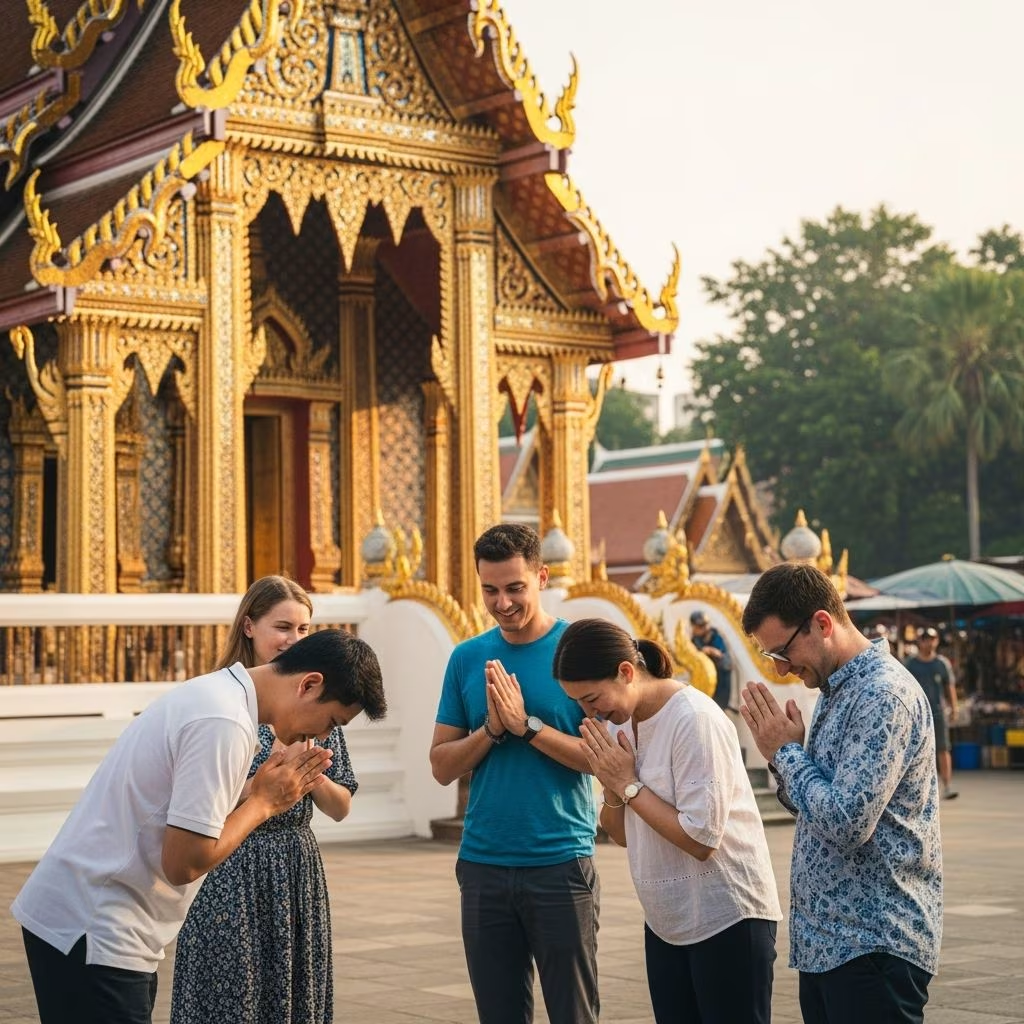
| Touching | Use a gentle wai (prayer-like hand gesture with bow) for greetings. | Refrain from hugging, kissing, or public displays of affection. |
When sitting on the floor, common in temples or homes, tuck feet beneath you or to the side. Crossing legs so feet face others is impolite. If entering a room where someone sits, step over carefully rather than around if space is tight.
Monks embody spiritual purity in Theravada Buddhism, Thailand’s dominant faith. Laypeople, especially women, must not touch monks or hand them items directly—use a cloth intermediary or place items on the ground for them to pick up.
Buddha statues demand similar deference. Never climb on them, point feet toward them, or pose irreverently. When paying respects, kneel with hands in wai position, facing the image.
The wai is Thailand’s hallmark greeting: palms pressed together at chest or nose level, accompanied by a slight bow. Wai elders or superiors higher (to forehead); peers at chest. Monks and royalty receive the highest wai, but tourists needn’t initiate—reciprocating suffices.
Use polite particles: ‘ka’ (women) or ‘khrap’ (men) at sentence ends softens speech, showing respect. Common phrases:
Avoid direct ‘no’—opt for ‘maybe’ or ‘not now’ to preserve face (saving dignity). Public arguments or raised voices disrupt harmony; address issues calmly, often with a smile.
Bargaining is an art in markets like Bangkok’s Chatuchak or Chiang Mai’s Night Bazaar. Start at half the quoted price, haggle playfully—aggressive tactics offend. Smile throughout; if no deal, walk away graciously.
Street food etiquette: Eat standing or at provided stools; slurp noodles loudly as compliment to the chef. Never waste food—it’s tied to prosperity beliefs. In restaurants, don’t snap fingers for service; a polite wai or ‘sawasdee’ works.
Public behavior: No littering, especially plastics harming beaches. Queue orderly; yielding to elders shows virtue. On public transport, offer seats to monks, pregnant women, elderly.
Thai families value quiet affection. Praise children indirectly to ward off evil spirits—say ‘not too pretty’ for a girl to avoid jealousy from ghosts. Physical discipline is rare; harmony prevails.
Entering homes: Remove shoes at the door. Knock softly or pause before entering private spaces, signaling respect for privacy. Bring small gifts like fruit for hosts.
Beaches like Phuket or Koh Samui blend tradition with tourism. Topless sunbathing offends; cover up when leaving water. Nude beaches don’t exist officially.
Nightlife in Bangkok’s Khao San or Pattaya: Dress smart-casual; cover up entering clubs. Ping pong shows or certain bars exploit locals—seek ethical entertainment like muay Thai fights.
In cities, traffic is chaotic—wear helmets on motorbikes, cross at zebra stripes. Jaywalking frustrates locals.
Protect against scams: Use metered taxis or apps like Grab; agree fares upfront for tuk-tuks. Drink bottled water; peel fruits.
Environment: No elephant rides—opt for sanctuaries. Coral reefs: Use reef-safe sunscreen, don’t touch marine life.
Shorts are fine for beaches but cover up for temples, government buildings, and rural areas. Opt for lightweight pants or long skirts.
No—women especially must not. Maintain distance and use indirect methods for interactions.
Smile, start low, and be ready to laugh it off. It’s a social game, not combat.
Apologize sincerely with a wai and ‘khor thoad.’ Thais appreciate genuine effort and quick correction.
Visible tattoos depicting sacred figures may bar entry. Cover them; sak yant (sacred tattoos) require respect.
