

 Travel Essentials
 Travel Essentials

Discover efficient ways to travel Thailand: buses for budget trips, trains for comfort, flights for speed, plus city hacks like BTS, songthaews, and ferries. Essential tips inside.
 Travel Essentials
Thailand’s transportation system blends affordability, variety, and efficiency, making it easy for travelers to explore its vibrant cities, serene islands, and lush countryside. Whether you’re hopping between Bangkok and Chiang Mai or island-hopping in the Andaman Sea, options like buses, trains, flights, and unique local vehicles ensure accessible journeys. This guide breaks down every mode, with practical advice to avoid pitfalls and maximize comfort.
Buses dominate Thailand’s intercity travel due to their low cost, frequent schedules, and extensive coverage reaching even remote areas. Public operators like Transport Co. Ltd. provide the cheapest fares, with routes spanning the country from northern hills to southern beaches. Private companies offer upgraded VIP services with air-conditioning, reclining seats, onboard toilets, snacks, and entertainment for longer hauls.
Key bus categories include:
Tickets start at 150 THB for short trips, rising to 1000 THB for cross-country routes. Book at terminals like Bangkok’s Mo Chit (Northern) or Southern Bus Terminal, or online for popular lines. Hotlines like 1490 help check schedules. Pro tip: Arrive early for express seats, and pack motion sickness remedies for winding mountain roads.
Thailand’s State Railway network connects major hubs in the north, south, east, and northeast, offering a slower but safer alternative to buses. Sleeper berths make overnight travel appealing, especially on the Bangkok-Chiang Mai or Bangkok-Surat Thani lines. Fares begin at 30 THB for seats, up to 2000 THB for first-class sleepers.
Classes range from fan-cooled third-class (daytime only) to air-conditioned second-class sleepers with curtains, and luxurious first-class private cabins. Food carts serve affordable Thai meals, adding to the charm. Note: No direct trains to Phuket, Krabi, or Sukhothai—combine with buses or ferries.
Stations like Hua Lamphong in Bangkok feature English signs and online booking via the official site. Trains are reliable but bookable weeks ahead during peak seasons like Songkran.
For time-crunched travelers, flights cut hours off bus rides. Budget carriers like AirAsia and Nok Air fly from Bangkok’s Don Mueang or Suvarnabhumi to Chiang Mai (1 hour, from 700 THB), Phuket, or Krabi. Full-service Thai Airways offers more legroom on select routes.
Airports are modern with cheap shuttles; book 1-2 months ahead for deals under 1000 THB. Watch baggage fees on low-cost airlines and factor in 1-2 hour check-ins.
Air-conditioned minivans (rot tuu) and share taxis fill gaps in bus/train networks, zipping between towns like Chiang Mai to Pai or southern provinces. They depart from markets or Victory Monument in Bangkok, often fully booked—arrive early. Fares are higher than buses (300-800 THB) but faster, with door-to-door service in some cases.
Songthaews double as inter-town shuttles in rural areas, flagged from roadsides. In the deep south, share taxis provide stylish connections, though minivans are overtaking them.
| Route Example | Mode | Duration | Cost (THB) |
|---|---|---|---|
| Bangkok-Chiang Mai | VIP Bus | 10 hrs | 600-900 |
| Chiang Mai-Pai | Minivan | 3 hrs | 150-200 |
| Bangkok-Phuket | Flight | 1.5 hrs | 700-2000 |
| Surat Thani-Koh Phangan | Ferry | 2.5 hrs | 300-500 |
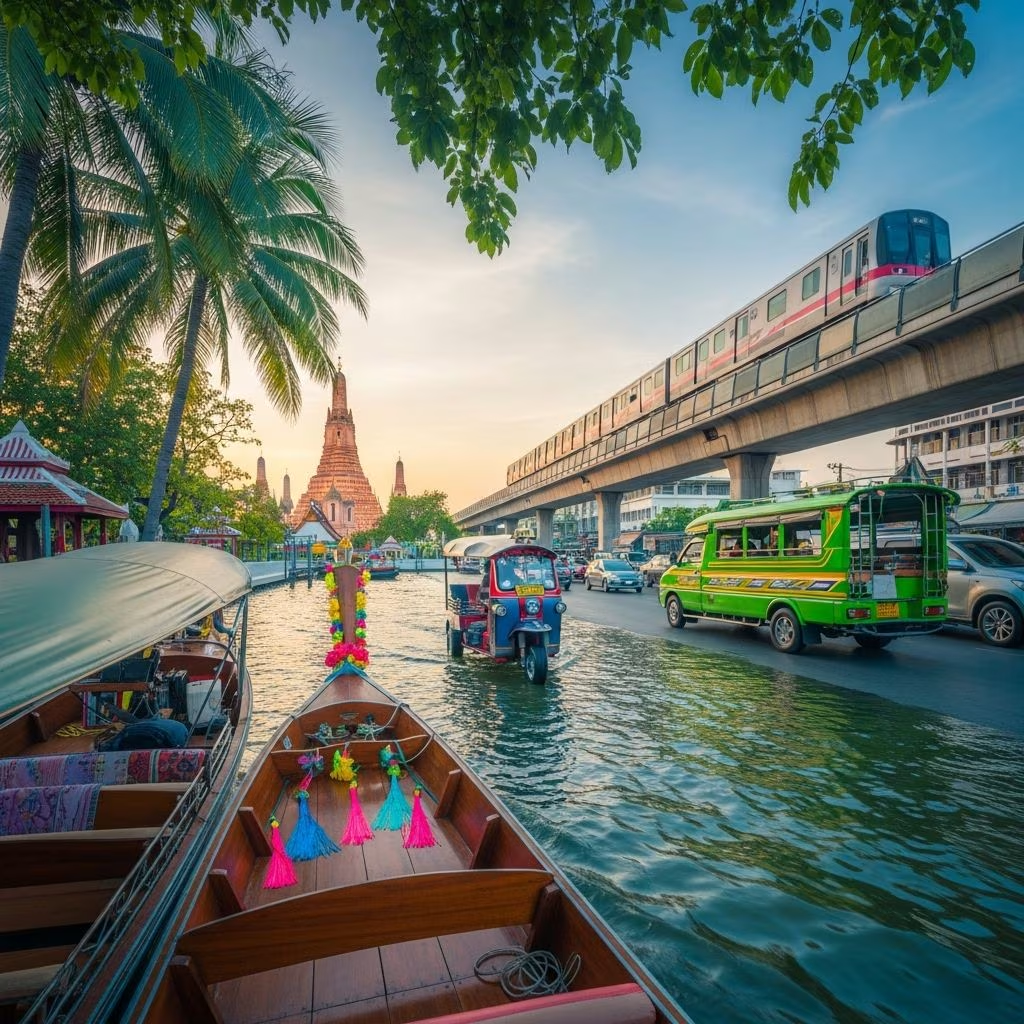
Bangkok’s traffic is legendary, but the BTS Skytrain and MRT subway cut through it with air-conditioned efficiency. BTS lines (Sukhumvit, Silom) link malls, temples, and airports; fares 16-59 THB. MRT complements underground. Chao Phraya Express Boats glide along the river (10-50 THB), while khlong shuttle boats navigate canals.
Red songthaews (‘red cars’) are the go-to, circling the old city for 20 THB or heading to nearby towns. Flag them anywhere; colors denote routes.
Songthaews, tuk-tuks, and motorbike taxis rule Phuket, Krabi, and Koh Samui. Rent scooters (200-300 THB/day) for freedom, but wear helmets—accidents are common.
Ferries link the Gulf (Koh Phangan, Koh Samui) and Andaman (Koh Phi Phi) islands from Surat Thani or Krabi piers. Speedboats are quicker (1-2 hours, 500-1500 THB) but rougher; large ferries cheaper and stable (2-5 hours). Schedules align with tides; Lomprayah and Songserm are reliable operators.
Scooters (automatic, 200 THB/day) are ubiquitous on islands and small towns—get international permit and insurance. Cars (800-1500 THB) suit families via Hertz or local shops, but left-hand driving and chaotic roads demand skill. Cycling thrives in flat Chiang Mai or Bangkok bike shares.
Daily transport: 100-300 THB locally, 500-2000 THB long-haul. Apps like 12Go.asia aggregate buses/trains/ferries; Google Maps shows real-time BTS/MRT. For cross-border, buses to Cambodia from Mo Chit.
VIP buses at 600 THB overnight; trains slightly more but comfier.
Yes for groups; hold on tight on curves. Prefer during day.
Airport Rail Link (45 THB) or BTS/MRT combos; avoid taxi queues.
No direct; train to Surat Thani, then bus/ferry (8-10 hours total).
For flexibility yes, but drive defensively and insure.
