

 Travel Essentials
 Travel Essentials

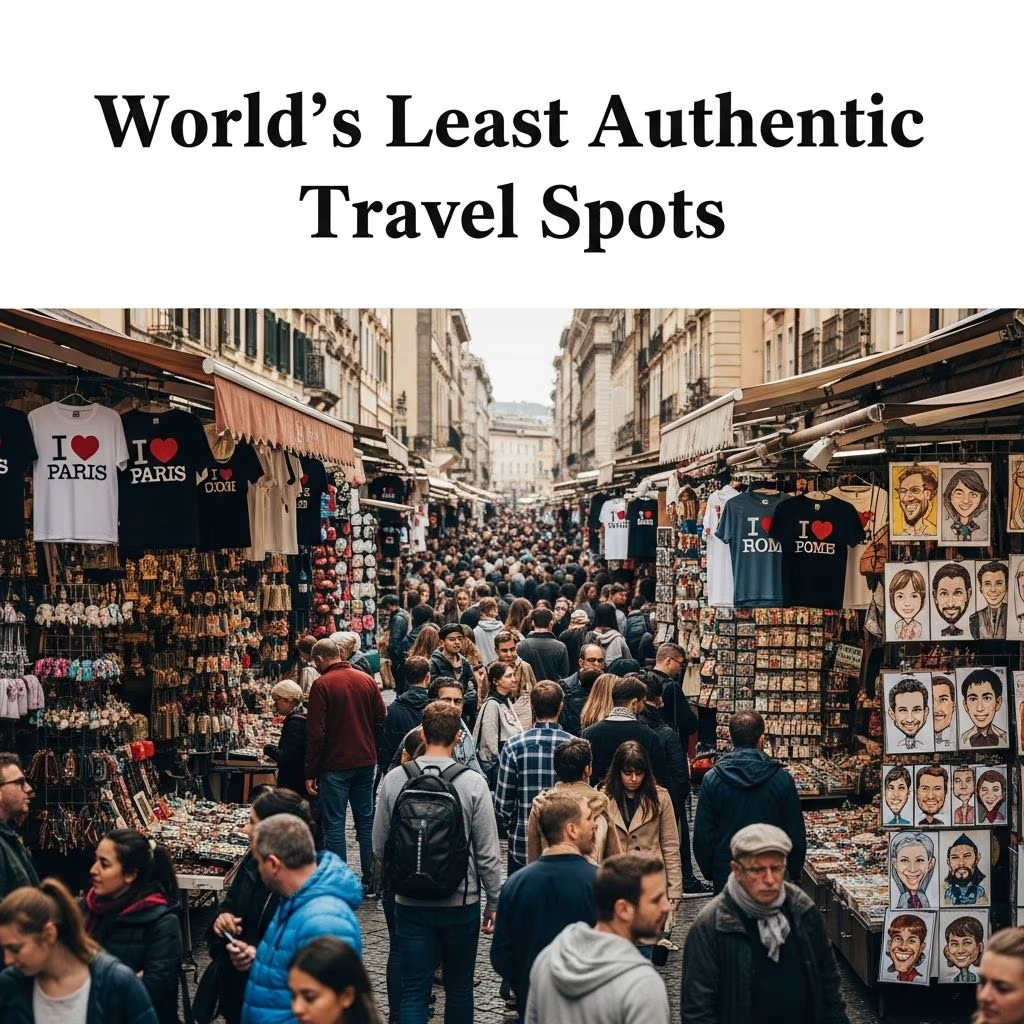
A study of 1.3M reviews ranks the top 10 least authentic destinations, with four U.S. cities leading. Explore reasons and tips for genuine travel.
 Travel Essentials
Travelers seeking genuine cultural immersion often encounter destinations overwhelmed by tourism, where commercialized experiences overshadow local life. A comprehensive study by travel insurance provider InsureAndGo analyzed over 1.3 million Google Maps reviews from 144 cities worldwide, scoring locations based on mentions of “authentic,” “local,” or “traditional” versus “tourist trap” or “overpriced.” The results reveal a top 10 list dominated by U.S. cities, highlighting how overtourism erodes authenticity.
Authenticity refers to experiences that reflect a destination’s true cultural, social, and daily rhythms rather than staged spectacles designed for visitors. In an era of Instagram-driven travel, many iconic spots prioritize spectacle over substance, leading to crowded streets, inflated prices, and curated attractions that locals avoid. This study quantifies traveler sentiment, assigning scores out of 100, with lower numbers indicating heavier tourist influence.
Key factors contributing to low scores include heavy commercialization, long queues at landmarks, and a lack of integration with residential neighborhoods. Cities topping the inauthentic list excel in providing entertainment but fail to connect visitors with everyday life, such as neighborhood eateries or community events.
The rankings expose a pattern: bustling hubs with world-famous attractions score poorly because their cores cater almost exclusively to tourists. Here’s the full list derived from the analysis:
Four U.S. cities occupy the top six spots, a stark reminder that American destinations often amplify spectacle for mass appeal.
Chicago claims the ignominious top spot with a dismal authenticity score of just 2 out of 100. Reviewers praise architectural wonders like the Willis Tower and Millennium Park’s Bean sculpture but lament the downtown area’s transformation into a visitor-centric zone. Long lines, premium pricing for deep-dish pizza tours, and river cruises dominate feedback, while mentions of genuine Polish delis or jazz clubs in outskirts are rare.
Locals frequent areas like Logan Square or Pilsen for tacos and breweries, yet tourists cluster around The Loop, missing these hidden gems. This disconnect arises from aggressive marketing of marquee sights, turning the Windy City’s heart into a commercial stage.
Ranking second, Venice epitomizes how fragile beauty buckles under pressure. Its labyrinthine canals and Renaissance architecture draw 30 million visitors yearly, far outnumbering residents. Gondola rides and St. Mark’s Square evoke postcard perfection, but reviewers decry soulless crowds, €100+ meals, and souvenir stalls replacing authentic cicchetti bars.
Day-trippers flood the city from 9 AM to 6 PM, emptying streets after dark when locals emerge. To experience real Venice, venture to Cannaregio or the Arsenal district for quieter bacari (wine bars) and community markets.
Las Vegas, third on the list, embraces artifice with replicas like the Venetian’s canals and Paris’s Eiffel Tower. The Strip’s neon fantasy scores low on local flavor, as reviewers note scarce mentions of off-Strip diners or Red Rock hikes favored by residents. It’s entertainment engineered for escapism, not cultural depth.
Nashville, fourth, trades gritty music roots for Broadway’s bachelorette-fueled honky-tonks. While legends like the Ryman Auditorium persist, boot-scootin’ crowds overlook East Nashville’s indie venues where true songwriters perform.
Boston’s Freedom Trail packs history into walkable paths, but central hubs like Faneuil Hall buzz with chain stores and performers, alienating locals who prefer Somerville’s dive bars. London’s tourist core around Westminster contrasts with diverse East End markets. Singapore’s Gardens by the Bay dazzles but ignores hawker centers. Sydney and Hobart suffer similar fates with harborfront overloads, while Brussels’ EU quarter feels detached from comic-strip culture.
| City | Key Tourist Draw | Common Complaints | Authenticity Score Insight |
|---|---|---|---|
| Chicago | Millennium Park | Crowds, high prices | 2/100 – Lowest globally |
| Venice | Gondolas | Overcrowding | Heavy day-tripper impact |
| Las Vegas | The Strip | Fake replicas | Designed for fantasy |
| Nashville | Broadway bars | Too polished | Curated vs. raw music |
| Boston | Freedom Trail | Tourist-geared areas | Central zones resident-free |
Conversely, Bogotá, Colombia; Lima, Peru; and Taipei, Taiwan lead authenticity rankings. Travelers rave about Bogotá’s street food in Chapinero, Lima’s ceviche markets in Surquillo, and Taipei’s night markets blending vendor banter with local eats. No U.S. city cracks the top 20, underscoring domestic challenges with overtourism.
Overtourism economics drive the shift: attractions generate revenue but inflate costs, pushing locals outward. Social media amplifies hotspots, creating self-perpetuating crowds. Review data shows a correlation between visitor volume and low scores—places with balanced tourism preserve character.
Post-pandemic recovery intensified this, as pent-up demand flooded icons without infrastructure upgrades. Climate and urban planning exacerbate issues, like Venice’s acqua alta worsened by cruise ships.
Even inauthenticity hotspots offer escapes:
In Chicago, hop the L train to Ukrainian Village; in Vegas, explore Fremont Street East. These strategies reclaim authenticity amid tourism tides.
Q: Why does Chicago rank as the least authentic?
A: Its downtown prioritizes tourist icons like the Bean, with reviews citing crowds and costs over local haunts.
Q: Can you still enjoy Venice authentically?
A: Yes, explore Dorsoduro for artisan shops and avoid peak hours.
Q: What’s the most authentic U.S. alternative?
A: No U.S. city ranks high; try smaller spots like Asheville, NC, for unspoiled vibes.
Q: How accurate is this study?
A: Based on 1.3M reviews, it reflects broad sentiment but varies by reviewer demographics.
Q: How to avoid tourist traps globally?
A: Prioritize residential areas, public transit, and off-season travel.
This ranking signals a tourism reckoning: destinations must balance economic gains with cultural preservation. Initiatives like Venice’s entry fees or Amsterdam’s cruise limits aim to curb excess. Travelers play a role by choosing responsibly, supporting local businesses, and sharing nuanced stories over filtered photos.
Ultimately, authenticity thrives in intentional exploration. While these cities deliver thrills, true travel memories lie in the unscripted moments beyond the traps.
