

 Travel Essentials
 Travel Essentials

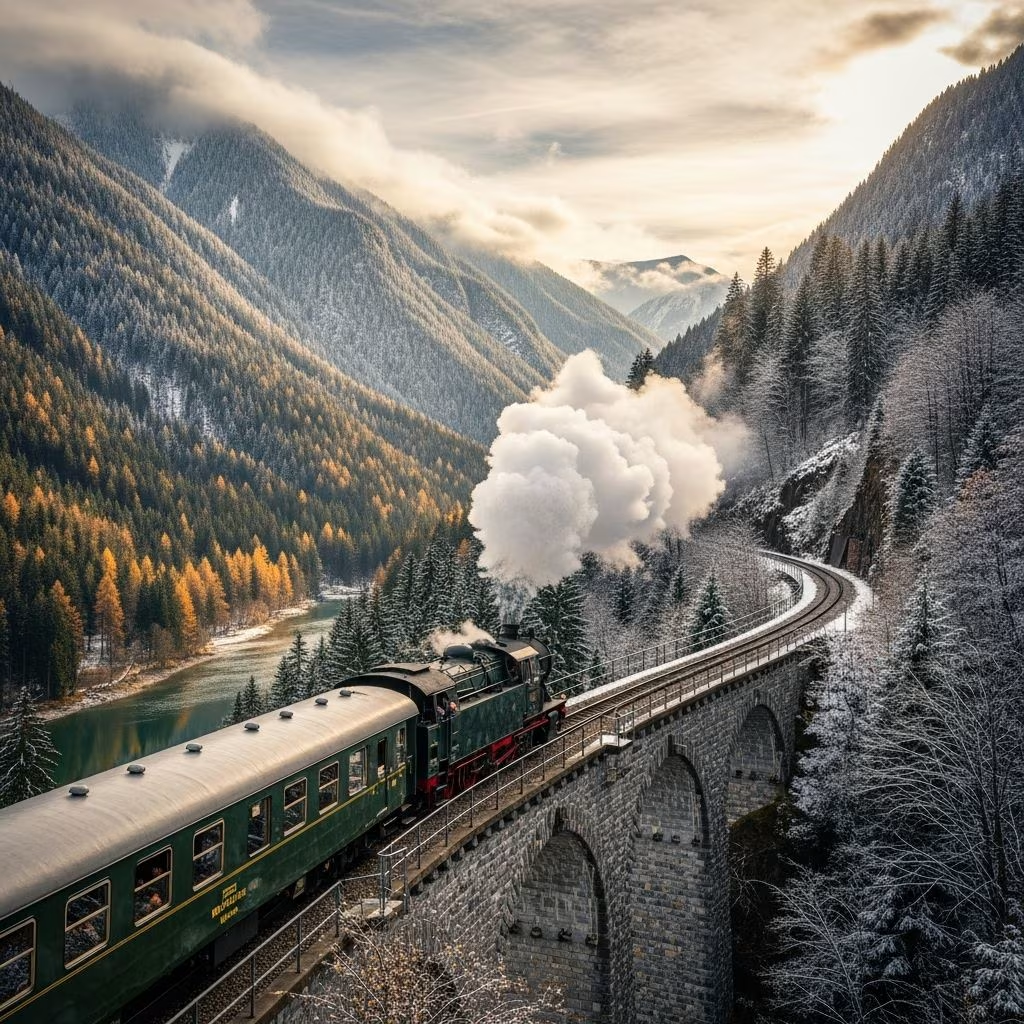
Discover Europe's most celebrated train journeys, from Alpine peaks to riverside valleys, offering unforgettable experiences through breathtaking scenery.
 Travel Essentials
Train travel across Europe offers a uniquely immersive way to experience the continent’s diverse landscapes, cultures, and heritage. Rather than rushing between destinations, rail journeys allow travelers to settle into comfortable seats, relish panoramic vistas, and connect with fellow adventurers. The following guide explores some of the most celebrated railway routes that have captivated millions of travelers seeking authentic European experiences.
Switzerland’s mountainous terrain has become synonymous with some of Europe’s most prestigious rail experiences. The mountain railways in this region represent engineering marvels that navigate treacherous terrain while providing unobstructed views of some of the continent’s most dramatic geography.
One particularly renowned route emphasizes the contrast between distinct ecosystems. This journey progresses from alpine glaciers to Mediterranean-style valleys, showcasing vegetation and climate transformations within a remarkably compact timeframe. The route crosses significant engineering achievements, including a striking viaduct that has become iconic among rail enthusiasts, and traverses high mountain passes that offer expansive vistas of rugged terrain, cascading waters, and pristine lakes.
Another celebrated Swiss experience focuses on connecting two renowned mountain destinations through an extraordinarily scenic passage. This route crosses approximately 300 bridges and traverses valleys that showcase the Swiss Alps in their full grandeur. Specially designed panoramic windows ensure that passengers experience uninterrupted views of snow-capped peaks, deep gorges, and charming villages throughout the journey. The route’s leisurely pace—earning it the distinction of being the world’s slowest express train—allows travelers to fully absorb the surrounding landscape rather than rushing through it.
Europe’s river valleys have long captivated travelers with their combination of natural beauty and human heritage. Several railway routes follow these waterways, providing intimate perspectives on both landscape and culture.
The Rhine Valley route represents one of Europe’s most historically rich railway passages. As the train winds alongside the river, travelers observe medieval fortifications perched on hillsides, vineyard-covered slopes, and small towns that seem frozen in time. This particular stretch of river holds designation as a UNESCO World Heritage Site, acknowledging the cultural significance of the landscape. The journey proves especially appealing during spring and autumn, when the vineyards display either lush greenery or brilliant fall colors.
Beyond the Rhine, additional river-following routes connect different European regions through similarly captivating passages. These journeys often feature stops in charming towns where travelers can explore local wine production, sample regional cuisine, and experience authentic European hospitality.
Norway’s railway system includes routes that many consider among Europe’s most spectacular. One particularly celebrated passage begins in the capital city and travels northward through progressively dramatic terrain.
The initial portion of this journey traverses forests and lakes during a multi-hour passage to a high-altitude station. Upon arrival at this mountain outpost, travelers transfer to a specialized tourist train that descends dramatically toward a fjordside settlement. This secondary route involves traversing 20 tunnels during a journey lasting less than an hour, with the train winding past numerous waterfalls and dramatic cliff faces. Combined, these two segments create what many consider the most spectacular railway experience in northern Europe.
Beyond modern railway infrastructure, several European routes preserve historic transportation methods and industrial heritage. These journeys offer unique perspectives on how rail travel has evolved while maintaining traditional aesthetics and operational methods.
Historic narrow-gauge railways operate in several European regions, particularly in Alpine and Mediterranean areas. These smaller-scale operations wind through terrain that conventional railways cannot access, often featuring charming vintage equipment and intimate travel experiences. Some of these routes have been in operation for over a century, connecting remote communities and preserving cultural traditions.
Steam-powered rail journeys operate seasonally in several European countries, offering passengers opportunities to experience rail travel as it existed generations ago. These locomotives pull period-appropriate carriages through landscapes that have changed little since the railways’ original construction, creating immersive historical experiences.
| Route Name | Primary Countries | Distance | Duration | Signature Feature |
|---|---|---|---|---|
| Alpine Glacier Route | Switzerland | 291 km | 8 hours | 300+ bridges, Alpine panoramas |
| Rhine Valley Passage | Germany | 65 km | 2-3 hours | Medieval castles, UNESCO sites |
| Scandinavian Mountain Journey | Norway | Varies | 5-6 hours | Fjord vistas, 20 tunnels |
| Mediterranean Connection | Switzerland/Italy | 122 km | 4 hours | Climate transition, viaducts |
| Historic Steam Routes | Multiple Countries | Varies | Varies | Vintage locomotives, heritage preservation |
Successful rail travel across Europe requires understanding various practical considerations. Different routes operate under different management structures, ticket systems, and scheduling patterns. Some routes function as tourist-oriented experiences with premium pricing and enhanced amenities, while others serve primarily as local transportation infrastructure.
Booking methods vary significantly across European railways. Some routes allow advance online reservations, while others primarily sell tickets at stations. Certain routes require mandatory seat reservations, whereas others operate on a first-come, first-served basis. Understanding these distinctions before traveling prevents frustration and ensures optimal experiences.
Seasonal variations significantly impact the travel experience. Mountain routes often experience seasonal closures due to snow conditions, while river-valley routes display dramatically different aesthetics depending on the season. Spring and autumn typically offer mild weather and vibrant vegetation, while winter provides dramatic snow-covered landscapes. Summer brings maximum accessibility but also attracts larger crowds.
European rail operators have substantially invested in passenger comfort and experience enhancement. Modern trains feature spacious seating with excellent sightlines, dining facilities, and climate control. Premium service levels typically include meal service, comfortable seating with enhanced legroom, and access to exclusive observation areas.
Beyond physical amenities, route selection influences the overall experience. Routes specifically designed for tourism typically feature larger windows, slower speeds allowing extended observation time, and strategic stops at particularly scenic locations. Local commuter routes, while often equally scenic, prioritize efficiency over observation comfort.
Many travelers combine multiple routes into comprehensive journeys, experiencing different regions and railway systems during extended European trips. This approach allows immersive engagement with the continent’s diverse landscapes and cultures while developing appreciation for different transportation approaches across different countries.
Spring and autumn offer ideal conditions for most European train routes, featuring mild temperatures, clear skies, and vibrant vegetation. Summer provides maximum daylight and accessibility but comes with larger crowds. Winter offers dramatic snow-covered landscapes on mountain routes but may cause seasonal closures.
Reservation requirements vary by route and train type. Luxury or tourist-oriented trains typically require advance reservations. Local and regional trains often operate on first-come, first-served bases. Checking specific route requirements before purchasing tickets prevents disappointment.
Most European trains operating on extended routes include dining cars or cafe facilities. Premium service levels typically include meal service in your seating area. Packing additional snacks proves prudent for routes with limited food services.
Scenic train routes offer exceptional photography opportunities throughout journeys. Strategic positioning near windows and timing during optimal daylight hours maximizes image quality. Many routes include stops allowing disembarkation for landscape photography.
Family-friendly amenities vary significantly across European railways. Most trains offer spacious seating accommodating children, and many include dedicated family compartments. Breaks during journeys allow children to stretch and explore station areas, making extended train travel manageable for families.
Train journeys across Europe continue attracting travelers seeking alternatives to rushed air travel or solitary car journeys. The combination of stunning scenery, comfortable travel conditions, and opportunities for social interaction creates experiences that extend beyond simple transportation.
Europe’s railway infrastructure represents centuries of engineering development, with routes carved through challenging terrain and bridges spanning dramatic chasms. These engineering achievements themselves constitute attractions, demonstrating human ingenuity and determination in connecting remote regions.
Whether traveling for relaxation, adventure, or cultural exploration, Europe’s renowned train routes offer experiences that transform ordinary transportation into memorable adventures. The continent’s diverse landscapes—from Alpine peaks to Mediterranean coasts, from riverside valleys to Scandinavian fjords—unfold gradually from train windows, allowing travelers to process and appreciate the full scope of European geography and culture.
Planning a comprehensive rail-based European journey combines practical logistics with emotional rewards, creating the foundation for unforgettable travel memories that extend far beyond the final station.
