

 Travel Essentials
 Travel Essentials

A comprehensive guide to walking through Quezon City, featuring cultural sites, natural attractions, and authentic local experiences across Metro Manila's largest city.
 Travel Essentials
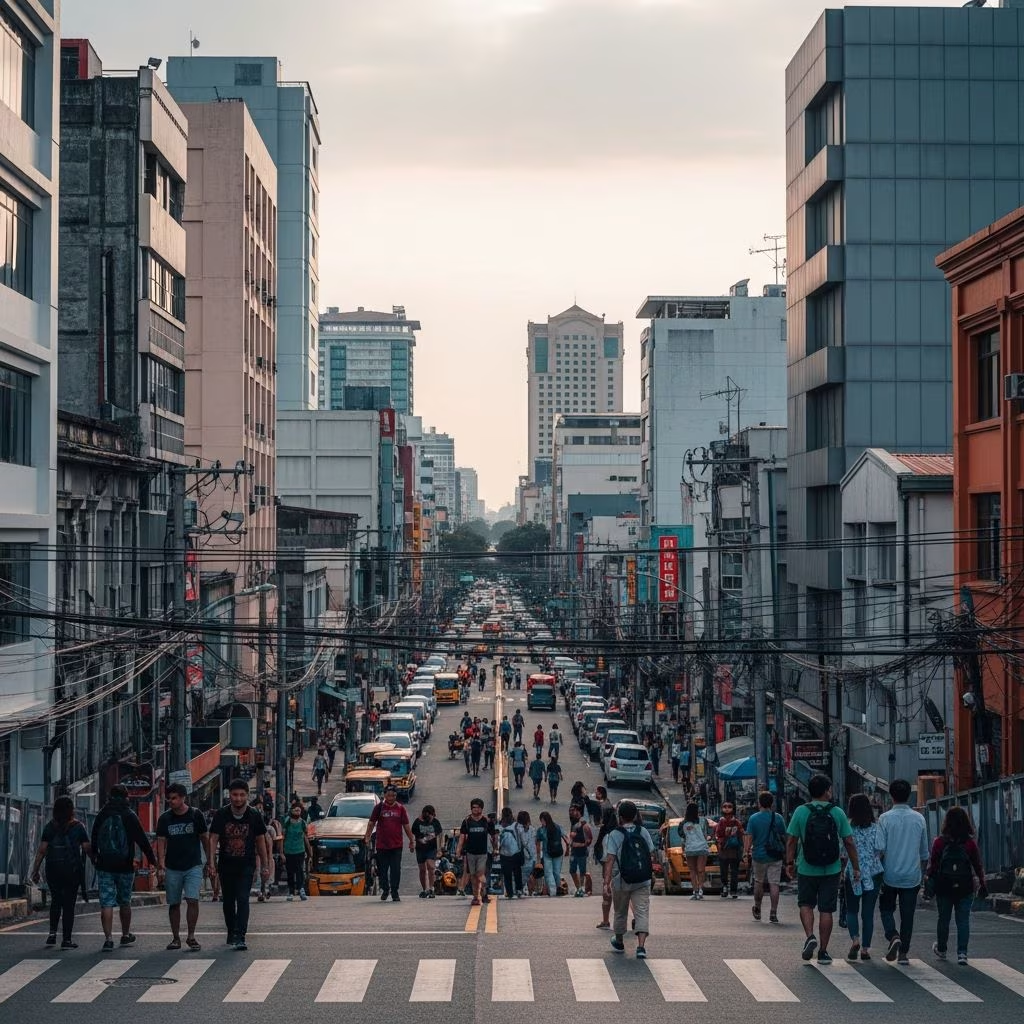
Quezon City stands as the largest city in Metro Manila and the Philippines, offering visitors and locals alike an expansive urban landscape filled with contrasts—from serene green spaces to bustling commercial districts, from historical monuments to contemporary cultural venues. Walking through this dynamic metropolis provides an unparalleled opportunity to experience authentic Filipino urban life, discover hidden neighborhoods, and connect with the rhythm of daily existence in one of Asia’s most vibrant cities. Whether you are a first-time visitor or a seasoned explorer, pedestrian routes through Quezon City reveal layers of history, culture, and community that cannot be fully appreciated from a vehicle.
Quezon City was established as the planned capital of the Philippines in 1939 and served in this capacity until 1976. The city encompasses an area of approximately 42.88 square kilometers and is divided into numerous barangays, or districts, each with distinct characteristics and attractions. Understanding the city’s spatial organization helps pedestrians navigate effectively and identify walking routes that align with their interests.
The city’s central business districts cluster around major thoroughfares such as EDSA (Epifanio de los Santos Avenue), Quezon Avenue, and Commonwealth Avenue. Meanwhile, residential and commercial neighborhoods extend outward in concentric patterns, creating diverse micro-communities that reflect different socioeconomic contexts and cultural influences. This geographic diversity makes Quezon City particularly rewarding for walkers seeking varied experiences within a compact metropolitan setting.
One of the most distinctive pedestrian destinations within Quezon City is the University of the Philippines Diliman campus, a 493-hectare sanctuary that provides respite from the intensity of urban development. This academic institution functions simultaneously as a botanical resource, historical archive, and cultural center, making it an ideal starting point for exploring Quezon City on foot.
Walking through the UP Diliman campus reveals carefully maintained gardens, tree-lined pathways, and architectural landmarks that chronicle Philippine educational history. The campus features numerous heritage structures dating back to the early twentieth century, alongside contemporary facilities that reflect the institution’s evolution. Students, faculty, and visitors navigate the grounds daily, creating a dynamic pedestrian environment that balances contemplation with purposeful movement.
Key features include:
Quezon City’s pedestrian routes intersect with numerous monuments that commemorate Filipino national identity and historical milestones. These landmarks serve not merely as tourist destinations but as gathering spaces and memory sites that reflect collective consciousness.
The Quezon Memorial Shrine stands prominently in Quezon City’s landscape, honoring former Philippine President Manuel L. Quezon, for whom the city is named. The memorial complex includes a distinctive pyramid-shaped structure that dominates the surrounding terrain and serves as a visual anchor for pedestrian orientation. Visitors can walk through manicured grounds, access exhibits related to Quezon’s presidency, and appreciate vantage points that offer panoramic perspectives of the city.
The Ninoy Aquino Parks and Wildlife Center provides another significant walking destination, featuring a sprawling complex dedicated to ecological conservation and environmental education. This sanctuary encompasses artificial lagoons, wildlife habitats, and interpretive trails that educate pedestrians about Philippine biodiversity. Walking paths wind through the facility, allowing visitors to observe diverse fauna and flora while learning about conservation initiatives.
The Museo ni Manuel Quezon and the Quezon Heritage House preserve material culture and domestic spaces associated with Philippine leadership and elite residential traditions. These institutions offer curated walking experiences through period rooms, exhibition galleries, and archival spaces that illuminate twentieth-century Filipino life.
Pedestrian exploration of Quezon City necessarily includes interaction with modern commercial zones that reflect contemporary Asian urbanism. Shopping malls, corporate office parks, and entertainment complexes shape the contemporary walking experience and reveal patterns of consumption and leisure.
Districts centered around major shopping destinations such as SM City North EDSA, Trinoma, and Eton Centris attract continuous foot traffic and demonstrate the integration of commerce with urban mobility. Walking through these areas exposes the interplay between indoor climate-controlled environments and outdoor streetscapes, between designed consumer spaces and spontaneous street vending. The pedestrian experience encompasses both planned commercial architecture and the informal economy that flourishes in surrounding streets.
Beyond major landmarks and commercial centers, Quezon City’s distinctive character emerges through exploration of individual neighborhoods and residential communities. Walking through barangays such as Diliman, Cubao, and other districts reveals the diversity of urban settlement patterns, architectural traditions, and community infrastructure.
Street-level exploration uncovers:
Walking through Quezon City provides continuous opportunities to engage with Filipino culinary traditions, both formal and informal. Street food vendors line major pedestrian routes, offering specialties that reflect regional and national tastes while serving the practical needs of mobile urban populations.
The pedestrian gastronomic experience encompasses traditional Filipino breakfast dishes, midday snacks, and evening meals. Walking visitors can encounter:
| Food Category | Typical Examples | Common Locations |
|---|---|---|
| Morning Fare | Lugaw, tapsilog, pandesal | Street corners, market areas |
| Midday Snacks | Isaw, fishballs, kikiam | Sidewalk vendors, food stalls |
| Evening Meals | Sinigang, adobo, grilled meats | Neighborhood eateries, food courts |
| Beverages | Halo-halo, buko juice, taho | Beverage stands, sari-sari stores |
Engaging with street food as a pedestrian traveler provides not only nutritional sustenance but also cultural immersion and economic participation in informal economies that sustain urban populations.
Walking through Quezon City requires awareness of several practical factors that influence the pedestrian experience. Weather patterns in tropical Manila involve distinct wet and dry seasons, with the southwest monsoon bringing heavy rainfall from June through October. Pedestrians should plan walks during cooler morning hours or evening times to mitigate the intense midday heat and humidity.
Sidewalk infrastructure varies considerably across different districts and neighborhoods. Major thoroughfares generally feature dedicated pedestrian pathways, though maintenance standards fluctuate. Secondary streets and residential neighborhoods may offer limited sidewalk facilities, requiring pedestrians to navigate shared spaces with vehicular traffic. Appropriate footwear and hydration become essential considerations for extended walking explorations.
Traffic patterns and pedestrian safety require attention, particularly when crossing major avenues during peak commuting hours. Informal street vending and temporary stall placement occasionally reduce effective sidewalk width, necessitating adaptive navigation strategies.
Quezon City’s tropical climate influences the ideal timing for pedestrian exploration. The dry season, spanning November through May, generally provides the most favorable conditions for extended walks, with lower humidity levels and minimal rainfall disruption. During this period, early morning walks offer particularly pleasant experiences, with comfortable temperatures and lighter traffic congestion.
The wet season brings challenges including sudden intense rainfall and reduced visibility, though fewer tourists and more locals engage in street activities during off-season months. Pedestrians willing to embrace wet-season walking can experience different neighborhood rhythms and avoid peak tourism congestion.
Efficient pedestrian exploration of Quezon City often incorporates complementary transportation modes, allowing walkers to cover greater distances while maintaining street-level engagement with the urban environment. The Light Rail Transit (LRT) system provides connections between distant neighborhoods, enabling walkers to concentrate intensive pedestrian exploration within specific zones before moving to new areas via rapid transit.
This hybrid approach allows visitors to experience diverse neighborhoods without experiencing excessive fatigue from continuous walking across the expansive city. Walking from transit hubs to specific districts creates manageable pedestrian routes while maximizing exposure to neighborhood character.
Beyond the major museums mentioned previously, Quezon City hosts numerous smaller cultural institutions, galleries, and educational facilities accessible to pedestrians. Art galleries, independent museums, and community cultural centers distribute throughout neighborhoods, rewarding exploratory walkers with unexpected cultural encounters.
The Philippine National Museum complex, various university museums, and private art collections create a geography of cultural access that extends beyond conventional tourist circuits. Walking routes can be deliberately designed to connect these institutions, creating thematic itineraries based on specific interests.
Quezon City generally maintains reasonable safety levels during daylight hours in developed commercial and institutional areas. As with any major urban environment, pedestrians should exercise standard urban awareness, avoid isolated areas after dark, and secure personal belongings. Well-lit commercial districts and university campuses provide safer walking environments than peripheral neighborhoods.
Early morning hours (5:00–8:00 AM) offer optimal conditions with cooler temperatures, lighter traffic, and fewer crowds. Late afternoon (4:00–6:00 PM) provides acceptable conditions before sunset, though traffic congestion increases. Midday walking requires sun protection and hydration due to intense heat and humidity.
Accessibility varies significantly across Quezon City. Major commercial districts and institutional campuses feature improved sidewalk infrastructure and some designated accessible routes. Residential neighborhoods and secondary streets often lack comprehensive accessibility provisions. Specific route planning should account for individual mobility requirements.
Multiple tour operators offer organized walking experiences throughout Quezon City, providing curated routes, expert interpretation, and structured experiences. These services range from casual community-based tours to formal tourism company offerings, accommodating different budget levels and interest areas.[10]
Walking through Quezon City becomes most rewarding when approached with intentional curiosity and openness to unexpected discoveries. Rather than rushing between predetermined destinations, pedestrians who allocate time for observation, conversation, and spontaneous exploration encounter the richness that distinguishes urban walking from mere transportation.
Photography, journaling, and sketching enhance pedestrian engagement by focusing attention on details of architecture, human activity, and environmental characteristics. These practices transform walking from passive movement through space to active documentation and interpretation of urban experience.
Quezon City’s walking routes ultimately offer more than physical exercise or tourism consumption. They provide opportunities for direct engagement with Filipino urban reality, for understanding how millions of people navigate daily existence in one of Asia’s most complex metropolitan centers, and for appreciating the resilience, creativity, and community that flourishes within and around formal urban structures. Whether walking established routes through major landmarks or exploring secondary neighborhoods, pedestrians in Quezon City participate in the ongoing creation and negotiation of urban space.
