

 Travel Essentials
 Travel Essentials

Explore Scotland's whisky legacy from ancient origins to modern distilleries, regional flavors, and top visitor experiences across its five key areas.
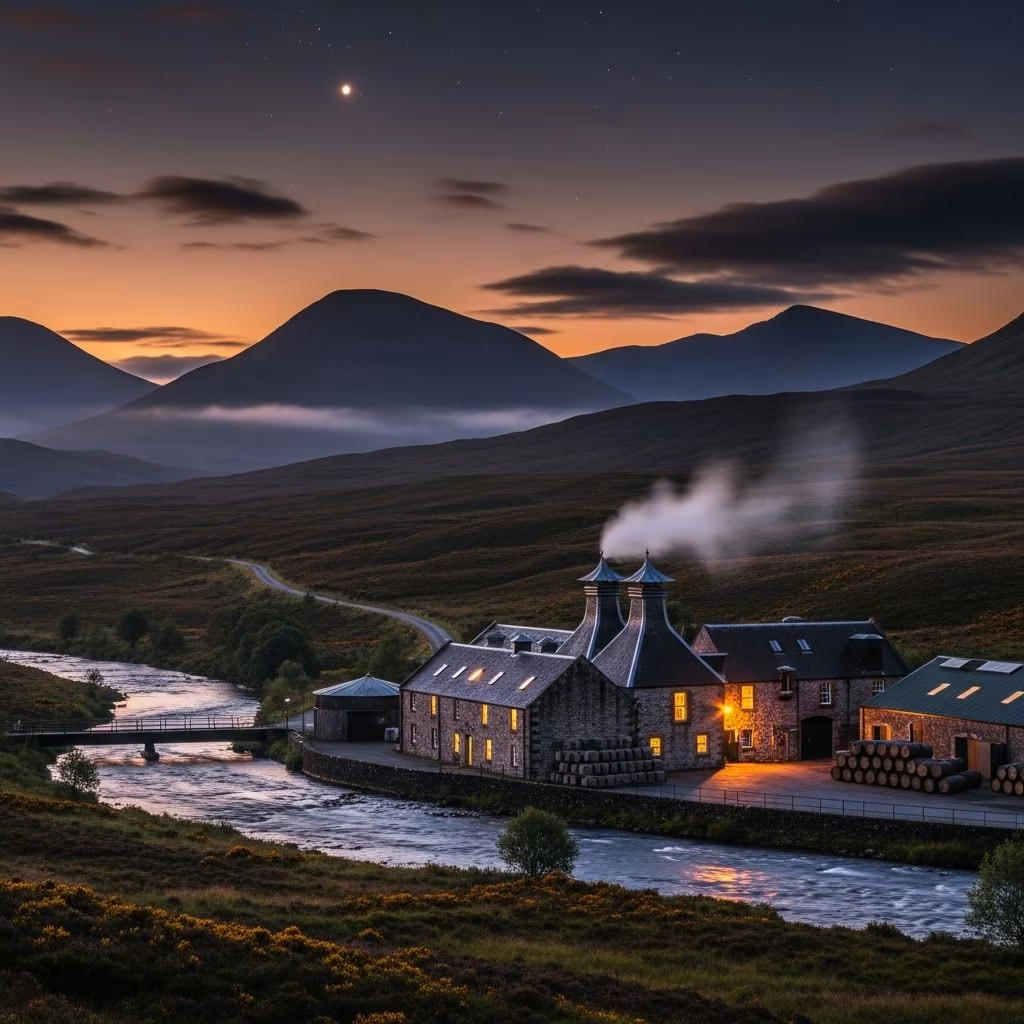 Travel Essentials
Scotland’s whisky stands as a global icon, embodying centuries of craftsmanship intertwined with the nation’s rugged landscapes and cultural identity. Known in Gaelic as uisge beatha, or “water of life,” this spirit captures the essence of peaty moors, misty glens, and coastal winds.
Whisky’s story in Scotland traces back to the early medieval period, when Christian monks arriving from Europe brought distillation techniques northwards. Unable to cultivate grapes in the cool climate, they adapted their skills to local barley, creating the first rudimentary spirits around the 11th or 12th century. These early efforts were small-scale, often for medicinal use in monasteries, but they laid the foundation for what would become a cornerstone of Scottish exports.
By the 15th century, records show distilling spreading to private hands, with the 1494 Exchequer Rolls noting eight bolls of malt given to Friar John Cor for producing aqua vitae. Taxation soon followed, sparking illicit operations in remote glens. The 1823 Excise Act legitimized the industry by imposing affordable duties, leading to legal distilleries that professionalized production. Today, over 130 active sites produce whisky that accounts for a significant portion of Scotland’s economy, employing thousands and drawing millions of visitors annually.
The evolution continued into the 20th century. Post-World War II, single malts emerged from the shadows of blended whiskies, gaining fame through savvy marketing and a growing appreciation for their nuanced profiles. By the 1950s and 1960s, icons like Glenfiddich pioneered bottling unblended malts, elevating them to luxury status worldwide.
Scotland’s terrain divides into five whisky-producing zones, each imparting distinct characteristics to the spirits through water sources, peat levels, and climate. These regions foster whiskies ranging from light and floral to bold and smoky.
This regional mosaic ensures no two drams are alike, influenced by hyper-local factors like barley variety, yeast strains, and maturation in oak casks—often ex-bourbon or sherry—from Kentucky or Spain.
Creating single malt whisky demands precision across six core stages, taking at least three years by law, though many mature 10-30 years for peak complexity.
Variations abound: peating intensity varies by region, still sizes affect reflux, and cask types (refill bourbon for purity, sherry for fruitiness) define the final dram.
Scotland offers immersive ways to explore, from self-guided drives to curated bus tours. Key trails span regions, with many distilleries offering 60-90 minute tours (£15-30) including tastings—book ahead, especially summer.
| Region | Signature Trail | Must-Visit Distilleries | Access Tips |
|---|---|---|---|
| Speyside | Malt Whisky Trail | Glenfiddich, Glenlivet, Cardhu | Elgin bus hub; rent a car for flexibility |
| Islay | Islay Whisky Trail | Laphroaig, Bowmore, Bruichladdich | Ferry from Kennacraig; rugged roads |
| Highlands | North Coast 500 loop | Highland Park, Talisker, Glenmorangie | ScotRail to Inverness; scenic drives |
| Lowlands | Edinburgh fringe | Auchentoshan, Daftmill | Train from Glasgow/Edinburgh |
| Campbeltown | Kintyre Peninsula | Springbank, Glen Scotia | Bus from Glasgow; coastal walks |
For multi-day itineraries, combine regions: fly into Edinburgh, train to Pitlochry for Blair Athol, then Speyside gems like Tomintoul, before Orkney’s Highland Park or Skye’s Talisker. Guided minibus tours from cities like Edinburgh cover Speyside/Islay safely, avoiding post-tasting drives.
Approach whisky like wine: observe color (pale from bourbon casks, gold from sherry), nose deeply (add water to open aromas), sip neat or with a drop, noting palate evolution—sweet, spicy, smoky—and lingering finish.
Urban intros abound in Edinburgh/Glasgow bars like The Scotch Whisky Experience, stocking 3,000+ bottles for flights.
Speyside, cradled by the River Spey, boasts lush barley fields yielding honeyed, orchard-fruit malts. Glenfiddich’s visitor center buzzes with tours tracing its 1887 founding; Glenlivet offers hilltop vistas and first-legal distillery lore.
Islay’s nine active sites deliver medicinal peat from tidal bogs. Laphroaig’s quarter-cask ownership club lets fans age personal whisky; Ardbeg’s dramatic cliffs inspire bold, tarry pours.
Spanning vast terrain, Highlands deliver everything from Orkney’s heather-honey Highland Park (Scotland’s northernmost) to Skye’s maritime Talisker, peppery with sea spray.
Tripple distillation crafts silky, floral spirits like Auchentoshan’s herbal crispness, perfect city gateways near Glasgow.
Fewer but fiercely independent, Springbank handcrafts everything onsite, yielding briny, funky malts reflective of its salty peninsula.
Scotch must be made in Scotland from malted barley (single malt) or grains, distilled/matured there minimum three years in oak, at least 40% ABV. Unique geography/regs ensure inimitable character.
Over 130, mostly single malt, clustered in Speyside (60+) with expansions in Lowlands/Islands.
Not necessarily—Lowland/Highland options suit novices; peat lovers chase Islay’s intensity.
Yes, but designate drivers or use tours/trains; many distilleries limit tastings accordingly.
Spring/autumn for fewer crowds; avoid ‘silent seasons’ (May-June maltings halt).
Sustainability drives modern whisky: water conservation, barley biodiversity, and cask recycling. Tourism funds heritage preservation, ensuring uisge beatha flows for generations.
