

 Travel Essentials
 Travel Essentials

Explore the rich history, symbolism, and ubiquity of lei in Hawaii—from ancient Polynesian origins to contemporary island life and tourism.
 Travel Essentials
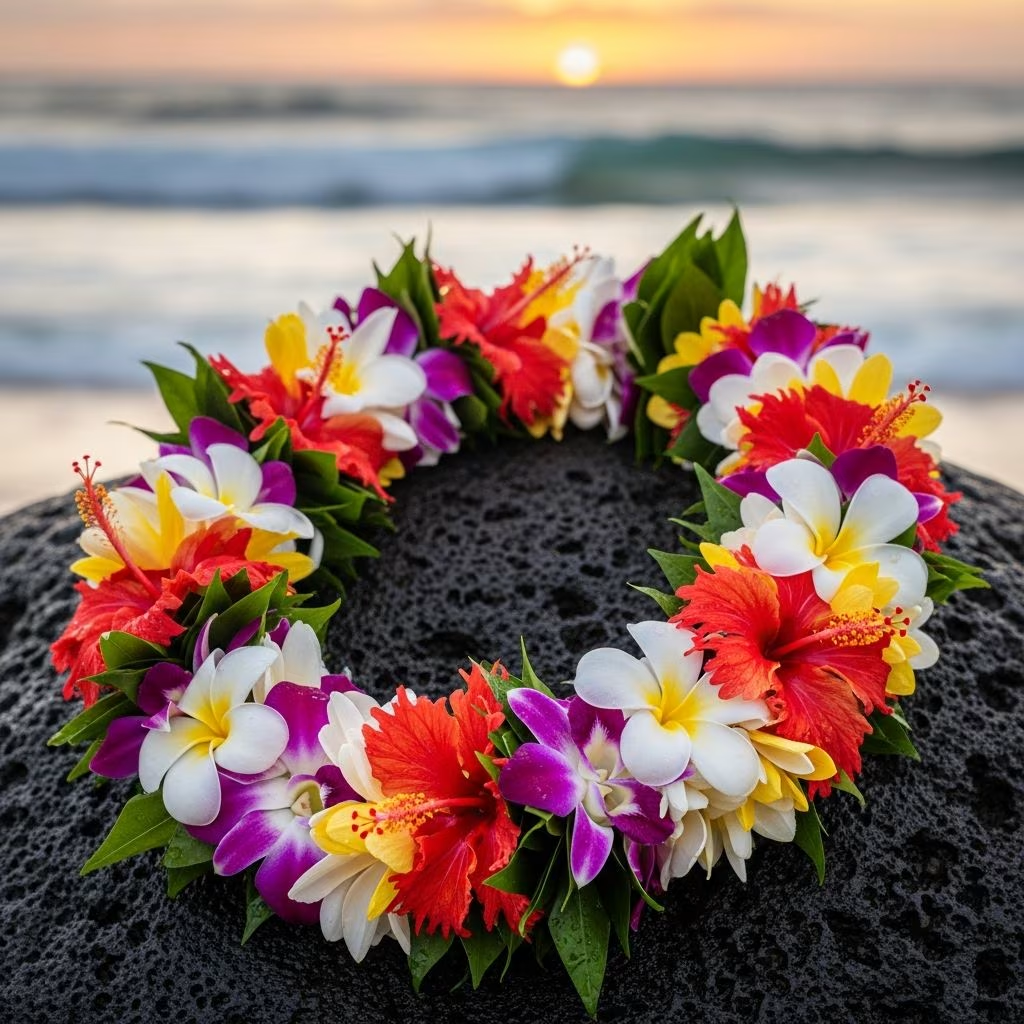
When visitors arrive at Hawaii’s shores, one of the first cultural encounters they experience involves being adorned with a delicate strand of flowers. This practice, known as lei, represents far more than a simple decorative gesture—it embodies centuries of Polynesian tradition, spiritual significance, and the warmth of Hawaiian hospitality. The prevalence of lei throughout the islands reflects its central role in Hawaiian identity and the ongoing celebration of cultural heritage that shapes island life.
The story of lei begins long before European contact, rooted in the maritime achievements of ancient Polynesian voyagers. These skilled navigators, who traversed vast oceanic distances using celestial navigation and environmental knowledge, carried with them not only physical goods but also cultural practices that would become foundational to Hawaiian society. Early Polynesian travelers arrived on the Hawaiian Islands from Tahiti as early as the 5th century, bringing their lei customs with them. Over generations, Indigenous Hawaiians refined and adapted these practices, developing distinctive traditions that reflected the unique flora and spiritual worldview of the islands.
In ancient Hawaiian society, lei served multiple functions beyond mere adornment. Lei was created as an adornment and made mostly from flowers, leaves, ferns, seeds, nuts, shells and bright feathers for sacred ceremonies, in hula and on special occasions. The crafting of lei was not simply a craft—it represented a spiritual and physical connection between the maker and recipient. Each strand told a story, beginning with the lei maker’s intentional journey into the forest to carefully select materials, continuing through the meditative process of stringing flowers together, and culminating in the gifting of a wearable expression of affection and respect.
Understanding lei requires moving beyond its visual appeal to grasp its profound symbolic meanings within Hawaiian culture. In Hawaiian society, the lei is much more than a decorative garland; it is a powerful symbol of the Aloha spirit, embodying love, honor, respect, and the interconnectedness of life. The physical structure of lei itself carries meaning: as each flower connects to the next, the completed garland represents the bond between the person who created it and the person who receives it.
The symbolism extends further to represent broader connections within Hawaiian society. A lei can symbolize the connection of family from elders to parents to children. Beyond the interpersonal level, lei serves as a representation of humanity’s larger relationship with the natural world. A lei emanates the love of and awareness of the aina (land) and environment. This environmental consciousness is reflected in the traditional practice of lei disposal—when a lei fades, the recipient traditionally returns it to the ocean following a period of quiet contemplation, allowing the materials to return to nature in a gesture of gratitude and respect.
Different occasions in Hawaiian life call for specific types of lei, each carrying its own significance. Maile, a native twining shrub, is used in an open-ended lei and worn on very special occasions, such as weddings and at graduations. This selective use of plant materials demonstrates how Hawaiian culture encodes meaning into the very flowers chosen for a lei, allowing the garland to communicate the nature and importance of the occasion.
The 20th century witnessed a dramatic shift in how lei functioned within Hawaiian society and how it became perceived globally. During the 1900s, tourism to Hawai’i started to grow, and lei greeters lined the pier at Aloha Tower on Oʻahu to welcome visitors disembarking from ships with strands of lei. This commercialization of lei coincided with the steamship era, when Hawaii transitioned into a major tourist destination. While this commercialization introduced lei to millions of visitors worldwide, it also created a tension between the sacred, intentional practice of lei-making in traditional contexts and the mass production of lei for commercial purposes.
Today, lei has become ubiquitous throughout the islands, accessible at multiple retail points and integrated into virtually every type of social gathering. Lei is everywhere in Hawai’i — and most travelers will encounter it as soon as they arrive in the Islands. Many hotels will greet their guests with lei as soon as they enter the lobby. The commercial availability of lei is remarkable in its scope and convenience. There are lei stands at the airport, lei shops in Chinatown and most supermarkets and convenience stores, including 7-Eleven, sell lei.
The flowers used in lei vary widely, reflecting both the natural flora of Hawaii and practical considerations for modern commercial lei production. The most common lei visitors will see on the Islands is the Dendrobium orchid lei. Hawai’i typically imports these flowers from Thailand. These orchids have become dominant in the tourism sector because they possess characteristics ideal for commercial purposes—they are sturdy, long-lasting, resistant to wilting, and can be dyed to suit any occasion. Interestingly, despite their ubiquity among visitors, Dendrobium orchids are not historically traditional to Hawaiian lei-making.
Among local populations, different flowers maintain traditional significance. The sweet-smelling awaʻawapuhi keʻokeʻo, or white ginger, is a popular flower used in lei among locals; it lies flat with the petals facing outward. Other traditional materials reflect Hawaii’s diverse ecosystem, including plumeria, various native ginger varieties, shells, seeds, nuts, feathers, and vines. Lei makers demonstrate remarkable creativity in combining these materials, creating pieces that range from simple, elegant designs to complex, elaborate compositions that showcase artistic skill and botanical knowledge.
The lei industry encompasses both large-scale commercial operations and individual artisans who maintain traditional craftsmanship. Throughout the islands, lei businesses operate at varying scales, from multi-generational family enterprises to individual crafters working from small shops or stands. There are crafters who own shops or sell their lei on every island, from the fourth-generation-run Cindy’s Lei Shoppe in Chinatown on Oʻahu to the Native Hawaiian–owned Kolonahe Creations on Maui. These businesses represent the continuation of lei-making as both cultural practice and economic livelihood, maintaining traditions while adapting to contemporary market demands.
Lei has become deeply woven into the fabric of Hawaiian social life, appearing at nearly every significant life event and celebration. You’ll see lei at birthdays, weddings, graduation parties, luau, even at the airport when you arrive. This integration into everyday celebrations reflects lei’s transformation from a practice reserved for sacred ceremonies and elite members of society into a widely shared cultural expression that marks important transitions and moments of connection.
The significance of lei is most palpable during life’s significant milestones—births, graduations, weddings, and funerals—when leis are exchanged as tokens of deep emotional bonds and well-wishes. The practice of exchanging lei at these moments underscores core Hawaiian values emphasizing community, mutual support, and the recognition that significant life transitions are shared experiences deserving of ceremonial acknowledgment and celebration.
Recognition of lei’s importance within Hawaiian culture crystallized in an organized way during the 20th century. Visitors lucky enough to be in Hawai’i on May 1 can participate in the annual Lei Day festivities, a celebration that began in 1927 to recognize the tradition in Hawai’i. This annual observance has grown into a comprehensive cultural celebration featuring multiple dimensions of lei appreciation and Hawaiian cultural expression.
There are lei exhibits, a prestigious lei contest with more than 100 entries in a dozen categories, and other activities. The Lei Day competitions have become renowned within lei-making circles, attracting skilled practitioners who demonstrate technical mastery, botanical knowledge, and artistic innovation. Categories range from traditional lei forms to contemporary interpretations, allowing both preservation of historical practices and exploration of new creative possibilities. The event brings together locals and visitors in shared appreciation for this distinctive cultural practice, making it an accessible entry point for those seeking deeper understanding of Hawaiian traditions.
One factor contributing to lei’s visible presence throughout the islands is its remarkable accessibility. Unlike many cultural artifacts that remain localized or specialized, lei can be purchased at numerous retail locations throughout Hawaii. You can buy lei just about anywhere, even at the neighborhood grocery store. This widespread availability democratizes access to lei, allowing residents and visitors alike to participate in the tradition without requiring specialized knowledge or extensive searching. The convenience of lei purchase has enabled its integration into casual celebrations and spontaneous moments of connection, not just formal occasions.
| Location Type | Availability | Typical Lei Selection |
|---|---|---|
| Hotels & Resorts | Upon arrival; greeting service | Commercial orchids; mixed arrangements |
| Airport Vendors | Arrival and departure areas | Dendrobium orchids; quick purchase options |
| Specialty Lei Shops | Open regular business hours | Wide variety; custom orders; traditional flowers |
| Supermarkets & Convenience Stores | In-store floral sections | Pre-made arrangements; budget-friendly options |
| Chinatown Markets | Year-round; multiple vendors | Traditional materials; crafted options; bulk flowers |
Lei is worn around the neck or shoulders, draped loosely. When greeting someone, the lei may be placed over their head or handed to them. Never refuse a lei if offered, as this is considered disrespectful in Hawaiian culture. Lei should never be removed or thrown away casually—when it wilts, it should be respectfully returned to the ocean.
While flowers are the most common lei material, lei can be crafted from diverse natural materials including leaves, ferns, vines, shells, seeds, nuts, and feathers. Traditional lei makers select materials based on seasonal availability and the specific occasion for which the lei is being created.
Durability varies significantly based on materials used. Imported Dendrobium orchids can remain fresh for several days to a week when kept cool. Native Hawaiian flowers and other delicate materials may last only a few hours to a day, which is why traditional lei was meant to be temporary, eventually returned to nature.
Receiving lei indicates affection, respect, celebration, or welcome. The giver invests time and thought into the lei’s creation or selection. Accepting lei represents acknowledgment of the relationship and reciprocation of the gesture’s sentiment.
Yes. While commercial orchid lei are readily available, visitors can find authentically crafted lei at specialty shops, particularly in Chinatown areas and from individual lei makers. Many artisans use traditional materials and methods while operating modern retail businesses, allowing visitors to purchase culturally significant lei.
Despite centuries of change and the complexities of tourism-driven commercialization, lei remains deeply significant to Hawaiian identity and cultural practice. Defined as a garland or wreath, lei is so much more than just a beautiful adornment. In Hawai’i, it’s the symbol of aloha, it’s something you give to someone you love, it’s a way of showing appreciation – a welcome. This multifaceted significance ensures that lei transcends its role as a mere tourist commodity, maintaining authentic cultural importance for Hawaiian residents and communities.
The prevalence of lei throughout Hawaii—visible at airports, in shops, at celebrations, and in daily life—reflects the tradition’s successful adaptation to modern circumstances while retaining core meanings and values. Contemporary lei makers, from large commercial operations to individual artisans, continue traditions established centuries ago while developing innovations in materials, design, and presentation. This balance between tradition and adaptation allows lei to remain vibrant, accessible, and deeply meaningful within Hawaiian culture today.
