

 Travel Essentials
 Travel Essentials

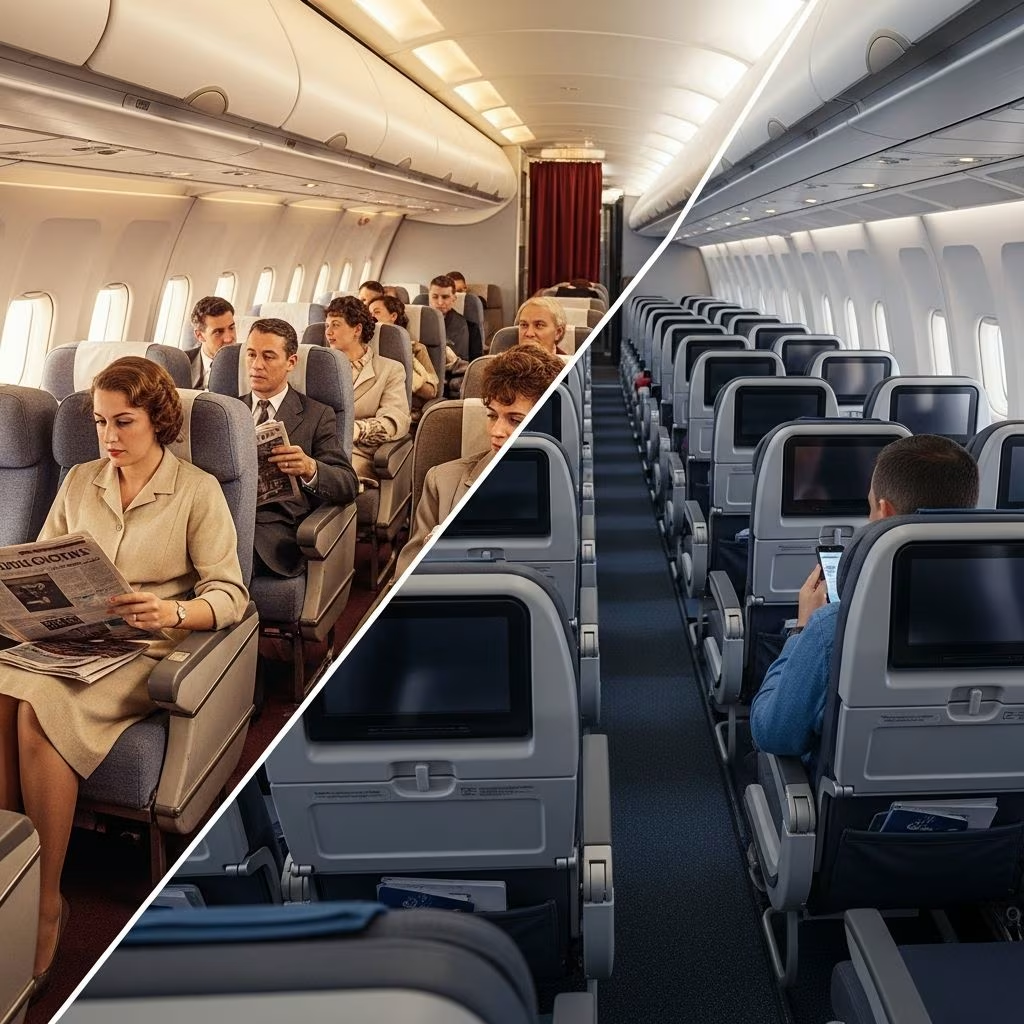
Trace the remarkable journey of airline seating from 1919 wicker origins to today's slimline, tech-enhanced seats across economy, premium, and luxury classes.
 Travel Essentials
The journey of airline seats reflects the broader story of commercial aviation, evolving from rudimentary setups to sophisticated systems prioritizing safety, comfort, and efficiency. This transformation spans over a century, driven by technological advances, passenger demands, and economic pressures.
Commercial air travel began modestly in the late 1910s. The inaugural passenger seat appeared in 1919 aboard a Lawson Airliner, crafted from wicker chairs secured to the cabin floor. These lightweight, breathable seats suited the era’s open cockpits and dusty airfields, where leather linings and padding gradually enhanced comfort by the late 1920s.
Wicker dominated for about a decade due to its availability and ease of installation on early biplanes. Passengers, often affluent adventurers, endured bumpy rides without modern amenities. Configurations were sparse, typically 2+1 or similar, emphasizing novelty over luxury.
A pivotal shift occurred in 1930 when the Aluminum Company of America introduced the first lightweight metal passenger seat. This aluminum design, adaptable and durable, forms the backbone of most frames today. It marked aviation’s push toward industrialization, reducing weight critical for fuel efficiency.
By 1936, the Douglas DC-3 popularized rubber-foam cushions over hard metal, improving shock absorption and hygiene—leather covers wiped clean amid sooty airports. Seats gained basic adjustments, though recliners debuted earlier in 1929 on the Fokker F-32.
| Era | Key Material | Impact |
|---|---|---|
| 1919-1929 | Wicker with leather | Basic, lightweight comfort |
| 1930-1940s | Aluminum frames, foam | Durability, better padding |
| Post-1950s | Advanced alloys, synthetics | Ergonomics, weight savings |
The 1930s-1940s positioned flying as elite luxury. Airlines like Imperial Airways offered cushioned armchairs with curtains on HP42 aircraft, mimicking train saloons. Overhead shock absorbers minimized propeller vibrations, while decorative elements evoked living rooms.
Boeing’s 377 Stratocruiser (1949) epitomized opulence with spiral staircases to lounges and drop-down beds for overnight flights. Pan Am’s ‘sleeperette’ in 1949 furthered sleep-focused designs. Food service emerged post-WWII, initially on separate trays—messy during turbulence until fold-down tables in 1973.
Seatbelts evolved to buckled fabric by the late 1940s, and configurations included table-centered setups akin to rail travel.
Post-1950s deregulation and jet engines democratized flying. IATA permitted multi-fare structures in 1952, birthing economy (roomier standard) and coach classes—all forward-facing. BOAC’s 1958 Comet 4 jets featured 20 deluxe seats on transatlantic routes.
The Boeing 707 and 727 introduced six-abreast tourist seating; the 747 (1970) expanded to nine-abreast, squeezing legroom from 34 to 32 inches. Deregulation (1978 US) spurred competition, shrinking pitches as airlines maximized capacity.
Seat widths standardized: 17 inches (Boeing legacy, 1950s), 18 inches (747/Airbus 1970s-80s), up to 18.5 inches (777/A380).
1980s-1990s saw premium class leaps. Singapore Airlines and Virgin Atlantic launched fully reclining seats in 1989; British Airways added flat beds in first class (1996), business (2000). Singapore’s 2007 A380 suites offered private doors, standalone beds, and chairs.
21st-century trends include herringbone, reverse, and staggered layouts for privacy and direct aisle access—eliminating climb-overs. Concorde (1970s) was first-class only but cramped, costing $7,000 NY-London.
Economy seats slimmed since 1990s to boost density amid larger, older passengers. Pitch dropped, widths held at 17-18 inches, prioritizing profitability over comfort.
Airlines configure per aircraft orders; legroom varies widely. Deregulation enabled dynamic pricing—advance bookings cheaper, last-minute pricier, though seats identical pre-1970s.
Today’s seats integrate tech: USB ports, IFE screens, adjustable headrests. Sustainability drives recycled materials; health focuses post-COVID include antimicrobial fabrics.
Premium economy bridges gaps with extra legroom. Innovations like Airbus A350/787 seats emphasize ergonomics. Passenger rights groups push against ‘incredible shrinking seats’.
Seat numbering began ~1919 in Europe (Handley Page flights), rows front-to-rear, letters A-J across.
| Class/Era | Pitch (inches) | Width (inches) | Recline |
|---|---|---|---|
| 1940s Luxury | 36-40 | 20+ | Convertible beds |
| 1970s Economy (747) | 32-34 | 17-18 | Basic |
| Modern Economy | 28-32 | 17 | Limited |
| Business (2020s) | Full flat | 20-22 | 180° |
A wicker chair on the 1919 Lawson Airliner.
1930, by Aluminum Company of America.
Deregulation (1978), rising demand, profit maximization.
Lie-flat beds, privacy doors, direct aisle access.
From 17″ (1950s) to 18.5″ peaks, but economy often reverts to narrower.
