

 Travel Essentials
 Travel Essentials

Explore The Exchange in Darling Square, Kengo Kuma’s timber landmark blending library, market hall, makerspace, childcare, and rooftop views.
 Travel Essentials
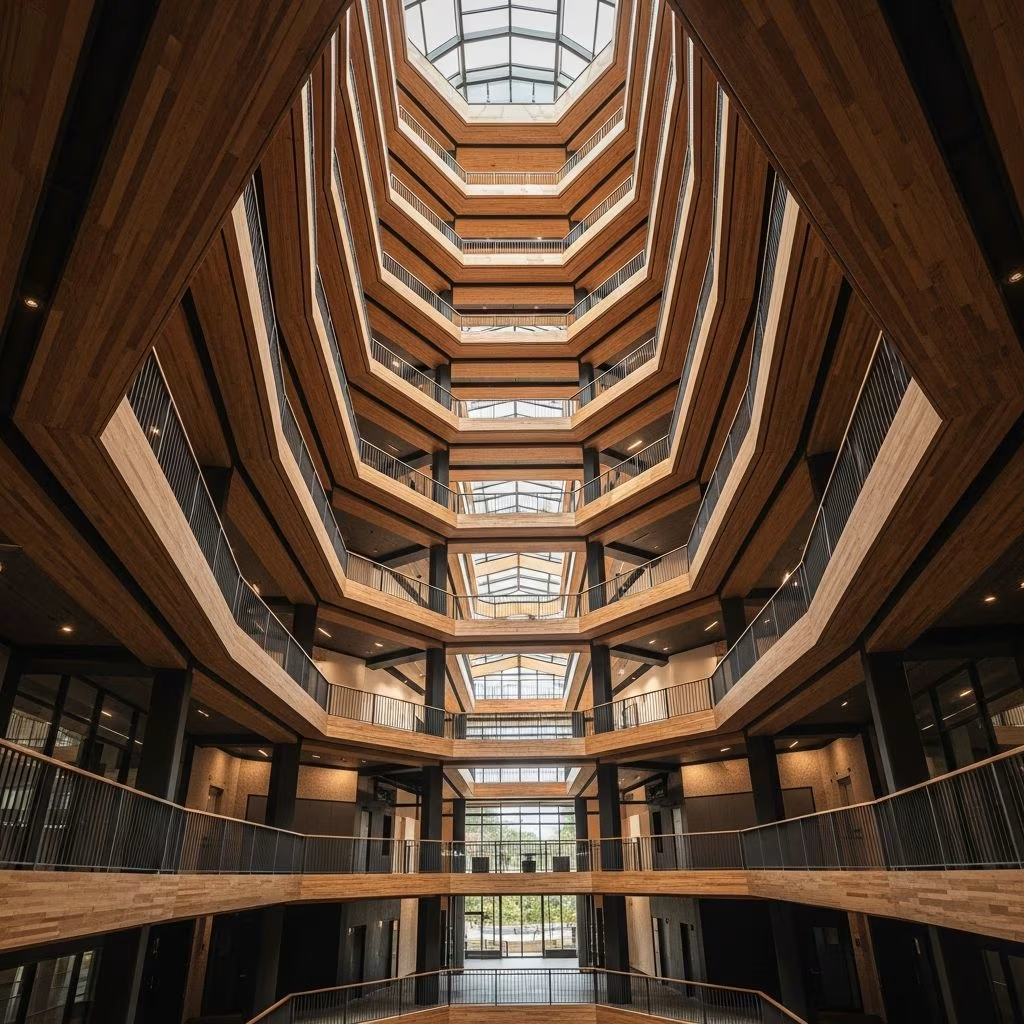
Amid the bustling skyline of Sydney’s Darling Harbour, one structure stands out for its organic warmth and innovative design: The Exchange. Crafted by renowned Japanese architect Kengo Kuma, this six-storey wooden wonder serves as a vibrant community hub in Darling Square, contrasting sharply with the surrounding high-rises. Opened as part of a massive urban renewal, it embodies a fusion of public services, commercial vitality, and architectural poetry, drawing locals and visitors alike to its spiraling embrace.
Darling Harbour has undergone a transformative $4 billion redevelopment by the New South Wales government, turning a former industrial and entertainment zone into a pedestrian-friendly precinct expected to house 4,200 residents, employ 2,500 workers, and educate 2,500 students. At its core lies Darling Square, where The Exchange rises as a low-rise oasis. Designed between 2015 and 2019, the building uses 20,000 meters of sustainably sourced Accoya softwood, arranged in irregular ribbons that evoke a nest or hive—a nod to the area’s historical role as a bustling market exchange.
Kengo Kuma’s vision was to create a ‘soft and warm’ structure integrated with the public square, countering the ‘urban jungle’ of towering apartments. The circular geometry ensures accessibility from all angles, with angled walkways and staggered floorplates forming a dynamic spiral. Timber elements extend outward as a pergola, providing shade and blurring boundaries between building and plaza.
The Exchange buzzes with multifaceted functions across its floors. The ground level hosts a lively market hall with openable hoods that merge with street life, offering fresh food stalls and eateries. Above, commercial spaces include restaurants, such as a Cantonese mezzanine spot inspired by local favorites.
Peering through the wooden screen reveals glimpses of activity, inviting curiosity and fostering a sense of communal energy.
Kuma’s signature use of timber transforms The Exchange into a living entity. The light-colored wood, wrapped dynamically around curved plates, softens the built environment and harmonizes with nearby green spaces like Tumbalong Park. This approach not only references Darling Harbour’s trading past but also promotes sustainability—Accoya is durable and eco-friendly.
The architect aimed for ‘architecture as open and tangible as possible,’ achieved through the hive-like form that encourages interaction. Yuki Ikeguchi of Kengo Kuma & Associates notes how the design generates social culture, making it a beloved landmark since opening.
| Feature | Description | Benefits |
|---|---|---|
| Timber Cladding | 20km Accoya softwood in spiral pattern | Sustainable, warm aesthetic, historical nod |
| Circular Form | Staggered floors with walkways | 360° accessibility, visual dynamism |
| Extended Pergola | Timber overhang into square | Shade, space continuity |
| Makerspace Tech | 3D printers, lasers, workshops | Innovation support, public access |
Located at 1 Little Pier Street, Haymarket, on Darling Square’s edge near Chinatown, The Exchange is easily accessible via light rail or foot from central Sydney. Free entry to the library and market makes it welcoming; childcare and rooftop dining may require bookings.
Best Times to Visit:
Parking is limited; opt for public transport. The precinct’s retail pavilions and parks enhance a full-day outing.
Beyond architecture, The Exchange revitalizes Darling Harbour from a parking lot era into a creative nucleus. It powers startups via the IQ-Hub, blending civic duty with ambition. As Kuma’s Australian debut, it sets a benchmark for biophilic design in dense cities, proving wood’s power in modern contexts.
Locals praise its role in daily life—from students in the Ideas Lab to foodies at the hall—while tourists appreciate the photogenic nest against Sydney’s harbor glow. Part of a broader precinct by Aspect Studios, it promises lasting vibrancy.
A six-storey civic building by Kengo Kuma featuring library, market, makerspace, childcare, and rooftop dining.
Yes, library and market are free; other areas like rooftop may have fees or reservations.
Spiraling timber ‘nest’ of 20km Accoya wood, contrasting high-rises with organic warmth.
Yes, a dedicated library children’s area and two-floor childcare center.
Hive design references the area’s past as a market exchange hub.
Public workshops available; startups get dedicated support.
The Exchange isn’t just a building—it’s Sydney’s invitation to connect, create, and savor. Pair a library session with market bites, then unwind atop with harbor vistas. In Darling Square’s evolving tapestry, it anchors community spirit amid urban pulse. Whether chasing innovation or architectural awe, this timber hive awaits.
