

 Travel Essentials
 Travel Essentials

Explore the Great Migration: timing, routes, river crossings, wildlife encounters, and essential safari tips for witnessing this unparalleled natural event in Serengeti and Maasai Mara.
 Travel Essentials
The Great Migration stands as one of the planet’s most extraordinary natural phenomena, where approximately two million wildebeest, accompanied by vast numbers of zebras, gazelles, and other herbivores, traverse the expansive plains of East Africa in a perpetual quest for fresh grazing lands and water. This annual cycle, spanning the Serengeti National Park in Tanzania and Kenya’s Maasai Mara National Reserve, unfolds as a dramatic saga of birth, predation, perilous crossings, and renewal, drawing adventurers worldwide to witness its raw intensity.
At the heart of this spectacle lies an immense herd estimated at over 1.5 to 2 million wildebeest, bolstered by hundreds of thousands of zebras and gazelles. These animals form a living river of hooves and horns, stretching across horizons in a synchronized movement driven by survival instincts. Zebras, with their acute sense of smell, lead the way to detect fresh grass, while wildebeest follow for their grazing prowess, and gazelles bring speed to evade threats. This symbiotic alliance exemplifies nature’s intricate balance.
The migration’s scale is staggering: during peak moments, herds can span kilometers, creating dust clouds visible from afar. It’s not a single mass but waves of animals—front-runners surging ahead, stragglers trailing behind—ensuring the ecosystem remains dynamic and predators perpetually engaged.
Unlike a linear trek, the Great Migration forms a roughly circular, year-round loop governed by East Africa’s rainfall patterns. Rain triggers lush grass growth, prompting movement, while dry spells force relocation. Though unpredictable year to year, it generally follows these phases:
This rhythm ensures constant motion, with animals strung out over vast areas, making sightings possible anytime but optimal during high-drama periods.
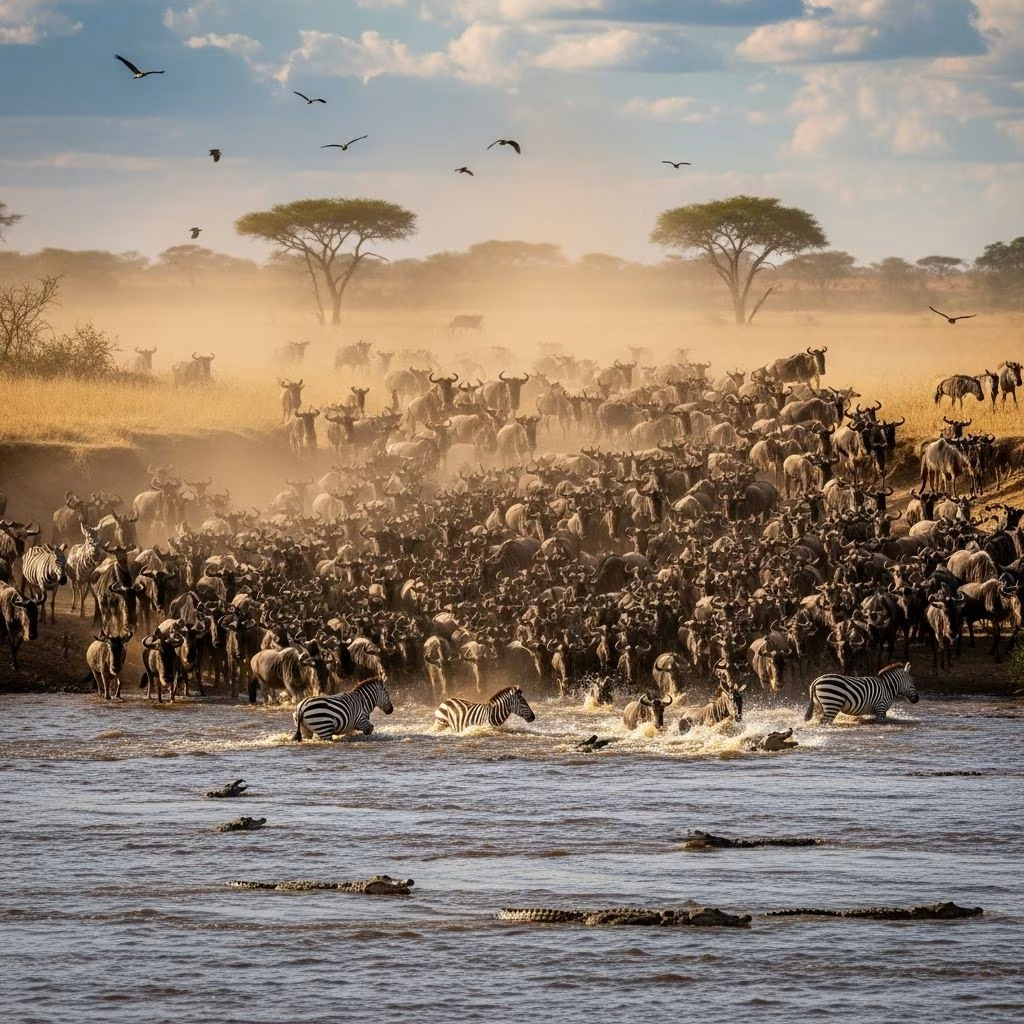
No element captivates like the river crossings, especially at the Mara and Grumeti, where panic grips massive herds facing steep banks, swift currents, and hundreds of massive crocodiles. Wildebeest stampede into the water in frenzied waves, many drowning or snapped up by jaws—losses numbering in thousands daily during peaks. These events, unpredictable even when herds mass nearby, can repeat dozens of times per season.
Visitors often wait days at crossing points, rewarded by thunderous splashes and survival triumphs. Midday heat intensifies the chaos, ideal for photographers despite glare. The Grumeti, narrower but crocodile-dense, offers earlier drama in June.
| River | Typical Month | Challenges | Best Viewing Areas |
|---|---|---|---|
| Grumeti | June | Crocodiles, steep banks | Western Corridor, Grumeti Reserve |
| Mara | July–August | Strong currents, Nile crocs | Maasai Mara NR, Serengeti north |
The migration fuels East Africa’s apex predators, turning the plains into a theater of hunts. Lions, the Serengeti’s most numerous pride, collaborate on wildebeest takedowns; cheetahs sprint after gazelles; hyenas scavenge and harass calves; leopards lurk in acacias; and crocodiles dominate rivers. Calving season overwhelms even these hunters, with thousands of newborns providing a feast, yet the herd’s vastness ensures propagation.
Observing a lion pride’s coordinated ambush or a crocodile’s explosive strike reveals survival’s brutality and beauty—a true circle of life.
The ecosystem spans protected areas ideal for safaris:
Hot-air balloon rides provide aerial perspectives of endless herds.
Timing is crucial: July–October for crossings and Mara drama; January–March for calving. Book 12–18 months ahead for peak season; fly into Seronera (Serengeti) or Kogatende (north). Opt for mobile camps tracking herds or fixed luxury lodges. Game drives at dawn/dusk maximize encounters; combine with cultural Maasai visits.
Budget for park fees, guides, and flights. Responsible tourism supports conservation amid growing threats like poaching and climate shifts.
Climate variability disrupts patterns, while habitat loss and snares endanger the herd. Organizations monitor via collars; visitor fees fund anti-poaching. Sustainable tourism preserves this UNESCO-highlighted wonder.
July to October for river crossings and peak concentrations, though calving (Jan-Mar) offers newborn drama.
Rain dictates movement; expect variations. Herds are year-round somewhere in the ecosystem.
Extremely: thousands perish to crocs and drownings, yet the herd endures.
Tanzania’s Serengeti for scale; Kenya’s Mara for accessibility and luxury.
Yes, with age-appropriate camps; focus on education over intensity.
