

 Travel Essentials
 Travel Essentials

Explore the transformed railway turned urban oasis in Manhattan. Learn about access points, attractions, nearby venues, and how to make the most of your visit.
 Travel Essentials
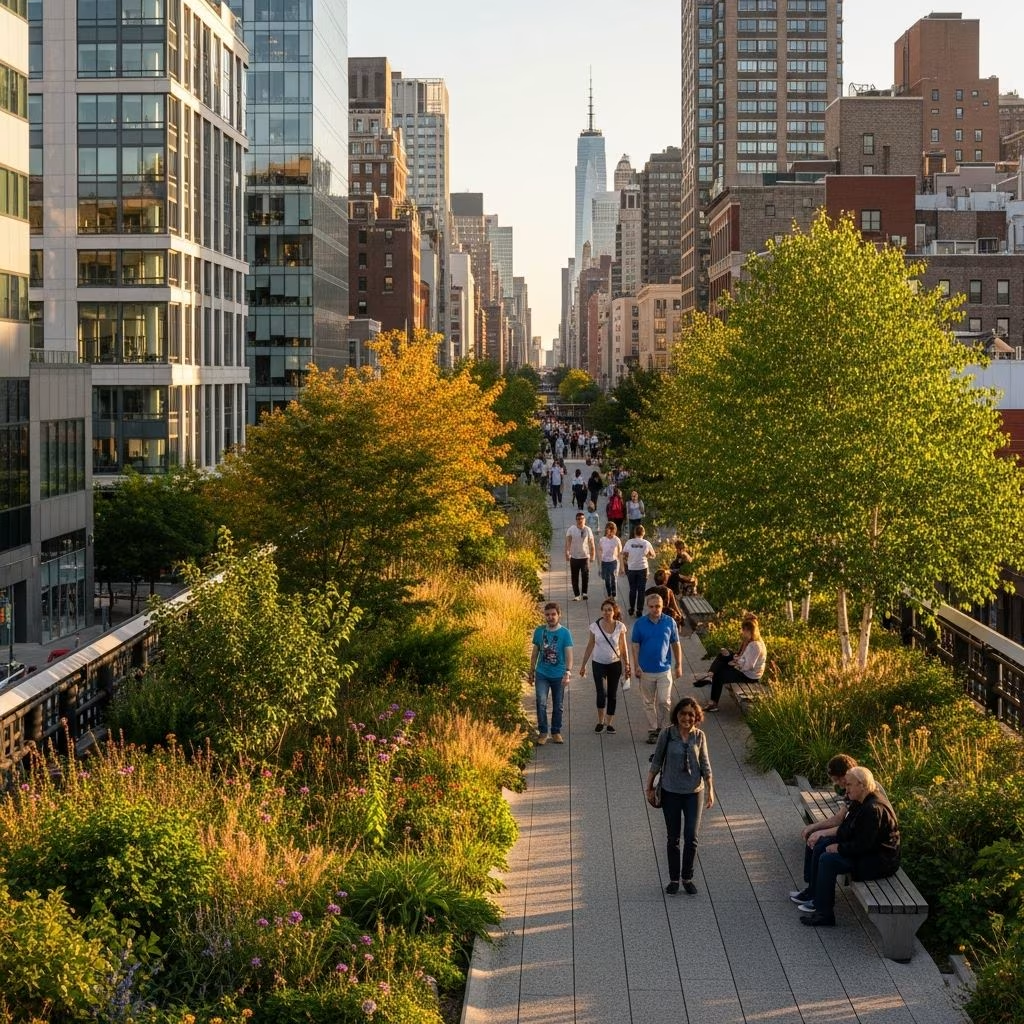
Manhattan’s skyline holds one of North America’s most remarkable urban transformations—a 1.45-mile strip of elevated green space that once carried freight trains now welcomes millions of visitors annually. This conversion from industrial infrastructure to vibrant public gathering place represents a unique chapter in New York City’s ongoing evolution, blending horticultural displays with contemporary art and architectural innovation.
The path that now hosts locals and tourists alike tells a fascinating story of urban renewal and community advocacy. Built in 1934 as an elevated freight railway, this infrastructure served a vital economic purpose for decades, transporting dairy products and meat throughout Manhattan’s commercial zones. By the 1980s, however, changing logistics and transportation patterns rendered the structure obsolete. For nearly two decades, the abandoned railway sat dormant, a forgotten relic of the city’s industrial past.
What could have become another demolished structure instead became the focus of passionate preservation efforts. Community members recognized the potential hidden within the neglected rails, envisioning possibilities beyond demolition. Their determination paid off, and in 2009, the transformation was complete. What had once been a source of economic value transitioned into a new form of civic asset—a public space designed to serve the community in entirely different ways.
Today, this 1.45-mile pathway winds through three distinct Manhattan neighborhoods, creating a unique thread connecting the Meatpacking District, Chelsea, and Hudson Yards. The elevated position offers visitors a perspective on the city rarely experienced at street level, providing escape from urban congestion while remaining thoroughly embedded in the metropolitan experience.
The park’s extensive network of entry points makes accessibility straightforward for visitors with varying mobility needs and preferences. The southern terminus begins at Gansevoort Street in the Meatpacking District, while the path extends northward, running roughly parallel to Tenth Avenue before shifting westward near West 30th Street, culminating at West 34th Street.
A total of 15 entry points provide multiple options for boarding the elevated pathway. Eight of these entrances feature either elevators or ramps, accommodating visitors with strollers, wheelchairs, or those preferring to avoid stairs. However, maintenance schedules vary seasonally, and the northernmost sections occasionally undergo development work, so verifying which entrances remain fully operational before your visit proves worthwhile.
The entire length requires approximately 45 minutes to traverse without pausing, though rushing defeats the purpose of this deliberately designed contemplative space. Most visitors allocate 2-3 hours to enjoy the park’s diverse offerings adequately.
The botanical experience distinguishes this park from conventional urban green spaces. Rather than formal horticultural arrangements, the landscape design emphasizes naturalistic planting schemes featuring wildflowers, specimen trees, and perennial combinations that provide visual interest across all seasons. The curated vegetation creates a sense of wild abundance despite the carefully orchestrated design underlying every planting decision.
The landscape shifts as you progress northward, reflecting different ecosystem conditions and design philosophies across the three sections. Hardy perennials dominate in some areas, while other portions feature shade-tolerant understory plantings and mature tree canopies. This botanical diversity maintains visitor engagement as the environment evolves throughout the walk, preventing the experience from becoming monotonous despite the linear path.
Beyond horticultural appeal, distinctive architectural and artistic interventions punctuate the pathway, creating memorable focal points and gathering spaces. These elements transform the experience from simple nature walk into multi-sensory journey through contemporary design.
Art installations change regularly, functioning as a continuously updated outdoor gallery. The High Line partners with established and emerging artists to present works that respond specifically to the park’s unique elevated context and the urban landscape surrounding it.
The park transforms dramatically with seasonal changes, offering distinct experiences throughout the year. Spring awakens dormant perennials and introduces fresh foliage, creating lush visual abundance. Summer intensifies colors while heat can make mid-day visits challenging in this sun-exposed environment. Autumn presents spectacular display opportunities as deciduous trees transition through warm color palettes. Winter strips away vegetation, revealing the architectural skeleton of the space while creating stark, dramatic vistas of the surrounding cityscape.
Each season attracts different visitor populations and offers different atmospheric qualities, meaning repeat visits reward with genuinely new perspectives rather than redundant experiences.
The immediate surroundings offer diverse dining options catering to various budgets and preferences. For casual, unpretentious lunch experiences, Hector’s Café & Diner at 44 Little West 12th Street provides authentic diner food and notably exceptional cookies at reasonable prices. This establishment serves as the antithesis of the trendy, Instagram-focused restaurants proliferating in nearby areas.
For evening dining experiences with deliberate see-and-be-seen ambitions, the Standard Hotel’s Boom Boom Room at the roof level offers elevated vistas matching those from the park itself. Advance reservations and early arrival remain essential for securing seating at this perennially popular venue.
The neighborhoods flanking the park contain hundreds of additional dining establishments ranging from fine dining restaurants to food hall vendors, ensuring options exist for every preference and expenditure level.
Chelsea’s designation as a major international art hub becomes immediately apparent when exploring beyond the High Line itself. Over 300 galleries operate within the neighborhood, representing diverse artistic practices and price points. These spaces range from blue-chip galleries representing established international artists to scrappy nonprofit spaces showcasing experimental work by emerging practitioners.
Printed Matter stands as a particularly compelling destination for visitors interested in artist-created publications, offering an extensive collection of independently published books, zines, and printed materials. This bookstore functions as cultural institution rather than conventional retail space, reflecting the artistic values of its surrounding neighborhood.
Exploring the galleries before or after High Line visits provides seamless cultural immersion, as many spaces remain within walking distance of multiple park entrances.
The West Village and Chelsea neighborhoods flanking the High Line have undergone substantial transformation over recent decades, shifting from industrial and commercial zones toward predominantly residential and cultural districts. This ongoing transformation influences the character of public spaces including the park itself, attracting families, friends, and community members seeking outdoor gathering places within densely developed urban environments.
The park serves not merely as tourist attraction but as genuine neighborhood amenity, with regular programming and activities organized by dedicated staff members focused on community engagement. Children’s group tours explore topics ranging from botanical ecology to the area’s industrial heritage, demonstrating the educational potential embedded within the space.
Weekday visits during off-peak hours typically provide more contemplative experiences with reduced crowds, though weekend and evening visits offer distinct social atmospheres reflecting the park’s role as public gathering space. Early mornings present opportunities for photography with optimal lighting and minimal human presence. Twilight hours provide dramatic lighting for photography while maintaining comfortable temperatures during warmer months.
The High Line operates as a free public park, requiring no admission fee or advance reservation for general access. This commitment to public accessibility remains fundamental to the park’s mission as civic space.
Leashed dogs are permitted throughout the park, making it an accessible outdoor destination for visitors traveling with canine companions.
Limited restroom facilities exist along the path, with public restrooms available at certain locations. Planning bathroom visits accordingly based on facilities locations prevents unnecessary interruption of your walk.
Eight of the 15 entry points provide elevator or ramp access, though not every section includes continuous accessible pathways. Visitors with mobility considerations should plan routes accounting for available accessible entrances.
The High Line’s successful transformation extends influence far beyond the park’s physical boundaries. It demonstrates possibilities for reimagining industrial infrastructure within dense urban environments, inspiring similar projects globally. The park catalyzed broader neighborhood revitalization, attracting residential investment, cultural institutions, and commercial establishments while simultaneously raising concerns about gentrification and changing neighborhood character.
For visitors, the park represents something more fundamental—evidence that cities can prioritize communal public space alongside private commercial interests, creating environments that serve human needs for beauty, connection, and respite from urban intensity.
