

 Travel Essentials
 Travel Essentials

Explore America's most celebrated Thanksgiving parades, from historic traditions to modern celebrations that bring communities together.
 Travel Essentials
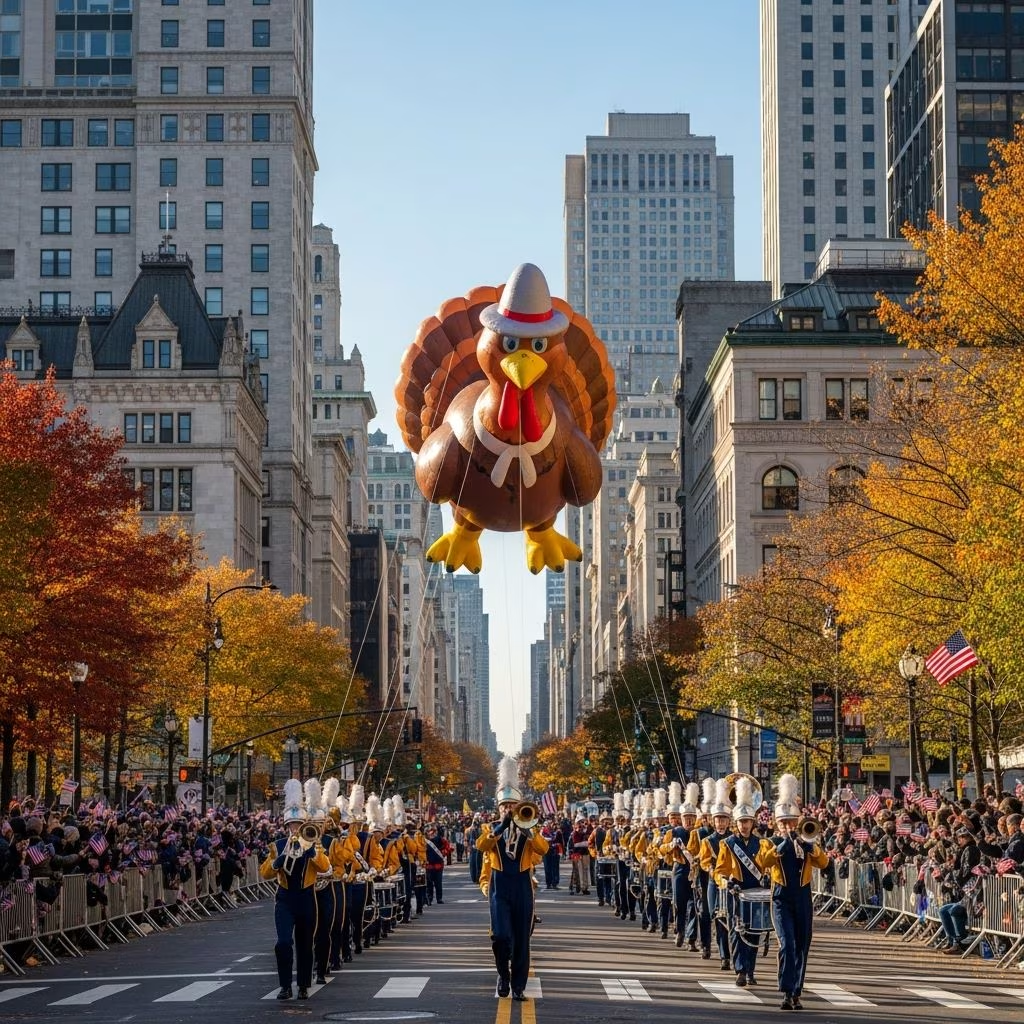
Each November, millions of Americans gather along city streets and tune in to their televisions to witness the spectacle of Thanksgiving parades. These celebrations have evolved into cherished national traditions that mark the official beginning of the holiday season. From the bustling streets of New York City to the heart of downtown Detroit and the neighborhoods of Philadelphia, these parades represent more than just entertainment—they embody the spirit of gratitude, community connection, and cultural pride that defines the American Thanksgiving experience.
The earliest Thanksgiving parades emerged as creative marketing ventures by department stores seeking to celebrate the holiday season and drive holiday shopping. What began as promotional events have transformed into cherished cultural institutions that command viewership in the tens of millions. The parades have grown from simple processions featuring employees and animals into elaborate productions showcasing celebrity performers, Broadway casts, and colossal character balloons that captivate audiences of all ages.
The concept of connecting Thanksgiving celebrations with organized parades gained traction throughout the early twentieth century, reflecting America’s growing urbanization and consumer culture. Department stores recognized that creating memorable holiday experiences would foster customer loyalty and establish their brands as central to family traditions. This commercial origin story, however, belies the genuine emotional connection these events have developed with the American public over the decades.
The Macy’s Thanksgiving Day Parade stands as one of the most recognized holiday traditions in the United States. Established in 1924, this New York City institution was created by employees of the Macy’s department store who wanted to celebrate their adopted country through a festival reminiscent of European celebrations their families had enjoyed. The inaugural parade featured store employees in colorful costumes, professional entertainers, floats, marching bands, and even live animals borrowed from the Central Park Zoo.
The parade began at Harlem’s 145th Street and proceeded southward through Manhattan’s streets, concluding at Macy’s Herald Square store where Santa Claus made his grand entrance. Over a quarter million spectators turned out for this first celebration, prompting Macy’s to establish it as an annual tradition. The success of the 1924 parade established a template that would influence how communities across America would eventually celebrate Thanksgiving.
Today, the Macy’s Thanksgiving Day Parade operates as a carefully orchestrated three-hour spectacle running from 8:30 a.m. to noon Eastern Standard Time on Thanksgiving morning. The parade travels south on 6th Avenue before turning at 34th Street and ending at 7th Avenue where floats are dismantled. This approximately 2.5-mile route has been refined over decades of celebrations to accommodate massive crowds and television production requirements.
The parade features multiple categories of participants and performances:
The introduction of giant helium-filled balloons in 1927 revolutionized the parade’s aesthetic appeal and became its defining feature. The first balloon, modeled after Felix the Cat and created by the Goodyear Tire and Rubber Company, set a precedent for increasingly elaborate aerial displays. By 1933, attendance had grown to over one million spectators, demonstrating the parade’s expanding cultural significance.
Radio broadcasts of the parade began in 1932 and continued through the television era. The parade gained national prominence in 1947 following the release of a major motion picture, which dramatized its traditions and exposed audiences nationwide to its unique charm. Since 1953, NBC has provided continuous national television coverage, transforming the parade into a media event viewed by tens of millions. In 2016 alone, approximately 24.639 million television viewers watched the parade broadcast, demonstrating its enduring appeal across generations.
The parade operates as a bridge between traditional Thanksgiving celebrations and contemporary consumer culture, beginning the holiday shopping season while maintaining genuine family appeal. Its televised format has made the parade accessible to Americans who cannot travel to New York City, creating a shared national experience of holiday anticipation and joy.
While the Macy’s parade receives the most media attention, Philadelphia’s Thanksgiving Day Parade holds the distinction of being the longest-running Thanksgiving parade in the United States, having commenced in 1920. This parade predates both the Macy’s event and Detroit’s celebration by several years, making it the oldest continuous Thanksgiving parade tradition in America.
The Philadelphia parade maintains its own character and regional significance, drawing crowds throughout the city’s downtown streets. This parade demonstrates that Thanksgiving traditions extend beyond New York City’s commercial epicenter, reflecting how communities nationwide have adopted and adapted the parade format to celebrate the holiday season.
Detroit’s America’s Thanksgiving Parade represents the second-oldest Thanksgiving parade tradition, tied with the Macy’s celebration, both beginning in 1924. The parade originated when the J.L. Hudson Company department store, following the success of similar Canadian celebrations, decided to create a holiday tradition for Detroit. Display director Charles Wendel conceptualized the parade as a way to bring festive celebration to downtown Detroit’s Woodward Avenue.
The original parade route began at Woodward and Putnam near the Detroit Public Library and proceeded to Hudson’s Marquee, where a special tradition unfolded. Santa would descend from his sleigh, and the city’s mayor would present him with a ceremonial key to the city and “the hearts of children of Detroit.” This poignant ritual connected the parade to civic pride and community unity, giving the celebration distinct emotional resonance beyond commercial interests.
Detroit’s parade continued annually from 1924 with only brief interruptions in 1943 and 1944 due to World War II material shortages. By 1979, operational costs had become burdensome for the struggling Hudson’s department store, which transferred parade responsibilities to the Detroit Renaissance Foundation. This organization managed the parade for four years until 1983, when control passed to the newly established Michigan Thanksgiving Parade Foundation, which holds the registered trademark for “America’s Thanksgiving Parade.”
The transition from corporate to nonprofit management represents a significant evolution in how American communities sustain Thanksgiving traditions, shifting from retail marketing initiatives to community-focused cultural institutions.
Detroit’s celebration maintains its own unique character, most notably through the annual performance by The Big Head Corps, a group that adds distinctive entertainment elements reflecting local cultural traditions. This feature differentiates Detroit’s parade from its national counterparts and demonstrates how regional variations enrich the broader tapestry of American Thanksgiving celebrations.
Both the Macy’s and Detroit parades experienced suspension during World War II, with celebrations halted from 1942-1944 due to material shortages and national priorities. When the parades resumed in 1945, they returned to record-breaking crowds, suggesting that Americans viewed the celebrations as powerful symbols of national recovery and renewed optimism. The parades’ resumption after wartime suspension underscores their cultural importance beyond entertainment, functioning as affirmations of American continuity, prosperity, and community values.
Modern Thanksgiving parades continue evolving to meet contemporary audience expectations while honoring historical traditions. The 2021 Macy’s Thanksgiving Day Parade returned to its traditional in-person format following pandemic-related modifications, featuring 6,500 participants marching through Manhattan’s streets. This return to normalcy reflected Americans’ hunger for shared experiences and community connection.
Regional variations of Thanksgiving parades extend throughout the country. Florida communities celebrate with their own traditions, including the Miami Beach Winternational Thanksgiving Parade, The Clearwater 5K Turkey Trot, and Universal Orlando’s holiday parades that activate the Thanksgiving season beyond the single holiday morning. These regional celebrations demonstrate how the parade concept has become embedded in American regional culture, adapted to local contexts while maintaining core traditions.
American Thanksgiving parades would be impossible without extensive volunteer participation. Thousands of volunteers from local communities and surrounding regions converge to guide giant balloons, manage crowd flow, set up infrastructure, and handle logistics. These volunteers represent diverse demographics united by a desire to participate in cherished traditions and contribute to celebrations that bring joy to their communities.
The volunteer infrastructure supporting these parades creates economic and social benefits extending beyond the parade day itself. Training programs, organizational efforts, and community mobilization generate employment, develop leadership skills, and strengthen social bonds within participating communities. Young performers selected for dance teams and marching bands gain valuable cultural experiences and professional development opportunities.
Most Thanksgiving parades take place on Thanksgiving morning, with the Macy’s parade running from 8:30 a.m. to noon Eastern Standard Time. Some regional celebrations may occur on the day before or weekend closest to Thanksgiving to accommodate scheduling preferences.
Philadelphia’s parade began in 1920, making it the oldest continuous American Thanksgiving parade. The Macy’s and Detroit parades both began in 1924, establishing themselves as nearly century-old traditions.
Yes, NBC provides national television coverage of the Macy’s Thanksgiving Day Parade, allowing millions to participate remotely. Regional parades may also receive local broadcast coverage through television stations or online streaming platforms.
Attendance varies by location and year. The Macy’s parade drew over a quarter million spectators at its 1924 debut and surpassed one million by 1933. Contemporary parades continue drawing massive crowds, though exact figures vary annually.
Thanksgiving parades represent more than entertainment spectacles—they serve as cultural anchors connecting Americans to shared traditions, community values, and holiday celebrations. What began as department store marketing initiatives have evolved into genuine expressions of national identity and gratitude. These parades provide frameworks through which families gather, communities unite, and cultural traditions persist across generations.
The parades demonstrate how American holidays evolve through commercial and cultural forces while retaining emotional significance. The annual return of these celebrations affirms continuity, prosperity, and communal connection. Whether watching nationally televised broadcasts or participating in regional celebrations, Americans affirm their commitment to Thanksgiving traditions through parade attendance and viewership.
As Thanksgiving parades enter their second century of American tradition, they continue adapting to contemporary preferences while honoring historical roots. The combination of entertainment, community participation, cultural representation, and family connection ensures these celebrations will remain central to American Thanksgiving observances for generations to come.
