

 Travel Essentials
 Travel Essentials

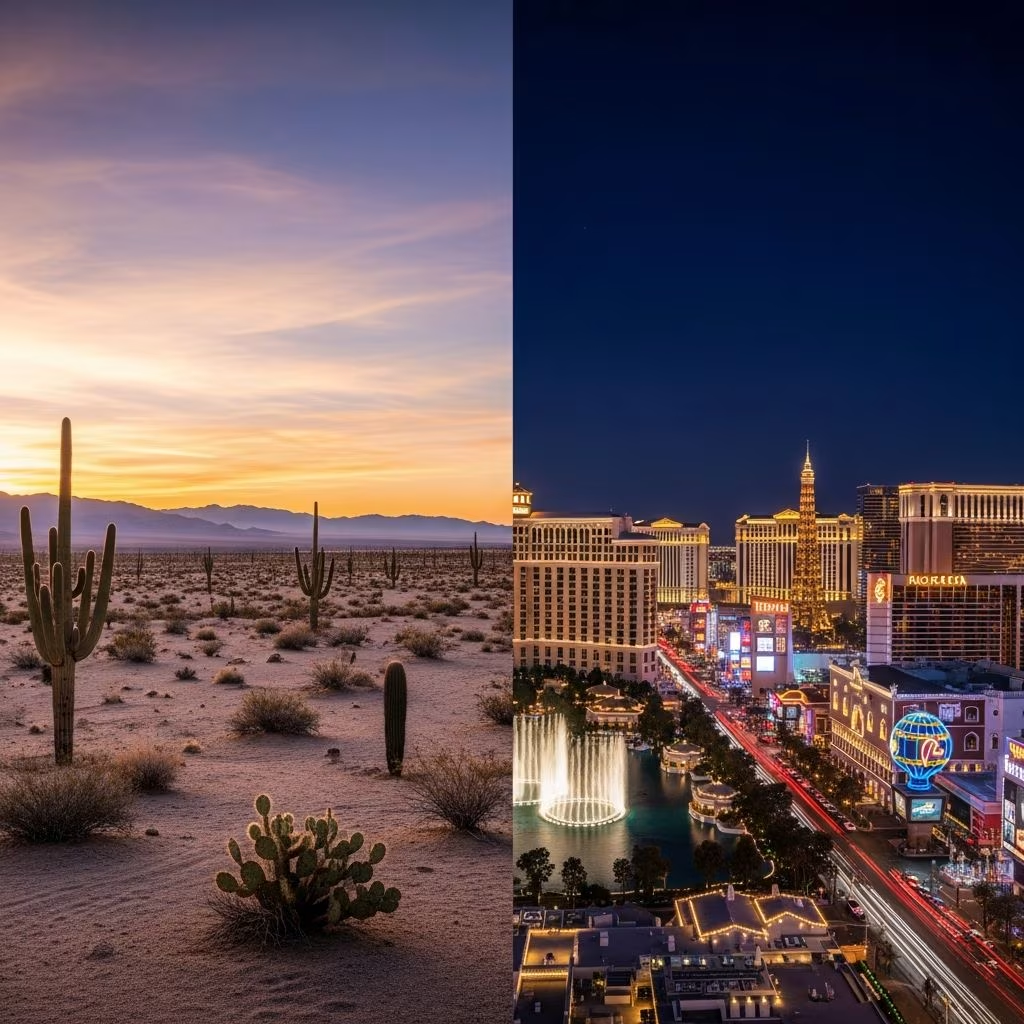
Trace Las Vegas's evolution from Native American lands and railroad outpost to a booming metropolis fueled by Hoover Dam, mobster casinos, corporate giants, and mega-resorts that redefined global entertainment.
 Travel Essentials
Las Vegas, nestled in Nevada’s Mojave Desert, stands as a testament to human ambition, transforming from a sparse Paiute settlement into the glittering heart of global entertainment. Its story spans indigenous roots, railroad booms, engineering marvels, organized crime influences, and corporate reinvention, drawing millions annually to its casinos and shows.
The Las Vegas Valley has sustained life for millennia, primarily through the Southern Paiute people who settled there around A.D. 700. These indigenous groups thrived on the area’s natural artesian springs, hunting game and gathering desert plants in a region otherwise dominated by harsh aridity.
European contact began in the early 19th century when Spanish explorers traversed the Mojave Desert en route to California. In 1829, merchant Antonio Armijo’s expedition included scout Rafael Rivera, who identified a fertile meadow nourished by springs—christening it ‘Las Vegas,’ Spanish for ‘the meadows.’ This verdant spot became a critical waypoint on the Old Spanish Trail, attracting traders and settlers despite the surrounding desolation.
Modern Las Vegas emerged in the early 20th century with the arrival of the San Pedro, Los Angeles & Salt Lake Railroad. Mining magnate William A. Clark, a key investor, recognized the site’s potential as a hub. On May 15, 1905, he auctioned land around the new depot, including the valley’s first casino in a station cafe, spurring rapid development.
Incorporated in 1911 with Peter Buol as its first mayor, the town grew around reliable water from wells and irrigation. U.S. Senators like Thomas Kearns and Clark were pivotal, fostering infrastructure that turned a dusty outpost into a functioning community. By the 1920s, Prohibition inadvertently boosted its rebellious allure, as speakeasies catered to thrill-seekers evading stricter laws elsewhere.
| Milestone | Year | Impact |
|---|---|---|
| Railroad Arrival & Land Auction | 1905 | Birth of downtown; population surge |
| City Incorporation | 1911 | Official governance; infrastructure growth |
| Prohibition Influence | 1920s | Underground nightlife establishes ‘Sin City’ vibe |
The 1931 start of Hoover Dam construction—initially called Boulder Dam—flooded Las Vegas with workers seeking diversion from Boulder City’s rigid rules. Entrepreneurs capitalized by opening casinos along Fremont Street, dubbed ‘Glitter Gulch,’ powered by the dam’s cheap hydroelectricity that illuminated the night sky like few U.S. cities.
Gambling legalization in 1931 was pivotal, taxing gross gaming revenue at 1% above $3,000 to fund infrastructure. This, combined with the dam’s completion by 1936, drove population booms and resort builds. Hidden roads smuggled workers in, evading federal oversight, while the project physically reshaped the region.
Key figures like Guy McAfee, a corrupt L.A. cop who fled to Vegas in 1939, developed clubs like Pair O’ Dice and named Highway 91 ‘the Strip’ after L.A.’s Sunset Strip. In 1941, Thomas Hull’s El Rancho Vegas introduced luxury with pools and gardens, shifting from rustic themes.
Post-WWII, organized crime poured into Vegas, eyeing legal gambling and skimming opportunities. Bugsy Siegel, backed by the New York mob, muscled into the 1946 Flamingo project, ditching Wild West motifs for tropical opulence inspired by Havana resorts. Despite his 1947 murder, the Flamingo succeeded, templating mega-casinos.
The 1940s-1950s saw mobsters fund lavish showrooms attracting stars like Frank Sinatra, cementing Vegas’s entertainment rep. Downtown’s Golden Nugget, opened 1946, epitomized grandeur, while the Strip stretched into a 4.2-mile spectacle blending speculation and vice.
By the 1960s, scrutiny forced mob divestment. Howard Hughes spearheaded corporate entry, buying properties and legitimizing operations with regulated professionalism. This era birthed mega-resorts like Caesars Palace (1966) and Circus Circus (1968), emphasizing family appeal alongside gaming.
The 1980s-1990s saw Strip dominance with behemoths like The Mirage (1989), introducing volcanoes and tigers, followed by Bellagio’s fountains and Venetian’s canals. Corporate giants like MGM Resorts drove diversification into conventions and shows, reducing mob shadows.
| Era | Key Developments | Influencers |
|---|---|---|
| 1960s-1970s | Corporate buys; mega-resorts rise | Howard Hughes |
| 1980s-1990s | Themed extravaganzas; family shift | Steve Wynn (Mirage) |
| 2000s+ | Conventions, residencies; sustainability | MGM, Caesars |
Today, Las Vegas hosts 40+ million visitors yearly, blending gaming with Cirque du Soleil, UFC, and residencies by Adele and U2. The 2008 recession prompted reinvention toward non-gaming revenue—60% now from rooms, food, and events. Sphere’s 2023 debut pushes immersive tech boundaries.
Pandemics and economic dips tested resilience, but rebounds showcase adaptability, from Formula 1 races to eco-initiatives like LED retrofits. Fremont Street’s Viva Vision canopy and downtown revivals preserve heritage amid progress.
Officially on May 15, 1905, via railroad land auction, though Paiute presence dates to A.D. 700.
Guy McAfee in the late 1930s, inspired by L.A.’s Sunset Strip.
Brought workers, legalized gambling boomed casinos, and provided cheap power for lights.
Corporate acquisitions led by Howard Hughes in the 1960s-1970s, with federal crackdowns.
Yes, with projects like the Sphere and F1 track, focusing on entertainment beyond gaming.
