
 Stays
StaysStays
The Liberty Hotel Boston: From Historic Jail to Luxury Stay
Explore the remarkable transformation of Boston's Charles Street Jail into The Liberty Hotel, blending historic preservation with modern luxury hospitality.
 Stays
StaysFew architectural transformations capture the spirit of urban renewal quite like converting a historic penitentiary into an upscale hospitality destination. The Liberty Hotel in Boston stands as a testament to innovative adaptive reuse, demonstrating how thoughtful preservation can honor a building’s past while creating an entirely new purpose. What was once considered a neighborhood eyesore has become one of the city’s most distinctive luxury properties, attracting travelers who appreciate both contemporary comfort and historical significance.
The Origins: Understanding the Charles Street Jail’s Legacy
The Charles Street Jail, completed in 1851, represents a pivotal moment in American penal architecture. Designed by Gridley James Fox Bryant, widely recognized as Boston’s most accomplished architect of that era, the facility was developed in collaboration with Rev. Louis Dwight, a Yale-educated penologist whose progressive views on incarceration influenced the building’s innovative design. The structure embodied what became known as the “Boston Granite School” of architecture, a distinctive style characterized by bold granite construction and classical proportions.
The jail’s design was revolutionary for its time. Rather than employing the typical fortress-like approach to detention facilities, the architects incorporated expansive windows and natural light throughout the building. This forward-thinking approach allowed corrections officers to maintain visibility and security while providing prisoners with adequate ventilation and illumination—a radical concept in nineteenth-century penology. The building’s cruciform layout became an international model for prison architecture throughout the latter half of the 1800s.
Over its operational lifetime, the Charles Street Jail housed some of Boston’s most notorious criminals, including the famous cases of Sacco and Vanzetti. However, by the 1970s, conditions within the facility had deteriorated significantly. In 1973, prisoners staged a revolt protesting inadequate living conditions, leading authorities to declare the jail in violation of inmates’ constitutional rights. The facility continued to operate under increasingly stringent oversight until it finally closed in 1990 when the last prisoners were transferred to a newer Suffolk County Jail facility.
The Transformation Process: Vision and Architectural Innovation
Following the jail’s closure, the structure remained vacant and deteriorating for a decade. The building’s prominent location at the border of Beacon Hill and adjacent to Massachusetts General Hospital made its abandonment increasingly problematic for the surrounding neighborhood. The five-story granite structure, surrounded by an imposing 18-foot prison wall, cast both a literal and figurative shadow over the area.
In 2000, Massachusetts General Hospital, which owned the adjacent property, selected developer Carpenter & Company to envision a new purpose for the building. The hospital chose Cambridge Seven Associates and Ann Beha Architects (now known as Annum Architects) to lead the redesign initiative. These firms faced an extraordinary challenge: how to maintain historical integrity while creating a modern, functional luxury hotel.
The architectural team approached the project with meticulous attention to preservation principles. Rather than demolishing and rebuilding, they chose to work within the existing structure’s constraints. The granite exterior received full restoration, with particular care taken to recreate the cupola that had been removed in 1949, using Gridley James Fox Bryant’s original architectural drawings as reference. The removal of the imposing 18-foot prison wall opened the site to the surrounding neighborhood, visually integrating the property into its community context.
The 16-Story Addition: Balancing Heritage with Modernity
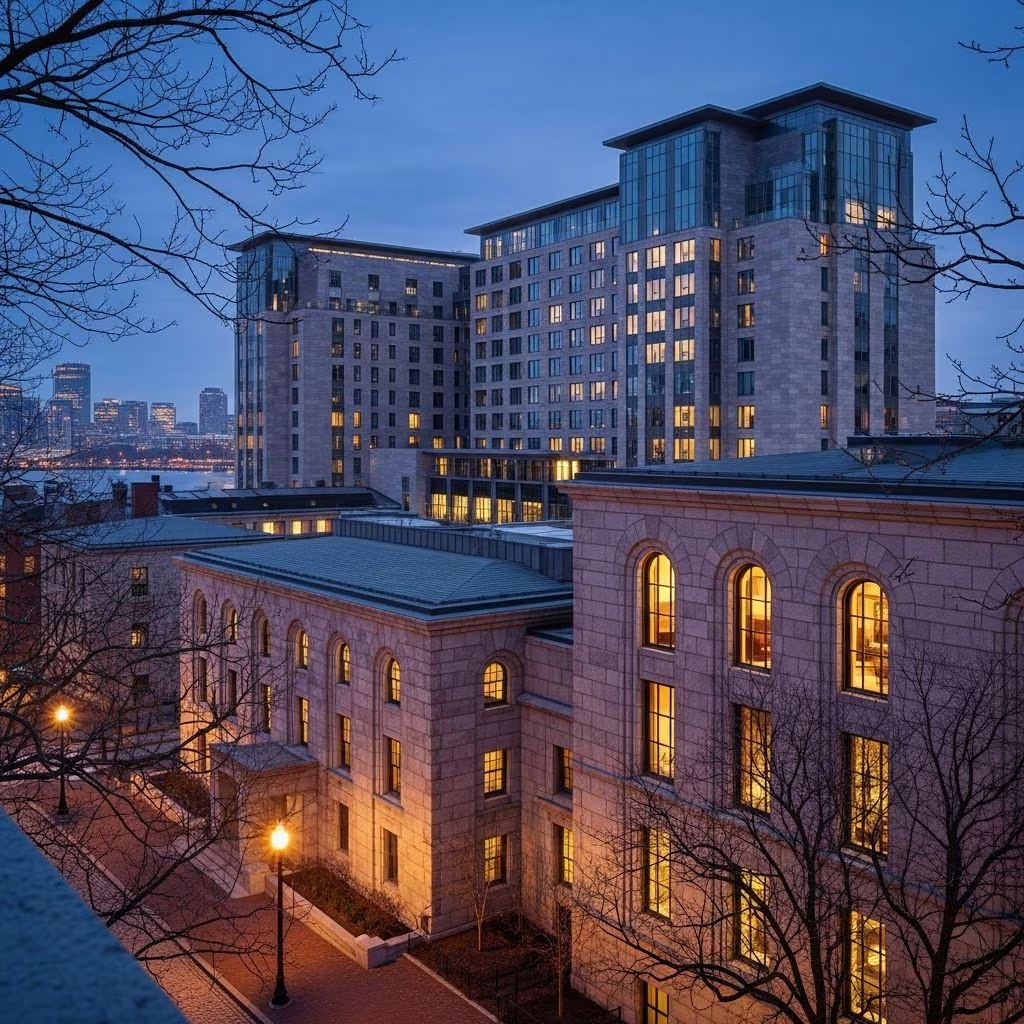
Expanding the facility to create adequate guest rooms required new construction. The design team developed a 16-story guest room tower that complements rather than competes with the historic jail building. Clad in contemporary materials, this modern structure provides visual contrast to the heavy granite of the original construction while maintaining architectural harmony with Charles Street’s character and the neighboring hospital buildings.
The new tower was designed to approximate the existing structure’s aesthetic qualities, ensuring visual continuity from the street level. This thoughtful integration demonstrates how contemporary construction can enhance rather than diminish historic properties when executed with sensitivity to context and scale.
Interior Redesign: Honoring History Through Creative Repurposing
Perhaps the most impressive aspect of the Liberty Hotel’s transformation lies in how its designers repurposed the jail’s internal spaces. The building’s most dramatic feature—the soaring 90-foot central rotunda with its signature 33-foot-high arched windows and circular apertures—became the hotel’s reception lobby. This breathtaking space, which originally allowed corrections officers to maintain panoramic surveillance of the cell blocks within four protruding wings, now serves as the hotel’s primary gathering space. The preserved catwalks and exposed brick create an atmosphere that acknowledges the building’s past while providing an undeniably striking aesthetic.
Rather than attempting to erase the jail’s history, the hotel’s designers embraced it as a design element. Original prison cells were thoughtfully incorporated into the hotel’s restaurant and bar areas. The property features two themed establishments that playfully reference the building’s former function: a bar called “The Clink” and another named “Alibi.” These venues maintain authentic architectural elements including barred windows and preserved cells, creating an immersive historical experience alongside contemporary hospitality offerings.
The hotel includes five guest suites with actual barred doors remaining intact, offering guests the unique opportunity to experience the building’s history firsthand while enjoying modern luxury accommodations. The jail’s former exercise yard was transformed into a private, beautifully landscaped courtyard that has become one of Beacon Hill’s cherished hidden gardens.
Preservation Standards and Financial Incentives
The Liberty Hotel’s construction utilized Federal and State Historic Rehabilitation Tax Credits, demonstrating how government incentive programs can facilitate ambitious preservation projects. These financial mechanisms recognize the public value of maintaining architecturally and historically significant structures while encouraging private investment in their adaptive reuse.
The project underwent rigorous review by preservation architects who guided all exterior and interior restoration work. The building’s listing on the National Register of Historic Places mandated adherence to strict preservation standards, ensuring that any alterations or modifications respected the structure’s historical significance.
Modern Amenities and Guest Experience
Opened in summer 2007, the Liberty Hotel operated as a luxury property with 300 guest rooms, combining historic character with contemporary hospitality standards. The hotel is now part of the Marriott Luxury Collection, positioning it within an elite tier of global hospitality properties.
Beyond its architectural distinction, the Liberty Hotel provides guest services designed for discerning travelers. Complimentary Biria bikes allow guests to explore Boston’s neighborhoods, while a dedicated running concierge assists fitness-focused visitors in discovering optimal routes through the city. A luggage liaison service coordinates with airports to deliver guest baggage directly to the hotel, streamlining the arrival experience.
The Hotel Within Its Urban Context
The Liberty Hotel’s transformation achieved far more than converting a single building. The $150 million renovation aligned with Boston’s broader civic, historical, and developmental objectives. The project successfully addressed urban blight by repurposing an underutilized historic structure, creating a destination that generates economic activity while celebrating the city’s architectural heritage.
The hotel joins a select group of American properties that have been successfully converted from correctional facilities. Similar transformations include the Jail Hill Inn in Galena, Illinois and the Jailhouse Inn in Newport, Rhode Island, though the Liberty Hotel’s scale and architectural ambition distinguish it among such conversions.
Significance Within Architectural History
The Charles Street Jail’s conversion demonstrates principles of adaptive reuse that have influenced urban planning and historic preservation practice across North America. The project illustrates how creative vision, technical expertise, and preservation commitment can transform seemingly obsolete structures into vibrant community assets.
The building’s original architectural achievement—creating a detention facility that balanced security requirements with humane design principles—receives continued recognition through its careful preservation. The rotunda that once symbolized control and surveillance now embodies hospitality and welcome, a poignant symbolic transformation that accompanies the building’s functional change.
Visitor Experience and Historical Storytelling
The Liberty Hotel provides visitors with tangible connection to Boston’s history. The preserved architectural elements throughout the property—exposed brick walls, original cell blocks, historical catwalks, and wrought ironwork—tell the building’s story without requiring guests to consult guidebooks. The hotel’s design choices create an environment where history is experienced directly rather than interpreted secondhand.
Staying at the Liberty Hotel becomes a form of experiential history education. Guests encounter authentic nineteenth-century construction techniques, understand spatial design principles from an earlier era, and reflect on how urban institutions have evolved over generations. The property transforms passive historical awareness into active engagement with Boston’s architectural and social heritage.
Conclusion: Preserving the Past, Creating the Future
The Liberty Hotel exemplifies how contemporary hospitality can emerge from historical consciousness rather than in spite of it. The transformation of the Charles Street Jail from abandoned correctional facility to luxury destination demonstrates that adaptive reuse need not involve compromising either historical integrity or modern comfort standards. The project stands as a model for urban renewal that honors a community’s past while establishing foundations for its future prosperity. For travelers seeking accommodations that merge architectural significance, historical narrative, and contemporary luxury, the Liberty Hotel offers an unparalleled Boston experience.
References
- Charles Street Jail — Wikipedia. Accessed April 2026. https://en.wikipedia.org/wiki/Charles_Street_Jail
- The Liberty Hotel — Annum Architects. https://www.annumarchitects.com/projects/the-liberty-hotel/
- The Charles Street Jail — The West End Museum. https://thewestendmuseum.org/history/era/west-boston/the-charles-street-jail/
- Liberty Hotel: Adaptive Reuse, Historic Preservation — CambridgeSeven. https://www.cambridgeseven.com/project/liberty-hotel/
- The Liberty Hotel, A Luxury Collection Hotel — Forbes Travel Guide. https://www.forbestravelguide.com/hotels/boston-massachusetts/the-liberty-hotel-a-luxury-collection-hotel
- Liberty Hotel-Charles Street Jail — Boston Preservation Alliance. https://www.bostonpreservation.org/advocacy-project/liberty-hotel-charles-street-jail
- Historic Hotel in Boston, MA | Liberty Hotel — Liberty Hotel Official Website. https://libertyhotel.com/hotel/history/
On This Page
The Origins: Understanding the Charles Street Jail's Legacy The Transformation Process: Vision and Architectural Innovation The 16-Story Addition: Balancing Heritage with Modernity Interior Redesign: Honoring History Through Creative Repurposing Preservation Standards and Financial Incentives Modern Amenities and Guest Experience The Hotel Within Its Urban Context Significance Within Architectural History Visitor Experience and Historical Storytelling Conclusion: Preserving the Past, Creating the Future← Previous
Blarney Castle: History, Blarney Stone & Visitor Guide
Next →
How Much Does It Cost to Move Abroad? Full International Relocation Guide
Related Reading